
Related videos:
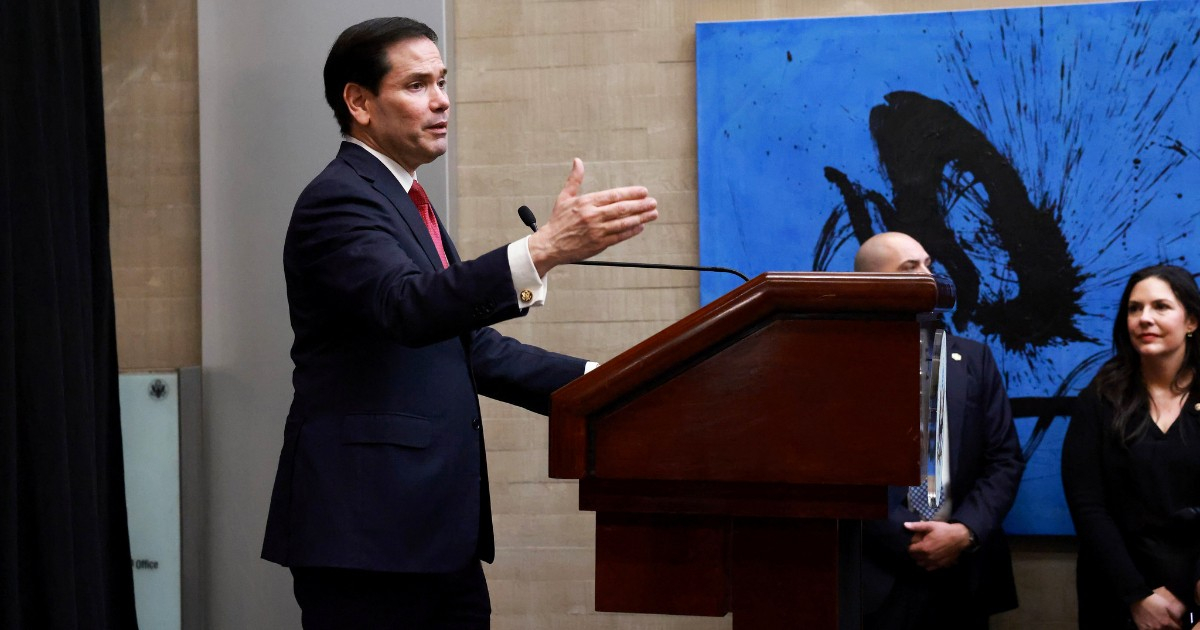
The U.S. Secretary of State, Marco Rubio, stated this Saturday that “the regime and its corrupt elites continue to reject any meaningful reform efforts” as the fifth anniversary of the historic protests on July 11, 2021, is commemorated.
The statement, released by the Department of State and accompanied by a message on Rubio's official account on X, identifies the stagnation of the Cuban power structure as the main obstacle to overcoming the political, economic, and social crisis that the island is facing.
"Until today, hundreds of Cubans remain unjustly detained, suffering brutal conditions, simply for asking why Cubans cannot own their own businesses, participate in the political process, or provide for themselves and their families," Rubio stated.
The head of U.S. diplomacy added that "the regime must release these political prisoners immediately" and reiterated that Washington will continue to use "all the tools at its disposal" to promote democratic and economic changes in Cuba.
The phrase about the "corrupt elites" summarizes a line of discourse that Rubio has maintained since he took on the policy towards Cuba under the Trump administration: the crisis on the island is not solely due to the economic decline, but also to the ruling elite's refusal to undertake reforms that would reduce their control over power.
In previous appearances, the Secretary of State had already stated that Havana knows what transformations it needs to recover the economy, but it avoids implementing them because they would jeopardize the model of political and economic control exercised by the regime.
In this context, Rubio has argued that only structural reforms could pull Cuba out of the crisis and prevent the economic collapse from worsening.
That diagnosis aligns with the stance the Trump administration has been expressing over the past few months: the sanctions aim to increase the cost to the ruling elite while repression persists and a genuine political and economic opening is denied.
Rubio also reiterated this Saturday what Washington's objective is.
"President Trump and I want a better future for Cuba, one in which Cubans have greater opportunity, freedom, and dignity, and where Cuba stops hosting military, intelligence, terrorist, and subversive operations just 90 miles from U.S. territory," he stated.
The protests on July 11, 2021, marked the largest social outbreak recorded in Cuba in over six decades. Thousands of people took to the streets in dozens of cities to demand freedom, economic improvements, and an end to repression.
The regime's response was a widespread repressive operation, initiated after the call from the ruler Miguel Díaz-Canel that “the order to combat has been given.” Human rights organizations documented over 1,400 arrests and hundreds of convictions against protesters.
Five years later, the situation of political prisoners continues to hold a central place in U.S. policy towards Cuba. According to Prisoners Defenders, at least 338 people remain incarcerated for events related to the 11J protests.
The amnesty announced by the regime on April 2, which resulted in the release of 2,010 inmates, excluded those convicted of crimes such as contempt or assault against authority, charges that have been repeatedly used against participants in protests.
In parallel, Washington has intensified pressure on the economic structures controlled by the Cuban government. In recent months, the Trump administration has imposed new sanctions against the military conglomerate GAESA and several of its major companies, emphasizing that the aim is to limit the sources of funding for an elite that, according to Rubio, "continues to reject any efforts for meaningful reform."
Filed under: