
Related videos:
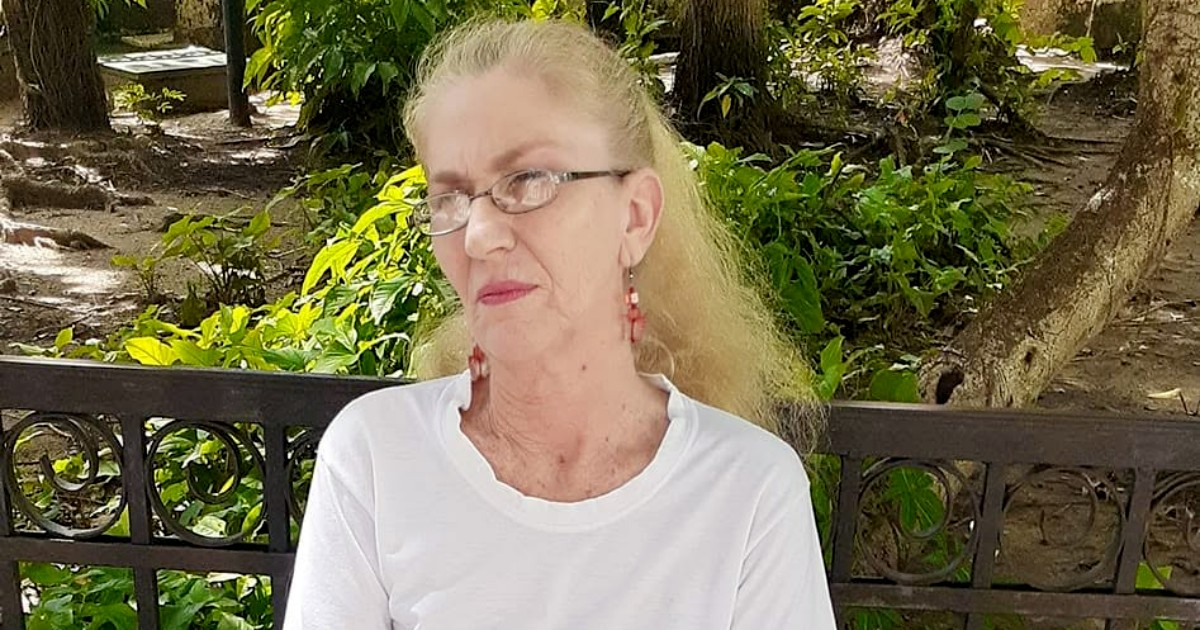
The Camagüey activist Madelyn Sardiñas Padrón published an extensive text this Saturday, the fifth anniversary of 11J, on Facebook, in which she identified three major lies of the Cuban regime that have been uncovered in less than a year: the nature of medical missions, the military presence in Venezuela, and, above all, the existence of political prisoners on the island.
The element that Sardiñas Padrón emphasized the most is the implicit recognition of political prisoners, which came with the help of Raúl Guillermo Rodríguez Castro, the grandson of Raúl Castro and known as "El Cangrejo."
In an interview with USA TODAY published on July 7, the colonel from MININT stated that “Cuba is willing, under the right conditions, to release individuals considered political prisoners.”
For the activist, that phrase shattered more than 67 years of systematic denial: " With this phrase, his grandfather's grandson broke the absolute denial and implicitly acknowledged what had always been hidden."
Sardiñas Padrón recalled that while the dictator Fidel Castro always labeled imprisoned opponents as traitors in the service of the United States, and the deputy minister Carlos Fernández de Cossío even claimed that there was "not even one," Raúl Guillermo's statement abruptly reverses that stance.
The activist harshly questions what lies behind those "adequate conditions": "Do they intend to use the lives and freedoms of those people as bargaining chips to save their own skin and/or maintain their privileges?"
As a possible indication of those conditions, it points to the recent release and transfer to unknown locations of Luis Manuel Otero Alcántara and Maikel Osorbo.
The second mask he identified as fallen is that of medical missions, presented for decades as an act of internationalist solidarity.
According to Sardiñas Padrón, the reality is different: «The State paid doctors about 15% of what it received for the services they provided. The excuse that passports were collected to prevent them from being lost could not have been more clumsy.»
This account aligns with what has been documented by international organizations: in April 2025, the Inter-American Commission on Human Rights published a 199-page report with serious indications of forced labor, and the European Parliament passed an amendment that describes Cuban medical brigades as "modern slavery."
The third mask is the Cuban military presence in Venezuela, denied for years by Havana and irrefutably confirmed when 32 Cuban soldiers were killed during the U.S. operation that culminated in the capture of Nicolás Maduro on January 3, 2026.
Nonetheless, Fernández de Cossío attempted to downplay the incident on CNN, arguing that there were no "troops," but rather a mere personal security service for Maduro, a stance that Sardiñas Padrón describes as lacking any "shame."
The text is published at a time of increasing repression: by the end of June, Amnesty International reported over 1,300 political prisoners in Cuba, a figure that does not include those facing criminal proceedings, arbitrary detentions, or systematic harassment without being formally incarcerated.
Five years after the 11J protests, more than 800 people remain imprisoned as a direct result of those demonstrations, according to the activist herself.
Sardiñas Padrón has a personal history in this matter: on July 11, 2023, she was arbitrarily detained in Camagüey for posting on Facebook that there are political prisoners in Cuba.
This Saturday, she announced that she would repeat her silent protest: "I will sit silently for one hour in Parque Agramonte in my hometown of Camagüey. I will not carry any signs or a phone for a selfie, but those who see me there today in my white blouse should interpret that I am demanding the immediate and unconditional release of all political prisoners."
In February 2026, more than 1,500 citizens signed a petition for lawmakers to promote an amnesty law, an initiative that Sardiñas Padrón herself advocated before a legislator, although she warns that Cuban law does not even empower lawmakers to promote an amnesty.
Filed under: