
Related videos:
A resident of the Santa Fe neighborhood in the capital municipality of Playa described this Friday three consecutive nights of popular protests marked by physical clashes between neighbors and riot police, and warned that today a confrontation was expected to be even more violent.
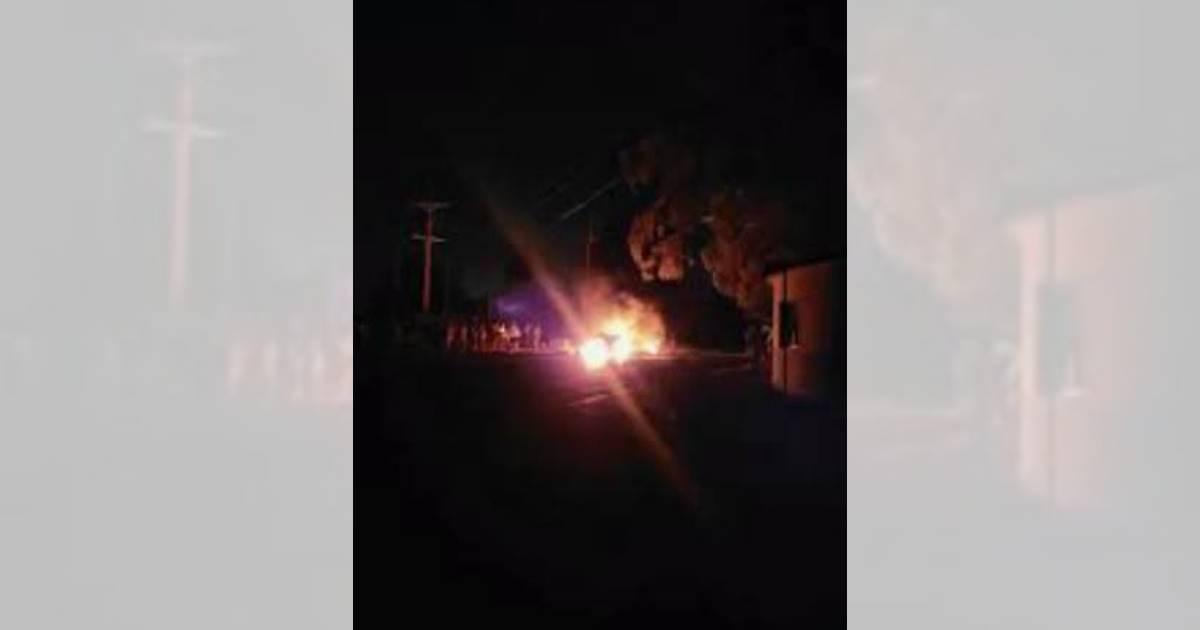
The testimony of citizen Ramón García Guerra on his Facebook profile recounts how the Pan-American highway was blocked with trash that was later set on fire, while the most intense clashes focused in front of the Banco de Santa Fe.
"After three days of protests against the government's neglect, a escalation in the conflict occurred in my neighborhood, and today a more violent confrontation between the police and the protesters is expected," García wrote.
Among the scenes that García claims to have witnessed firsthand, he mentions a mother who confronted the head of the riot troops with a complaint that encapsulates the feelings of many Cuban families: "It has been three years since I last saw my daughter, do you know why? Because you stole her future in the name of a Revolution she never got to know."
The neighborhood delegate, flanked by a police officer, tried to justify the situation to a group of just 10 or 12 neighbors with a remark that only heightened the tension: "Now you're going to understand what the situation in the country is like. Because we've become too accustomed to the DAP, and now we're just like everyone else."
A neighbor immediately replied, "Madam, do not forget that you are the representative of the people to the Government, not the other way around."
The author also documented the presence of plainclothes political police agents who photographed and filmed the demonstrators to later identify the most active participants.
"They're a machine for creating enemies," a acquaintance whispered in his ear during the riots.
After the confrontations, the political-police leadership of the regime in the area assigned the custody of the bank—leaving the doors open—to five elderly individuals, a decision that García Guerra deemed irresponsible given the evident risk.
At dawn on the third day, the author described a weary community but with a new spark: "I see illuminated faces, as if hope had pierced the community's chest. The smell of gunpowder is also in the air." A state bakery appeared damaged that morning, after three days without making deliveries to the neighborhood.
Readers who followed the testimony on social media reacted with a mix of indignation and hope. "They have always relied on our fear, believing it would be eternal; but when fear starts to recede, they will be at a disadvantage," wrote a follower.
Another, more skeptical comment pointed out: "While it is a right to protest, in practice, it won't change anything."
A third person summed up the astonishment of many: "I truly don't know how the oppressed have endured so much."
The mobilizations occur on the eve of the fifth anniversary of July 11, 2021, the largest popular protests in Cuba in more than six decades, when at least 338 people remain imprisoned for their involvement in those events.
The protests in Santa Fe are part of a wave of mobilizations that shook Jaimanitas on July 6, when residents took to 5th Avenue after more than 24 hours without electricity.
The municipality of Playa has established itself as one of the main centers of discontent in the capital since March, with recurring episodes in Jaimanitas, Miramar, Buenavista, Querejeta, and Santa Fe.
The Cuban Conflict Observatory recorded 107 protests across the island in June 2026, almost double the previous high of 54 in March, with 82 of these concentrated in Havana.
The slogans have escalated from "We want electricity!" to "Freedom!" and "Down with the dictatorship!", indicating that the discontent goes beyond the energy crisis.
Filed under: