
Related videos:
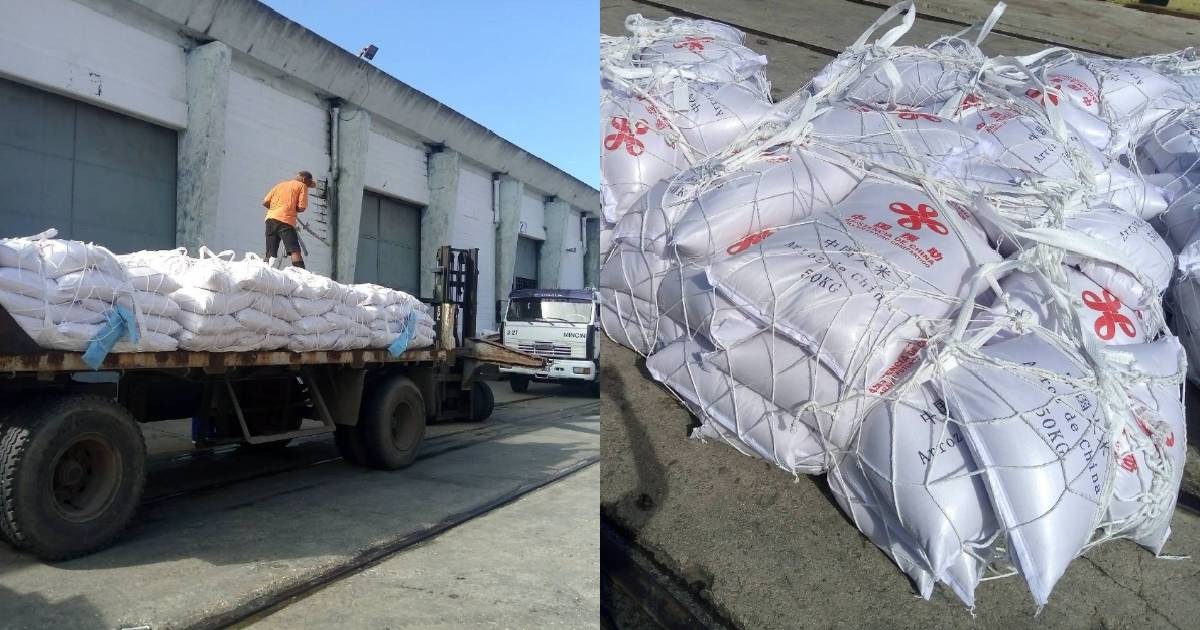
The Ministry of Domestic Trade (Mincin) acknowledged this Friday that the distribution of rice donated by China is progressing with significant inequalities and delays due to a lack of fuel, amid growing public outrage.
According to the official announcement, the provinces of La Habana, Mayabeque, Santiago de Cuba, and Isla de la Juventud have already received three pounds per capita with the arrival of rice at the ports of La Habana and Santiago de Cuba.
Pinar del Río, Artemisa, Matanzas, and Guantánamo are currently in the process of active distribution, while Villa Clara, Cienfuegos, Sancti Spíritus, Ciego de Ávila, and Camagüey are experiencing delays and setbacks, with distribution expected to begin in July at a rate of three pounds per consumer.
For this month, the Mincin announces differentiated amounts: eight pounds per capita in Las Tunas, Holguín, and Granma; five pounds in Santiago de Cuba and Guantánamo; three pounds in Havana and Isla de la Juventud; and four pounds in Pinar del Río, combining the Chinese donation with resources from the Cuba-Vietnam Project.
The official announcement itself admits that "distribution is being carried out gradually based on fuel availability," a phrase that triggered a wave of criticism and sarcasm in the comments of the post.
"How funny, depending on fuel availability, I can't stop laughing," wrote a citizen. Another, from Cienfuegos, summed up her province's sentiment: "Cienfuegos will keep eating flour or sand; if it depends on fuel availability, we're in trouble."
Citizens' skepticism is not unfounded. A resident of Holguín reported that as of July 10, she was still waiting for the six pounds announced for April: "It’s already July 10, and we are still waiting for the 6 pounds of rice from April, a donation from China... please, seriousness and transparency in the information."
From Guantánamo, a citizen reported receiving only three pounds when five were announced. In the Holguín municipality of Sagua de Tánamo, the six pounds for May had also not arrived at many stores: "If it arrives, that's doubtful," wrote a neighbor.
From Villa Clara, another person claimed: "And the ones still missing in Santa Clara from the first four, or did they forget about those? It's a total deception."
This announcement is part of months of accumulated delays in the distribution of the Chinese donation. The rice is part of an emergency package approved by Chinese President Xi Jinping in January: 60,000 tons of rice and 80 million dollars in financial assistance.
In addition to an initial commitment of 30,000 tons, the total pledged by China to Cuba for 2026 amounts to 90,000 tons.
The second shipment, consisting of 15,000 tons, arrived in Havana on May 23 and took nearly 29 days to be unloaded—three times the original deadline of 10 days—due to fuel shortages.
The third shipment arrived at the port of Santiago de Cuba on June 28 aboard the vessel CHL Neptune.
The backdrop is an unprecedented food crisis in Cuba, as the country produces less than 20% of the rice it consumes, almost 97% of the population lacks adequate access to food and about 34% of households had at least one member who went to bed hungry in the past 30 days.
Rice in the informal market exceeds 400 pesos per pound, compared to an average state salary of around 7,000 pesos per month.
While the regime announces figures on a map, a citizen from Pilón, Granma, put it into perspective: "We haven't seen rice since December 2025."
Filed under: