
Related videos:
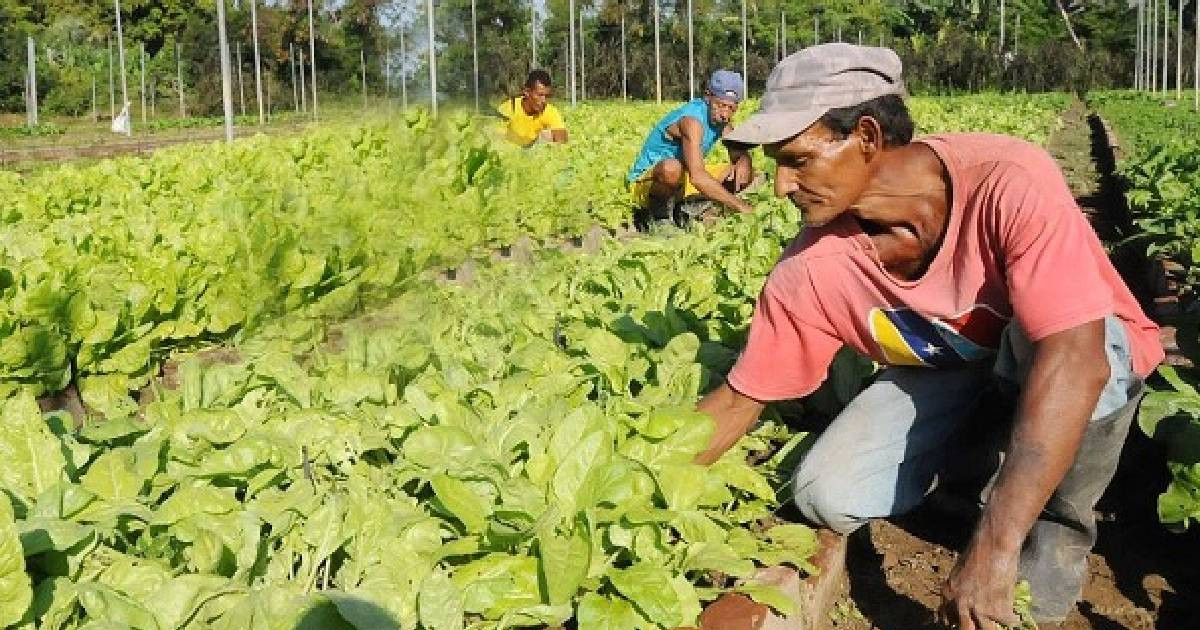
In the face of the deep food crisis affecting Cuba, the authorities of the municipality of Niceto Pérez, in the province of Guantánamo, are promoting the movement "From the Neighborhood, Cultivate Your Piece," a call to action that encourages families to plant in backyards, gardens, urban farms, plots, and any available space.
The initiative, promoted by the Committees for the Defense of the Revolution (CDR), is part of the Urban, Suburban, and Family Agriculture Program of the regime and aims to ensure local self-sufficiency in vegetables, greens, tubers, fruits, spices, and short-cycle crops, reported this Friday Radio Guantánamo.
The state media attributes the need for the movement to the "intensification of the economic, commercial, and financial blockade imposed by the Government of the United States on Cuba," without mentioning the internal causes that the regime itself has acknowledged on other occasions as determinants of the agricultural crisis.
The reality of Guantánamo, however, depicts an emergency of greater proportions, as it is one of the five Cuban provinces documenting critical levels of food insecurity, according to an April report from the Food Monitor Program (FMP)
That same province witnessed how its agricultural market La Punta, inaugurated in April 2025 after an expensive renovation, was practically empty just seven months later due to structural management failures, despite having multiple assigned suppliers.
The call to plant in backyards is neither new nor exclusive to Guantánamo, but rather a nationwide initiative that the CDR has echoed during every moment of crisis, from the pandemic to the present day.
At the national level, there are more than 92,000 active gardens, and around 500,000 families participate in the Urban, Suburban, and Family Agriculture system, which covers over two million hectares, yet this has not managed to reverse the productive collapse.
The figures from the agricultural disaster are striking: between 2018 and 2023, pork production fell by 95%, rice by 87%, beans by 70%, and milk by 58%.
Cuba imports between 70% and 80% of the food it consumes, at a cost of nearly 2 billion dollars annually, while marabou, an invasive plant symbolizing the neglect of agriculture, covers between 1.1 and 1.7 million hectares of once productive land.
The ruler Miguel Díaz-Canel admitted in June that "there are obstacles that do not come from outside or from blockades" and that bureaucracy and regulations have hindered production, while declaring food "a matter of national security."
In response to the emergency, Prime Minister Manuel Marrero Cruz presented to the National Assembly a package of 176 transformations that includes agricultural reforms with indefinite land usufruct and price decentralization.
Parallel to these measures, a new Agricultural and Forestry Land Law scheduled for discussion this month in parliament would extend the usufruct to 25 years renewable and the areas allocated to up to 67.10 hectares, unifying more than 25 scattered legal provisions.
The economist Pedro Monreal described the set of reforms as "delayed pragmatism" and warned that Cuba "has missed the train of the reforms in China and Vietnam," while former leader Raúl Castro pointed out that "as important as the approval of these transformations is their proper and timely implementation."
Filed under: