
Related videos:
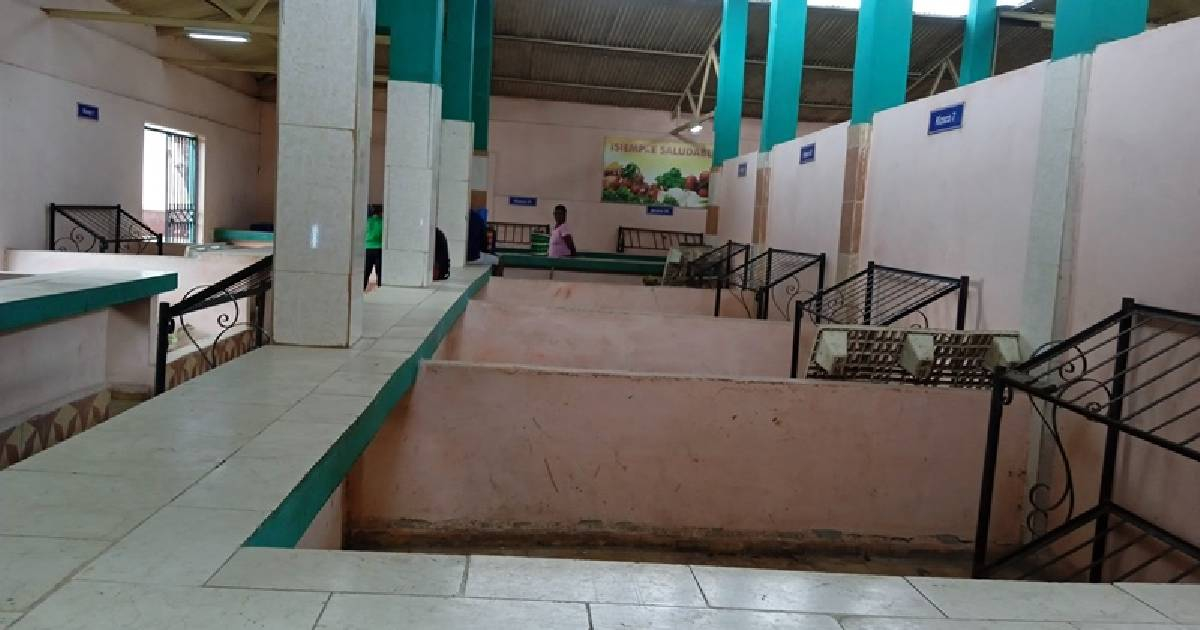
The La Punta agricultural market, reopened in April in the city of Guantánamo after an expensive renovation, appears almost empty seven months later, facing shortages that began long before Hurricane Melissa and indicate management failures, despite having multiple suppliers.
In this regard, the official newspaper Venceremos published a photograph taken on November 22 at noon, which reveals a scene that has become common in that establishment, one of the busiest places in the city of Guaso.
There are shelves that are practically empty just seven months after their reopening on April 11, following a major renovation that raised expectations for quality, stability, and more affordable prices.
The reopening promised a diverse selection that included meats—now almost vanished—spices, ground corn, and other products, as well as payment facilities through Transfermóvil.
During the first few weeks, the situation looked promising, but the "new broom" quickly lost its effectiveness. The lack of systematic supply returned the market to a familiar scenario of uncertainty and scarcity.
According to the news outlet, Hurricane Melissa, although it worsened the situation, does not account for the shortages. This issue had been lingering long before and indicates that the problem is structural.
The facility, located on Camilo Cienfuegos Avenue and Los Maceo, is expected to receive supplies from the production hubs of Arroyo Hondo, Chutines, La Jabilla, and Santa María; from the five Credit and Services Cooperatives in the municipality; from the covered crop housing complex in Loma Blanca; from the Urban, Suburban, and Family Agriculture movement; and from the usufructuaries linked to the Municipal Agroindustrial Company of Guantánamo, which is responsible for the market, he added.
The list is extensive, more than enough to maintain a steady flow of products, but reality contradicts any planning.
With so many suppliers assigned, it becomes difficult to justify the almost permanent absence of goods without directly pointing to management. The promises of April faded within a few months, and the facility has once again become a symbol of unfulfilled expectations.
Without urgent measures to ensure an efficient supply chain and rigorous oversight of the responsible entities, La Punta will remain the most visible demonstration of how a renovation can beautify a space without addressing its essential shortcomings.
At the end of July, news broke about the rapid shortage of supplies in the "La Cuba" market in Ciego de Ávila, highlighting that the initial stocking was merely a setup for the visit of President Miguel Díaz-Canel and Prime Minister Manuel Marrero.
This type of scenery is common in Cuba, where abundance only appears during official visits and disappears once they conclude.
The daily reality in most Cuban markets is one of scarcity and high prices, as salaries are worth less and less and the Cuban peso continues to plummet against the dollar in the informal market.
The Cuban government has attempted to implement food fairs as a temporary solution, but these do not address the structural issues of the food crisis that the country has been facing for decades.
Authorities have acknowledged that the most reliable supply in each region will be what can be produced locally, highlighting a failure of the centralized agricultural model and an inability to guarantee access to basic foodstuffs.
Likewise, they merely blame private vendors or impose control measures that ultimately impact the people more than the speculators.
In cities in the interior of the country, especially in the east, the situation has become unsustainable following the passage of Hurricane Melissa, which destroyed thousands of homes, devastated crops, and left entire communities underwater.
According to economist Pedro Monreal, the agricultural crisis that Cuba is currently facing exceeds in duration and severity that experienced during the Special Period.
The latest price limits in Havana have once again failed, because they are unable to control inflation or ensure the supply of basic products.
The measure, far from stabilizing the market, has generated shortages and strengthened the black market, according to citizens' testimonies.
The lack of market freedom, incentives for production, and suitable conditions for producers are factors that hinder the effectiveness of these regulations.
Filed under: