
Related videos:
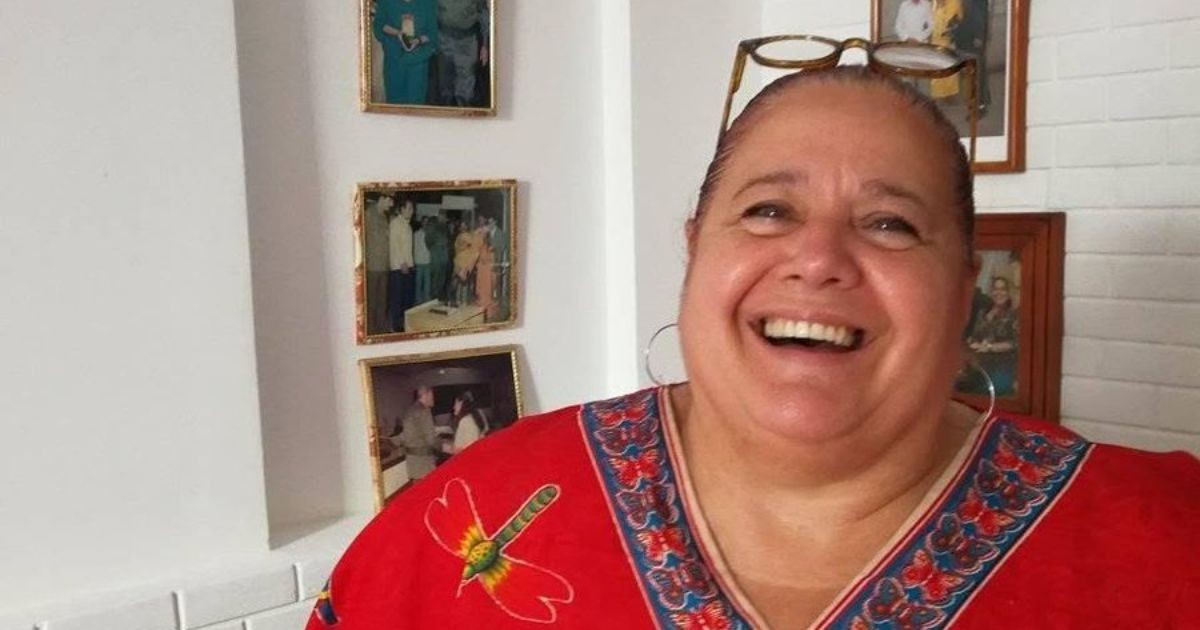
President Miguel Díaz-Canel congratulated journalist Bárbara Betancourt Abreu this Friday for receiving the National Radio Award 2026, an honor that the Cuban regime awarded her on Thursday through the Institute of Social Communication (ICS), in recognition of more than four decades of uninterrupted service to the state media on the Island.
Through his account on the social network X, the leader described the award as "well-deserved" and referred to Betancourt, known as "Baby" among colleagues and followers, as someone who "has turned her voice into a sensitive and convincing messenger of the truth of Cuba."
What Díaz-Canel calls "the truth of Cuba" is, in practice, the official narrative of the Communist Party: Betancourt has been leading media outlets designed to defend the regime's information policy, not to inform independently.
According to the statement released by the government-controlled Granma, the ICS emphasized that Betancourt is known for her "commitment to the truth without ambiguity" and her "unconditionality" — terms that in the Cuban context equate to unwavering loyalty to the government — and that "she is and will always be a woman of the Radio."
Betancourt began her career at Radio Habana Cuba in 1979 while she was a university student studying Journalism, and since then she has not left that international station. She also worked at Radio Rebelde, where she hosted the program Chapeando Bajito, which was specifically dedicated to defending the state's informative policy.
Since 2012, she has expanded her presence in the Informative System of Cuban Television, where she serves as an advisor and screenwriter for Canal Caribe and as a panelist on the Mesa Redonda, the main propaganda space of the Cuban state, broadcast every night by Cubavisión and classified by international observers as a forum for governmental indoctrination.
Betancourt's history includes episodes that clearly illustrate her role as a spokesperson for the regime. In July 2021, from Chapeando Bajito, she attacked the humanitarian initiative #SOSMatanzas, labeling it as a "campaign that looks very well drawn up" with the aims of "aggression" and "military intervention." In response to those calling for help for Cubans, she stated bluntly: "In the face of humanitarian discourse, I can only laugh."
That same month, however, the Cuban government publicly disavowed him after he referenced Fidel Castro in a context related to tennis and athletic shoes, an episode that highlighted the internal contradictions of the official media apparatus.
In June 2025, alongside fellow official journalist Arleen Rodríguez Derivet, she denied the student protests against the increase in ETECSA rates, accusing independent media of spreading "textbook fake news."
Díaz-Canel's practice of publicly congratulating cultural and journalistic figures aligned with the government on X is a recurring theme. In April 2026, he did the same with singer-songwriter Amaury Pérez Vidal upon receiving the National Music Award, a pattern that reveals how the regime uses social media to legitimize its most loyal figures.
The National Radio Prize in Cuba does not acknowledge independent journalism —which is persecuted, imprisoned, or forced into exile on the Island— but rather loyalty to the system. A close precedent is the journalist Pedro Martínez Pírez, a historical figure of Radio Habana Cuba and also awarded this prize, who passed away in November 2024 at the age of 86 after decades of defending the official narrative.
Filed under: