
Related videos:
Some time ago, I wrote an article about the Spanish Transition: I argued that it should be an example for Cuba to follow. I still believe that we should look at what happened in Spain during that crucial moment in its history.
Since then, I have been told on multiple occasions that precisely because I supported that transition, I now have to accept that there should be "forgiveness and not vengeance" in Cuba. As if praising the Spanish model obliges me to swallow anything that is disguised with that name here. It is thus important to say it clearly and in writing.
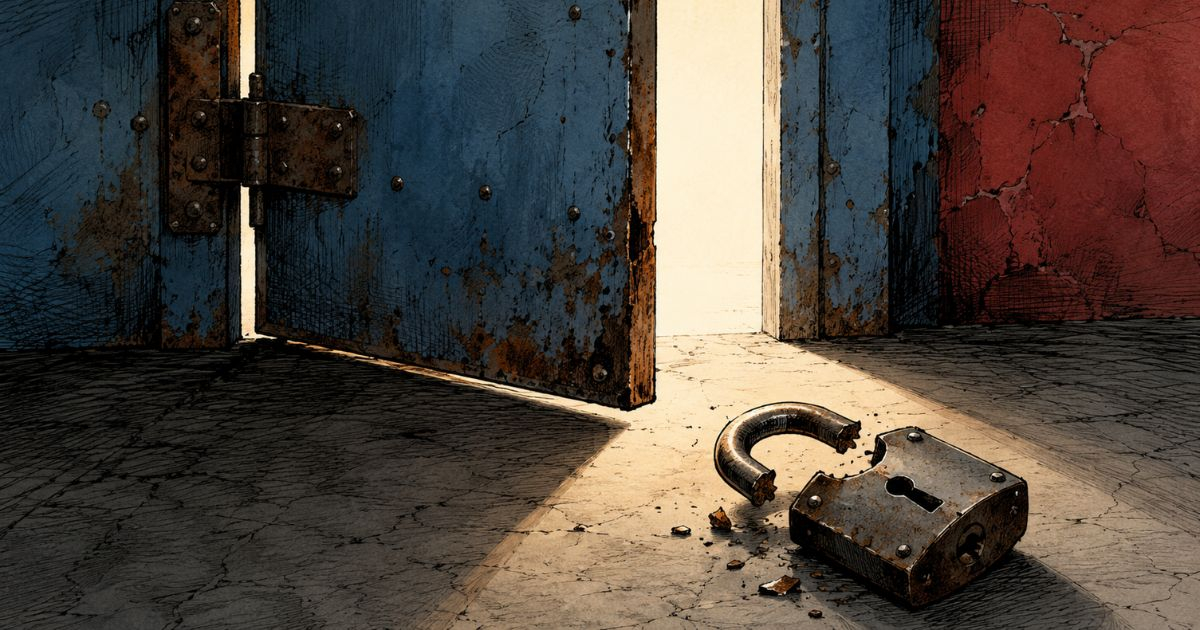
While the Francoist government of Spain used its legality to open the cage, the Cuban dictatorship used its legality to weld the bars.
I, and I believe many exiles and Cubans living outside the island, are willing to embrace a transition to a Spanish-style government. We are not afraid of dialogue or reconciliation. What we won't accept is being sold a cat for a hare.
Because a genuine Spanish-style transition is not what the dictatorship is offering, and it is important to explain why.
What the Spanish Transition really was
Let’s remember how it happened, because "transition" is used too casually. In Spain, there wasn't a transition followed by laws; the laws were the transition.
After Franco's death in 1975, it was the regime's apparatus itself that approved the Political Reform Act in 1976.
The Francoist Cortes —not elected, composed of men from the regime— voted on a text that dismantled the system of which they themselves were a part. Hence the phrase that summarizes that process: Francoism transcended itself "from law to law."
And then came the essential:
- The legalization of political parties, including the Communist Party, the historical enemy of the regime.
- Free and competitive elections in 1977.
- A Constitution in 1978.
The power that had ruled for forty years relinquished control. It submitted to the vote. It accepted that it could lose.
That is a transition. Not a mere change of names at the top. Not an economic opening with the same old leaders in charge. A real, legal, and irreversible relinquishment of political power.
What Cuba offers is not that
In Cuba, nothing like this has happened, and it's not by chance. What we have witnessed are turnovers within the same dictatorship. Fidel handed over power to Raúl. Raúl passed the presidency to Díaz-Canel but retained control of the Party. Later, he gave up the Party as well. The names changed; who is in charge and how they govern did not change.
And when the regime has altered the laws, it has done so in a direction contrary to Spain's. The 2019 Constitution did not open the system: it reinforced it. It declared the "irrevocable" socialist nature and enshrined the Communist Party as the sole leading force. While Franco's government in Spain used its legality to open the cage, the Cuban dictatorship used its own to weld the bars.
Now there is talk of economic reforms, of small and medium-sized enterprises, of private banking, of investment from the exile community. We are being asked to see this as the beginning of change. But let's take notice of what is changing and what is not. The economy is opening up while political power remains intact, in the hands of the same military-business complex as always.
That is precisely the point: as long as power remains concentrated in the same hands, any opening is a concession, not a right.
The model being outlined is not the Spanish one; it is the Chinese or Vietnamese model, where the market opens up but the single party continues to repress, with no elections, no free press, and no legal opposition. The leadership remains in power: it transforms into the owner of the new economy, now protected by foreign capital interested in ensuring that nothing changes politically.
Why does forgiveness require change first?
Here is the crux of the matter, and I want to say it plainly. In order to forgive, we first need to embrace change. If there is no change, there is no forgiveness. And that is not vengeance.
The distinction between justice and vengeance is accurate, and that is precisely why what we seek is justice. Vengeance would mean punishing for the sake of punishment. Justice is demanding that those who have held power for more than six decades acknowledge the harm they have caused, stop doing it, and ensure that it will not happen again. This has a name in any serious process of reconciliation: truth, acknowledgment, and guarantees of non-recurrence. It is not resentment. It is the minimum condition for forgiveness to mean something.
A pardon granted to someone who continues to do exactly the same thing reconciles nothing: it merely whitewashes. Forgiving a regime that continues to imprison, that continues to deny, that has not acknowledged a single one of its wrongs, would be forgiving in vain. It would be declaring a wound closed that the perpetrator intentionally keeps open.
That’s why those who accuse us of being vengeful shift the burden. They ask us, the ones who have been hurt, to forgive first, as a price of entry, when those who have struck for sixty-seven years haven’t lifted a finger. But the first step is not for the victim to take. It belongs to the one who holds the power and caused the harm. This was the case in Spain: the gesture of openness came from those in command. Forgiveness came afterward. Never the other way around.
What we are asking the regime is exactly what Franco's regime did in 1976: to acknowledge that what it has built is negative. To admit that the Cuban political system is bad, that it is not democratic, and that it does not grant rights to Cubans. And that it is the regime itself —just as the Spanish regime did— that creates the laws for its own dismantling: to legalize parties, including the opposition and exile platforms; to call for free and competitive elections; to release political prisoners; to open the press; and to remove that deceptive word, "irreversible," from the Constitution.
Cosmetic changes are not a transition
And here is the reason why I reject what is being offered today. Cosmetic changes are not acceptable, and they are not for a specific reason: they are not indefinite, they are optional. They can roll back whenever they feel like it, just as they have always done.
The Cuban regime has opened and closed its hand so many times that we already understand the mechanism. It decriminalizes the dollar and then hunts it down. It tolerates a market space and then suffocates it. It allows an escape valve and then closes it when the pressure diminishes. Every concession is reversible because none is guaranteed by a law that they do not control. And that is precisely the point: as long as power remains concentrated in the same hands, any openness is a loan, not a right. And what is lent can be taken away.
A true transition is defined by that: by being irreversible. By placing power in a position where the one who rules today can no longer reclaim it at will.
That is what Spain did when it subjected Francoism to a vote and accepted alternation. What Cuba offers is the opposite: changes that depend on the goodwill of those who have spent sixty-seven years demonstrating that they do not possess it, and who reserve the right to backtrack whenever they choose.
We are ready, but truly
Let it be clear, we are not closed to dialogue. We do not want bloodshed, we do not want revenge, we do not want a Cuba of winners and losers. We are willing to reconcile and to transition like Spain. We desire a new Cuba where everyone can participate, including those who are on the other side today.
We will be told that demanding change first is to condemn the transition to never happening, because that leadership will never regret on their own accord. But we do not ask for sentimental regret, nor tears, nor confessions over dinner. Only a concrete legal gesture, like the Political Reform Law of 1976: a legal act that opens the system and is impossible to undo. If that gesture does not come, the problem is not what we are asking for: it is the lack of will from those who prefer to keep ruling rather than returning the country to the Cubans. Let us not be accused of blocking a transition that is them, and only them, who refuse to initiate.
The rest —the economic makeup, the reversible opening, the "let's look ahead" that boldly skips over the acknowledgment of guilt— is not a transition. It is the old dictatorship with new vocabulary, more amiable, more presentable to investors. And to that, with all due respect and the utmost willingness for dialogue, we cannot agree.
Because forgiving without change is not generosity; it is surrender. And we do not ask for vengeance. We simply ask that those who struck us for sixty-seven years finally recognize that what they did was wrong, and show it by relinquishing power. On that day, there will be a transition. And on that day, we will gladly talk about forgiveness.
Filed under:
Opinion article: Las declaraciones y opiniones expresadas en este artículo son de exclusiva responsabilidad de su autor y no representan necesariamente el punto de vista de CiberCuba.