The U.S. Department of the Treasury designated the Ministry of Tourism of Cuba (MINTUR) on the List of Specially Designated Nationals (SDN) this Monday.
The new round of sanctions targeted nine more entities of the Cuban regime, including repressive agencies and state-owned companies.
The measure was announced by the Office of Foreign Assets Control (OFAC) alongside a statement from the Department of State titled “Further Sanctions on the Sources of Funding and Tools of Oppression of the Cuban Regime.”
"The Ministry of Tourism of Cuba (MINTUR) is designated according to article 2(a)(i)(F) of Executive Decree 14404 as a political subdivision, agency, or instrument of the Government of Cuba. MINTUR is the Cuban ministry responsible for regulating tourism both within and outside the country and serves as the main player in the tourism sector outside of GAESA," the statement notes.
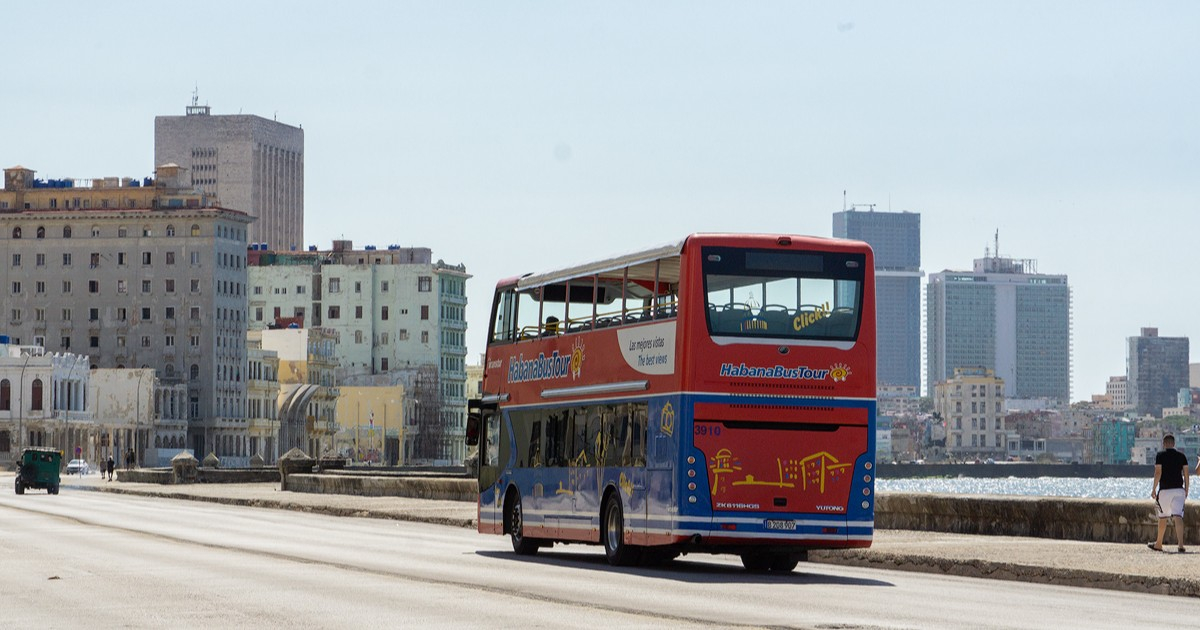
The sanction against MINTUR comes at the worst time for Cuban tourism in decades. During the first quarter of 2026, only 298,057 international visitors traveled to the island, a 48% drop compared to the same period in 2025, with hotel occupancy plummeting to 12.9% and tourism revenue decreasing by 42.4%.
What other entities were sanctioned this Monday?
Among the designated entities are two organizations with a documented history of repression: the Rapid Response Brigades (BRR), created in June 1991, and the Territorial Troops Militias (MTT), founded in January 1980.
The brigades were one of the main instruments of violence during the protests on July 11, 2021, when their members attacked demonstrators with sticks and blunt objects.
The Cuban Revolution Combatants Association (ACRC) was also sanctioned, identified by human rights organizations as participating in acts of repudiation and aggression against activists.
In the economic sector, the list included the Maritime Port Transport Business Group (GEMAR), the Foreign Trade Business Group (GECOMEX), OSDE Caudal S.A., and Antillean Export Corporation S.A. (ANTEX), the latter being directly linked to GAESA according to the SDN list itself.
The list is completed by two companies in the fuel sector: COREYDAN S.A. and ENETEC S.A.
What do these U.S. sanctions imply for Cuban institutions?
According to the statement itself, the practical consequences for the sanctioned entities are extensive and go beyond a mere "blacklist." These are the main implications:
1. Freezing of assets in the United States
All assets, bank accounts, investments, and other properties of the sanctioned entities that are in the United States or under the control of U.S. persons or companies are frozen. These assets must be reported to the Office of Foreign Assets Control (OFAC).
2. Blocking of linked companies
All companies that are 50% or more owned, directly or indirectly, by one or more of the sanctioned entities are also blocked, even if they are not explicitly listed.
3. Prohibition on doing business with Americans
No U.S. citizen, U.S. company, or person located in U.S. territory can conduct transactions with these entities unless there is a specific license from OFAC.
The prohibition covers payments, contracts, provision of services, supply of goods, and receipt of goods or services from those sanctioned.
4. Risk for foreign companies and banks
The statement warns that non-U.S. companies and financial institutions that engage with the sanctioned entities may be exposed to U.S. sanctions.
This risk is particularly high for those operating in sectors deemed strategic by Executive Order 14404, such as energy, defense, metals and mining, and financial and security services.
5. Difficulties in accessing the international financial system
Although the sanctions are American, in practice, many international banks avoid doing business with entities on the SDN list to avoid exposure to secondary sanctions or losing access to the U.S. financial system.
6. Prohibition on aiding in the concealment of assets
The statement indicates that transferring assets to another country or attempting to return goods to a sanctioned entity may also incur liability and expose third parties to sanctions.
7. Inclusion on the SDN List
The entities are added to the Specially Designated Nationals and Blocked Persons List (SDN), one of the most restrictive sanctions lists of the Department of the Treasury.
Being on that list often leads to banks, insurance companies, suppliers, and international business partners suspending commercial relationships, even when they are not legally required to do so.
8. Possibility of requesting exclusion
Sanctions are not necessarily permanent. Entities can request their removal from the SDN List through the OFAC administrative procedure if they believe they meet the legal requirements for such a request.
In practical terms, MINTUR may find greater difficulties in conducting international financial transactions, contracting services, or signing agreements with companies that have exposure to the U.S. market.
What other institutions and individuals have been sanctioned to date?
This new round of sanctions is part of a sustained offensive that began with the signing of the Executive Order 14404 by President Donald Trump on May 1, 2026, which expanded the legal framework for sanctioning strategic Cuban sectors and established a regime of secondary sanctions against foreign companies that do business with designated entities.
Since then, the designations have been progressive: on May 7, GAESA and its president Ania Lastres Morera were sanctioned, accused of managing illicit assets valued at up to 20 billion dollars.
On May 18, the United States imposed sanctions on the General Directorate of Intelligence (DGI), the Ministry of the Interior (MININT), and the Revolutionary National Police (PNR).
On June 4, the Ministry of the Armed Forces (MINFAR), the Committees for the Defense of the Revolution (CDR), the ICAP, the leader Miguel Díaz-Canel, Alejandro Castro Espín —former head of Cuban intelligence services and son of Raúl Castro— and other individuals from their circle were included in the OFAC list.
On June 11, the state oil company CUPET was appointed; and on the 23rd, several state entities controlled by GAESA, including the Banco Financiero Internacional S.A. (BFI) and RAFIN S.A., were designated.
In total, the Trump administration has accumulated more than 240 restrictive measures against the Cuban regime since January 2026, consolidating maximum pressure on Havana across all economic, military, and security fronts.
Filed under: