Related videos:
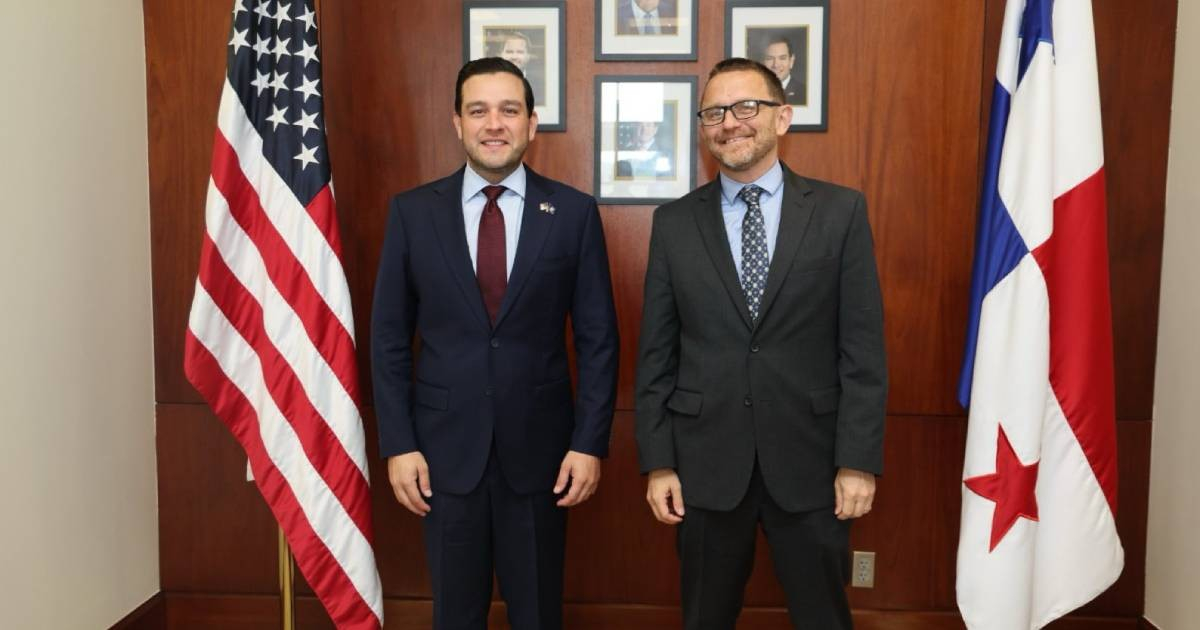
The United States Ambassador to Panama, Kevin Marino Cabrera, held a meeting on Monday with Samuel Parker, Deputy Assistant Secretary for Threat Finance and Sanctions at the State Department, to strengthen coordination with Panamanian authorities and to warn about the risks of facilitating financial operations linked to the Cuban regime.
After the meeting, Cabrera issued a message aimed at banks and companies in the region. "Banks and foreign businesses must be aware of the risks involved in facilitating sanctions evasion," the diplomat wrote on his account on the social network X.
Cabrera added that, under the leadership of President Donald Trump, "economic security is national security" and explained that the new sanctions aim to "cut off the illicit flows of money that help finance the regime's repression."
Parker's visit is part of the strategy with which Washington has increased the pressure on the Cuban government during 2026, combining new economic sanctions with diplomatic efforts directed at countries deemed strategic for the regional financial system.
Panama, a key point in Washington's strategy
The meeting is particularly significant because Panama has historically been a jurisdiction used by companies linked to the Cuban economic and military apparatus to conduct international operations.
Among the most well-known cases are FINCIMEX (Financiera Cimex S.A.), established in Panama since 1984, and Kave Coffee S.A., operator of the Cubita brand, both added by the Office of Foreign Assets Control (OFAC) of the U.S. Department of the Treasury to its list of sanctioned entities in November 2020.
The Trump administration views preventing the use of third countries to circumvent sanctions as an essential component of its policy towards Cuba.
Internationally applicable sanctions
The main instrument of this strategy is Executive Order 14404, signed by Trump on May 1, 2026, which expanded the restrictions against entities controlled by the military conglomerate GAESA and included the possibility of applying secondary sanctions.
Under this mechanism, banks, companies, or foreign individuals engaged in certain transactions with blocked entities may face restrictions imposed by the United States, including access to the U.S. financial system.
The deadline set by Washington for foreign companies to cease operations with GAESA expired on June 5, after which the U.S. administration has intensified its contacts with governments and international partners to warn about the consequences of maintaining trade relations with sanctioned entities.
In that context, on June 23, Secretary of State Marco Rubio reiterated that "anyone providing services to these sanctioned actors risks being sanctioned themselves," after announcing new measures against the International Financial Bank (BFI) and RAFIN S.A.
In recent months, several foreign companies have announced changes in their operations related to Cuba, while others are reviewing their business ties with entities included on the U.S. sanctions list.
The meeting held this Monday in Panama City marks a new step in Washington's diplomatic strategy to reinforce the enforcement of those measures from one of the main financial and logistical hubs in Latin America.
Filed under: