Related videos:
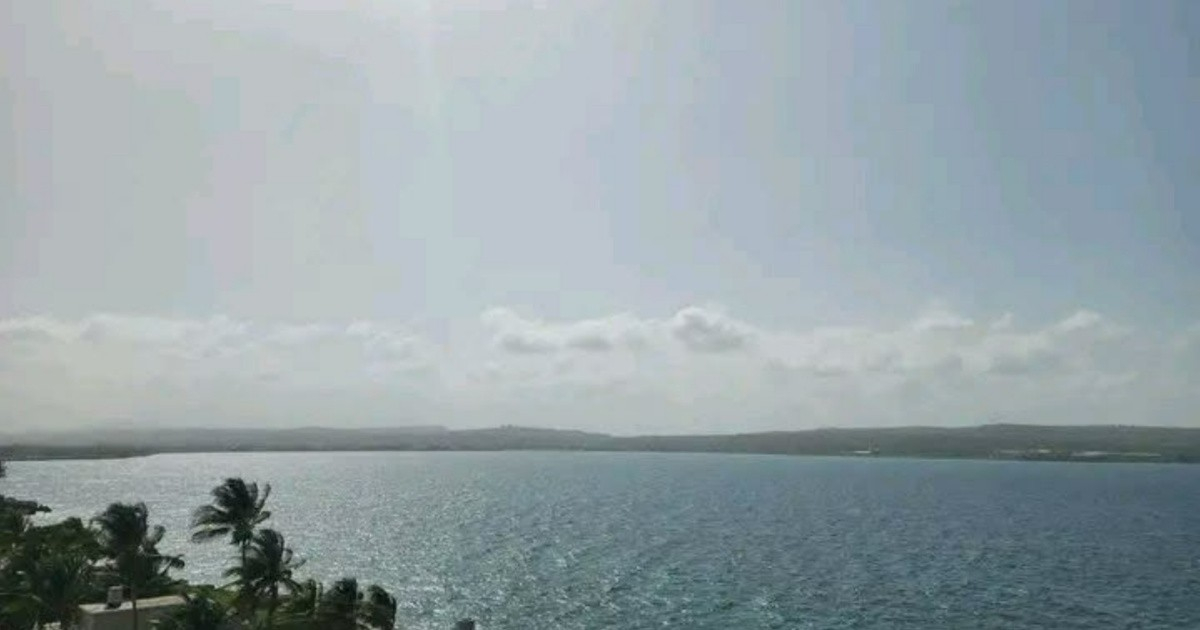
The sky over Matanzas woke up this Sunday with a whitish hue and a significant reduction in visibility, a direct consequence of the Saharan dust cloud that blankets the western half of Cuba following the most intense episode of the 2026 season, documented by Periódico Girón based on the report from meteorologist Henry Delgado Manzor.
On Saturday, July 11, Cuba experienced the highest concentration of Saharan dust recorded so far in 2026, affecting the entire island from east to west. The meteorologist Rubén Capote described it as "the highest concentration of Saharan dust we have seen so far this season."
This Sunday, the main core of the cloud began to move towards Florida and the Yucatán Peninsula, but Matanzas and the rest of the western half of the country continued to be under its influence.
The maps published by meteorologist Vladimir Leon, from the Meteorología_Cuba page, showed values of up to 800 µg/m³ at the surface and concentrations of up to 1,500 µg/m³ at altitudes between one and three kilometers. "The first graph corresponds to the concentration at the surface and is quite dense. The second and third graphs correspond to an altitude between one and three kilometers where the concentrations of dust are higher and denser," Leon explained.
The presence of dust also reduced precipitation to very isolated showers in parts of the south, from Matanzas to Sancti Spíritus, remaining scarce in the rest of the country.
The phenomenon occurs every summer in the Caribbean. Clouds form from sandstorms in the Sahara Desert and the Sahel region of Africa, and they are propelled by the trade winds westward across the Atlantic, reaching the Caribbean Sea, Central America, and even the southeastern United States. They can rise to altitudes of between two and seven kilometers.
From a health perspective, this episode represents a real alert for thousands of Cubans. The arrival of these concentrations leads to a decrease in air quality and can exacerbate allergic problems, irritations in the eyes, skin, and mucous membranes. The most vulnerable groups are individuals with asthma, chronic bronchitis, or allergies, children under four years old, seniors over 65, and pregnant women. The peaks of bronchial asthma in Cuba during the summer have been linked to this phenomenon since at least 2018.
Meteorological authorities recommend wearing masks, avoiding prolonged outdoor activities, keeping doors and windows closed, staying hydrated frequently, and rinsing eyes and nasal passages with clean water. "It is logical to protect oneself, especially those who suffer from respiratory conditions and those who work outdoors or engage in other activities," stated Leon.
The 2026 season began on June 3, when the meteorologist from INSMET, Raydel Ruisanchez, alerted about the first significant wave that affected eastern Cuba. On July 9, the highest columns of the year reached Florida. Just two days later, Cuba experienced the highest peak seen all year.
Meteorologist Vladimir Leon warned that "for the rest of the week, another invasion of this dust could arrive," keeping the population of Matanzas and the rest of western Cuba on alert.
Filed under: