Related videos:
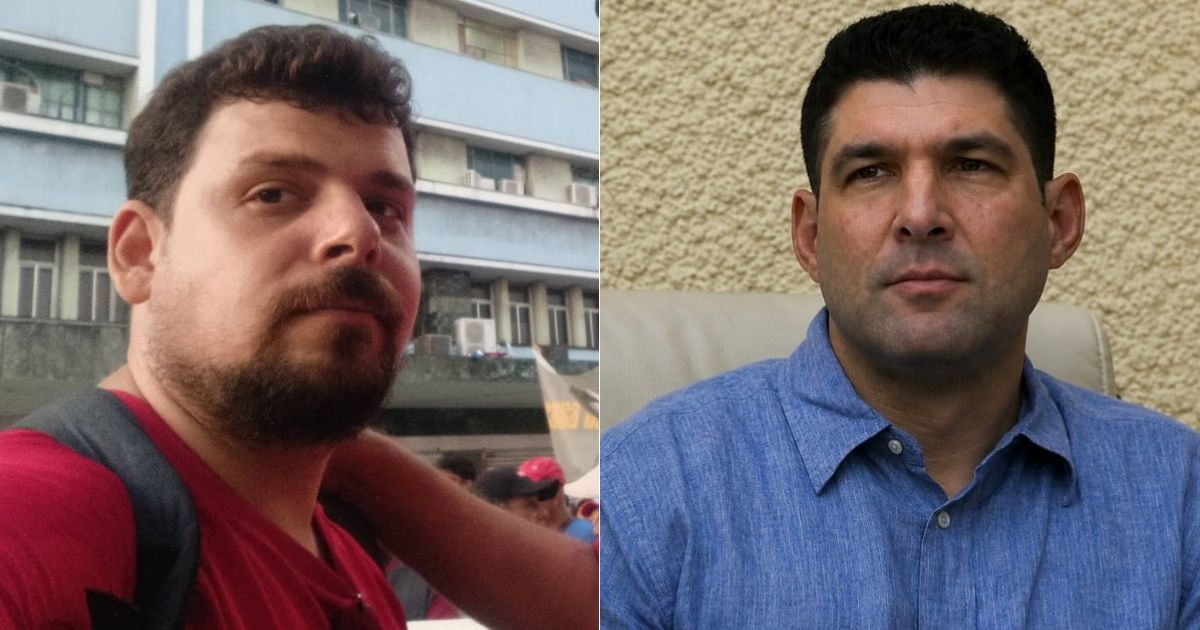
The writer and former television director Yin Pedraza Ginori published this Saturday, exactly on the fifth anniversary of the 11J, a fictional account on his Facebook imagining how Raúl Guillermo Rodríguez Castro —“El Cangrejo”, the grandson of Raúl Castro— reacted upon reading the article that Michel Torres Corona dedicated to him on the Uruguayan site Mate Amargo. The verdict from the “little prince crab heir”: three letters scrawled in anger in the corner of the paper: PLP. “Break His Legs.”
The scene begins at four in the morning on July 11, a significant date that in the account justifies the early wake-up call because, for those in charge, “it implies an extra effort in terms of controlling the situation.” The Cangrejo de Pedraza Ginori arrives at the Palacio de las Convenciones—to the office that “now belongs to him,” the same place where his grandfather announced Fidel's death—dressed in artisanal selvedge Italian denim jeans, a Hugo Boss t-shirt, and Hermès sneakers worth 890 euros. This is nothing new; it has already been seen in the real interview the character gave to USA Today on July 6, where he declared his willingness to negotiate with Trump over the future of Cuba, showcasing the same outfit along with a Rolex Submariner on his wrist.
On the historical table, Secretary Yunisleidys —a name chosen by Pedraza Ginori with sarcastic precision— has placed a printed copy of the article "The Crab and the Vampire," signed by Torres Corona and published on July 9th in Mate Amargo. The text leaves "Raulito" speechless: it calls him "a Cuban proto-bourgeois, fond of showy bars and with the usual vassal aesthetics of the nouveau riche," denounces that "photos of him in similar settings, exhibiting casual vanity, circulated on digital networks," and reproaches him for "mocking officials, men and women who sacrifice daily to keep the country afloat, while flirting with enemies."
When he finishes reading the "tome"—a word that Pedraza Ginori uses with all the intention in the world—El Cangrejo hurriedly jots down the initials and signs it. At noon, leather portfolio by Salvatore Ferragamo under his arm, he goes to his daily meeting with his grandfather and lays the papers before him: "This is a piece written by a certain Michel who presents a television program, tearing me apart." The elderly general examines the initials and asks, "I see you put PLP." The grandson’s response leaves no room for doubt: "Yes, I think 'Break His Legs' is the least he deserves."
Raúl Castro, in Pedraza Ginori's account, not only approves but also expands the scope of action: "You're right. You can't be soft with these people. Moreover, find out who is backing him and take them down as well." A familiar threat for anyone who understands how the Cuban State Security operates, but here presented in a tone reminiscent of a farce, with the same casualness as ordering dessert.
What makes the satire especially sharp is that Torres Corona is neither a dissident nor an exile: he is the host of the program "Con Filo" on Cuban television. He was already censored in April 2026 when he attempted to criticize Sandro Castro—"the Vampire," Fidel's grandson—on air following his interview with CNN. This time, he turned directly to a Uruguayan portal to ask what the official television prohibits him from asking: “What justifies his impunity?”
The week preceding the chronicle was marked by unprecedented internal turmoil. Singer-songwriter Israel Rojas publicly apologized for being "naive" regarding the privileges of the elite. The mother of the head of Communication at the Palace of the Revolution demanded on Facebook that someone "silence" Raúl's grandson. And Prime Minister Manuel Marrero accused critics of executing "a well-designed plan to generate uncertainty and distrust," labeling dissenting voices as "reputation assassinations." All of this while the Cuban people continue to suffer without power, food, and answers.
Pedraza Ginori, who directed and wrote for Cuban television between 1965 and 1995 before going into exile, has been publishing chronicle-like posts on social media for years, infused with a sharp sense of humor that portray power from within with a discomforting acuity, precisely because it feels so plausible.
Filed under: