Related videos:
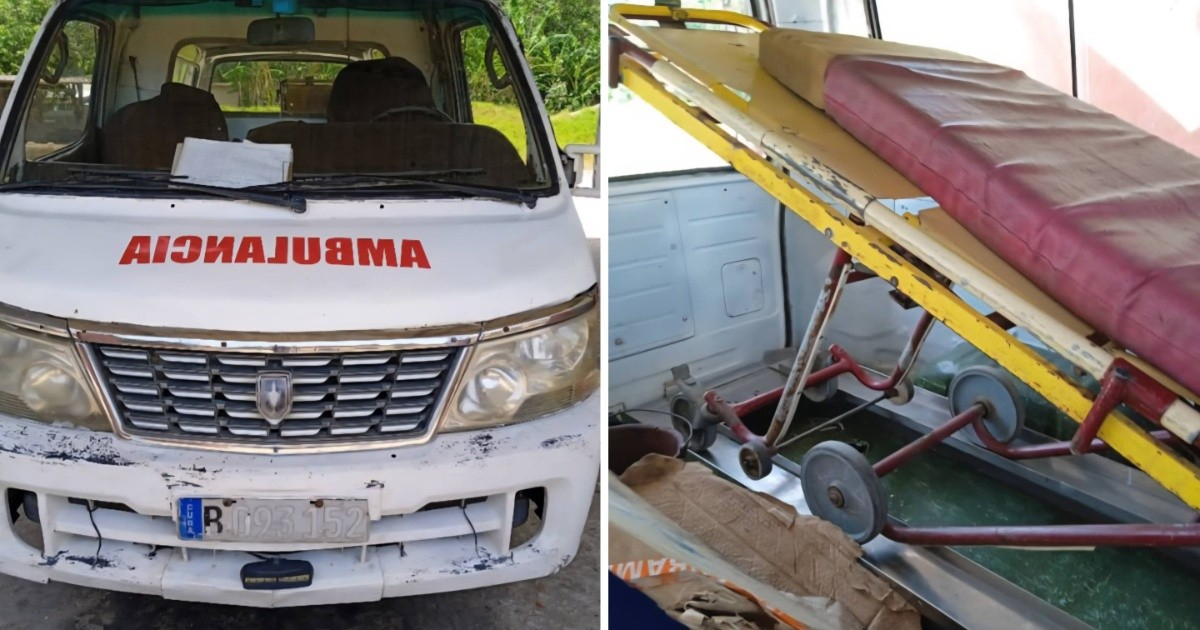
A Cuban citizen identified as Juan Carlos León revealed this Sunday on social media that he and his son had to pay out of their own pocket for a broken part of a state ambulance in order to take his wife for oncology treatment, in a testimony collected by the independent journalist José Luis Tan Estrada.
According to León's account in a Facebook comment, the ambulance had been sitting idle in the repair shop for over six months without the State fixing it, while his wife needed to frequently visit the oncology center for radiation and IV treatments.
"If I tell you something, this ambulance a few years ago was in the workshop for over 6 months, and my wife was sick. We had to go frequently to the oncology center for radiation and treatment, and my son and I had to buy the broken part ourselves so we wouldn't miss our appointments at the oncology center, and thus it could serve us," wrote the citizen.
Tan Estrada, a journalist from Camagüey exiled by the regime who documents the health crisis on the island, described the situation with a straightforward phrase: "The height of absurdity. A citizen had to purchase the parts that correspond to the State in order to transport his wife."
The testimony is not an isolated case. The collapse of Cuba's ambulance service is a structural problem that has worsened over the years.
In Artemisa, Jinbei brand units remain out of service because replacement parts are unavailable, and in Havana there is a reported graveyard of stranded ambulances where dozens of vehicles remain inoperable due to a lack of tires and maintenance resources.
The data from 2026 confirms the magnitude of the disaster: in Matanzas, only 16 out of the 54 ambulances needed are operational, and in Pinar del Río, barely 12 units are in operation.
Due to its inability to sustain the system, the regime has begun to require the private sector to finance the purchase of parts and fuel.
In May of last year, the Center for Neurosciences of Cuba sought private support to cover the maintenance of its transport fleet, implicitly acknowledging that the State cannot manage it alone.
The crisis is hitting cancer patients particularly hard. Approximately 60,000 people in need of radiotherapy are not receiving treatment in Cuba, and between 12,000 and 16,000 requiring chemotherapy are also experiencing disruptions in their care due to a lack of transportation and power outages that halt medical equipment.
The picture is even more grim considering that in April 2026, the basic medication list had a coverage of only 30%, with 461 out of 651 essential drugs out of stock in state pharmacies.
In November 2025, a video was recorded showing a patient being transported in a chair due to a lack of stretchers in a Cuban hospital, another image of the same collapse that forces citizens to rely on their own resources for what the State should ensure.
Filed under: