
Related videos:
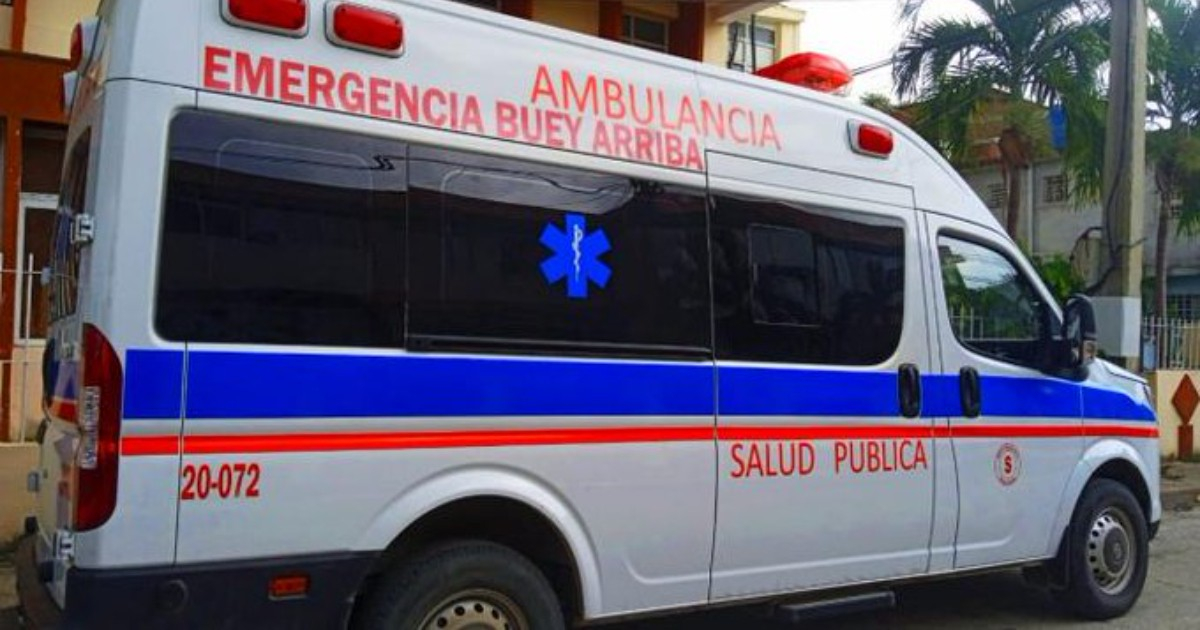
The province of Granma received four new ambulances manufactured in China, purchased by the Ministry of Public Health using funds from the state budget for 2026, as reported by the official organ of the Communist Party of Cuba.
The vehicles will be allocated to the municipalities of Guisa, Bartolomé Masó, Buey Arriba, and Media Luna, all of which are rural and mountainous, as confirmed by the provincial health director, Yelenis Elías Montes.
Ángel Suárez Vázquez, director of the Health Assurance and Support Unit in the province, specified that "each unit had an approximate cost of 1.3 million pesos, with a total investment of 5.2 million."
The equipment in each unit includes oxygen, two stretchers, accessories for IVs, a lighting system, and a compartment for medications, as paramedic José Martín Guerra detailed: "Everything is very comfortable."
The delivery, however, barely scratches the surface of a severe structural deficit. With the new additions, the province has a total of only 17 active ambulances across its territory, according to Ignacio Manuel Collada Reina, head of the Transportation Department of the Health Assurance and Support Unit.
In January of this year, Granma was operating with 16 ambulances against an estimated need of 54, which represents less than one third of the minimum required fleet, a deficit that is echoed across the country: Cuba only has 39.6% of the emergency vehicles needed at the national level.
Collada himself admitted that in some municipalities, they hadn't received a new ambulance in about a decade: "New, like the ones they are receiving now, they didn't receive ten years ago."
The four units aim to ease the burden on the regional bases of Bartolomé Masó and Media Luna, the municipalities that evacuate the highest number of medical cases to hospitals in Manzanillo.
This lot is the second delivery received by Granma this year. In January, four other ambulances arrived—funded by the 2025 state budget—for the municipalities of Bayamo, Jiguaní, Manzanillo, and Niquero, as part of a national gradual distribution program that has also benefited Holguín, Pinar del Río, Matanzas, and Cienfuegos.
In addition to the vehicles, another problem remains to be addressed: training new personnel—nurses and paramedics—in the beneficiary municipalities to operate the vehicles.
The health landscape in which these reports are situated is bleak. In February of this year, the Minister of Public Health, José Ángel Portal Miranda, acknowledged before Parliament that the Cuban health system was "on the brink of collapse", with power outages lasting up to 20 hours a day, a shortage of fuel, more than 96,000 postponed surgeries, and only 30% of the basic medication kit available in pharmacies and hospitals.
Recent analyses describe these batches of ambulances as small patches in the face of the magnitude of the problem, the result of decades of accumulated deterioration in the Cuban healthcare system.
Filed under: