
Related videos:
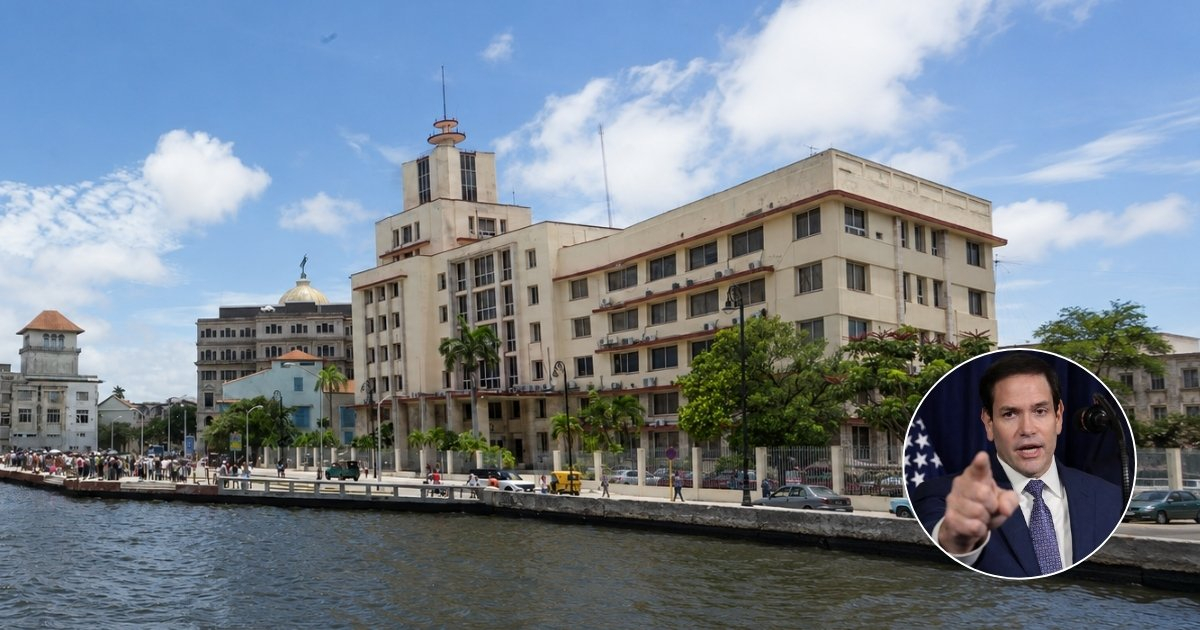
The U.S. Secretary of State, Marco Rubio, issued a strong warning on Tuesday to banks, companies, and investors worldwide: maintaining business relations with entities linked to the Cuban military conglomerate GAESA may have consequences.
The warning accompanied a new round of sanctions announced by the administration of President Donald Trump against five Cuban entities and a member of the Castro family circle, as part of the economic pressure strategy promoted by Washington against the regime in Havana.
Foreign banks and other companies providing services to these entities must immediately freeze those activities, Rubio stated while presenting the new measures.
Although the announcement included sanctions against specific companies, the message was aimed much broader than Cuba.
The State Department made it clear that any foreign person or entity conducting operations with companies sanctioned under Executive Order 14404 could be exposed to similar measures.
The warning particularly targets actors operating in sectors identified by Washington as sources of funding for the Cuban regime, including financial services, mining, metals, energy, defense, and security.
According to the official statement, foreign banks and other financial institutions must act with extreme caution in any transaction involving the designated entities.
U.S. authorities also warned of potential risks for those attempting to transfer assets or facilitate operations aimed at benefiting sanctioned individuals or companies.
Three of the entities included in the new round of sanctions —Almacenes Universales S.A. (AUSA), RAFIN S.A., and Banco Financiero Internacional (BFI)— are part of the business network linked to GAESA, the conglomerate controlled by the Cuban Armed Forces that Washington considers one of the main economic pillars of the regime.
However, beyond the new appointments, the warning issued by Rubio comes at a time when several foreign companies have already begun to withdraw from Cuba to avoid exposing themselves to U.S. sanctions.
In recent weeks, hotel chains such as Meliá and Iberostar announced their departure from several hotels managed alongside entities linked to GAESA.
They were joined by Blue Diamond Resorts and Aston Hotels, which also reduced or canceled operations on the island in response to the tightening of measures adopted by Washington.
The pressure has not been limited to the tourism sector. The Canadian Sherritt International, one of the regime's most important foreign partners in the mining and energy sectors, announced changes to its operations in Cuba amid the new landscape of sanctions.
In the financial sector, entities such as Banco Sabadell and other operators linked to businesses with the island have also begun to reevaluate their exposure to the Cuban market.
The message sent this Tuesday by Rubio seems to be addressed specifically to the companies that still maintain relationships with structures controlled by the Cuban state and military.
Foreign banks and other companies providing services to these entities must immediately freeze those activities, stated the Secretary of State.
The warning is particularly significant as it comes just days after the regime approved a package of 176 economic reforms aimed at attracting foreign investment, expanding access to financing, and liberalizing various sectors of the economy.
While Havana tries to position itself as a more attractive destination for international business, Washington is raising the stakes for any company that operates with entities considered part of the regime's economic network.
Beyond the sanctions announced against AUSA, RAFIN, and BFI, the message from the Trump administration is that the cost of doing business with GAESA may continue to rise.
For many foreign investors, the recent experience of hotel chains, banks, and mining companies that have begun to withdraw from Cuba serves as a warning as clear as the sanctions themselves.
Filed under: