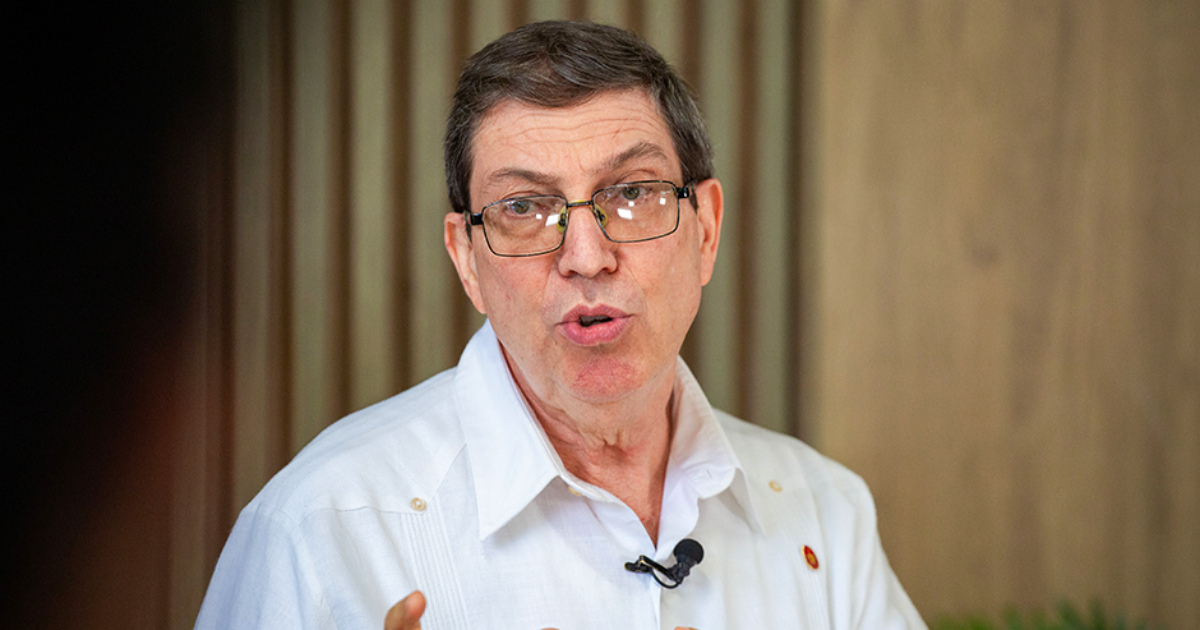
The Cuban Foreign Minister Bruno Rodríguez Parrilla accused the U.S. government on Thursday of using leaks to the press as part of a “psychological war” aimed at gauging public support for a potential military action against Cuba.
In a message posted on his X account, Rodríguez warned that an attack by Washington on Havana “would cause a bloodbath.”
The Cuban chancellor directly responded to a report by CBS News on Wednesday, which revealed that Pentagon planners evaluated military options against Cuba in late June, including an air assault led by the 101st Airborne Division.
"Once again, U.S. media outlets are joining the campaign of aggression threats by the U.S. government against Cuba," wrote the foreign minister. He described the alleged leaks as a tool to gauge American public opinion regarding what he termed a "military adventure."
Rodríguez also rejected the idea that Cuba poses any danger to Washington: "Cuba is not a threat, and US intelligence agencies know it. How could it be a threat to the world's greatest military and nuclear power?"
This statement aligns with what is stated in the 2026 Annual Threat Assessment of the U.S. Intelligence Community, which does not classify Cuba as a direct military threat, although it does identify it as a platform of strategic interest for China, Russia, and Iran.
The acting spokesperson for the Pentagon, Joel Valdez, stated that "we do not comment on hypothetical military operations," and officials quoted by CBS News clarified that armed action is unlikely in the short term, as the offensive capabilities of the U.S. remain focused on the Middle East.
The Cuban chancellor also directed his criticisms towards political figures in South Florida: "The fabrication of deceitful pretexts against Cuba from South Florida is the perfect business for a group of discredited and corrupt politicians, who continue to profit from the suffering of the Cuban people."
The statements made this Thursday are part of a sustained escalation of tensions that has intensified throughout 2026.
The Trump administration has combined increasing economic sanctions—especially against GAESA, the military conglomerate that controls nearly 70% of the Cuban economy—with a maximum pressure rhetoric.
The Secretary of State Marco Rubio warned the Cuban leadership that there is still time to choose "real reforms, peace, and prosperity, before it is too late."
Related videos:
Filed under: