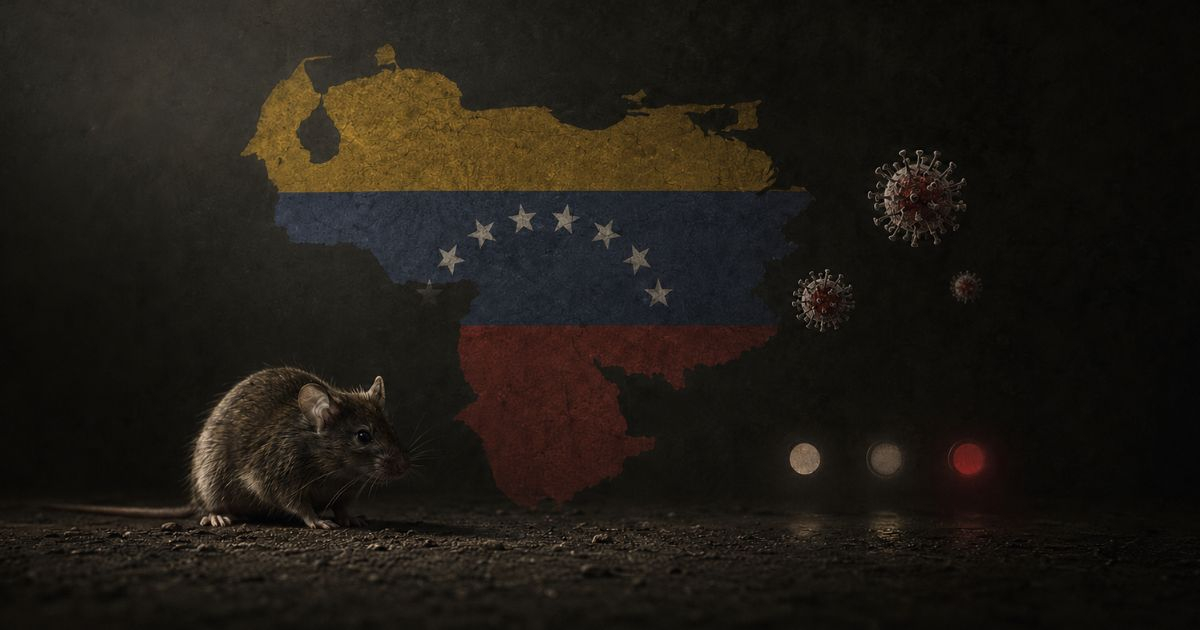
The Ministry of Popular Power for Health of Venezuela confirmed this Tuesday the death of three individuals diagnosed with hantavirus in the state of Anzoátegui, in the eastern part of the country, through an official statement published on social media.
“This virus is transmitted by rodents in rural and agricultural areas, primarily by inhaling particles of urine, feces, or saliva in enclosed spaces,” the ministry specified.
Health authorities noted that there is no scientific evidence of person-to-person transmission in Venezuela.
The ministry assured that the National Public Health System "remains deployed and operational" and that the final results of the investigation will be communicated through official channels, although no timeline was set.
According to El Diario, the deceased were identified as doctors Jhovanny Silva, Rafael Díaz, and Cecilia Chávez.
Regional authorities stated that the deceased had received care for more than seven days in private clinics before being admitted to Dr. Luis Razetti Hospital in very compromised conditions, and that there was no evidence linking the cases epidemiologically.
In parallel, the same statement reported the death of two medical professionals in the state of Barinas, the causes of which are still under investigation.
The ministry clarified that these deaths are not related to the confirmed hantavirus cases in Anzoátegui and that they are "isolated events that do not pose a risk to the community at large."
The Barinas Medical Association demanded an "exhaustive and scientifically rigorous" epidemiological investigation, as well as protective equipment and biosafety supplies for healthcare staff.
On its part, the Venezuelan Medical Federation supported the regional guild's alert and demanded greater epidemiological transparency.
Furthermore, the Health Director of Barinas, José Fajardo, dismissed the existence of an epidemiological health alert.
The authorities indicated that the National Public Health System remains deployed and operational, and that the definitive results of the investigation will be communicated in a timely manner through official channels.
The documented history of hantavirus in Venezuela dates back to the 1990s. A scientific review places the first known human case in 1993 in Guanarito, Portuguesa state.
Additionally, the Ministry of Popular Power for Health indicates that during studies conducted between 1994 and 1999, two Venezuelan hantaviruses, Caño Delgadito and Maporal, were isolated in rodents.
The organization includes Anzoátegui among the states where the presence of its natural reservoirs has been documented.
These viruses are different from the Andes virus, responsible for the international outbreak linked to the MV Hondius cruise.
The World Health Organization declared that outbreak contained on July 2, 2026, after accounting for 13 cases —12 confirmed and one probable— and three deaths.
The Andes virus is the only hantavirus for which limited human-to-human transmission has been documented, usually following close and prolonged contact
The announcement comes in a health and humanitarian context already deteriorated: the toll from the earthquakes that shook Venezuela on June 24 has risen to more than 5,200 deceased.
Related videos:
Filed under: