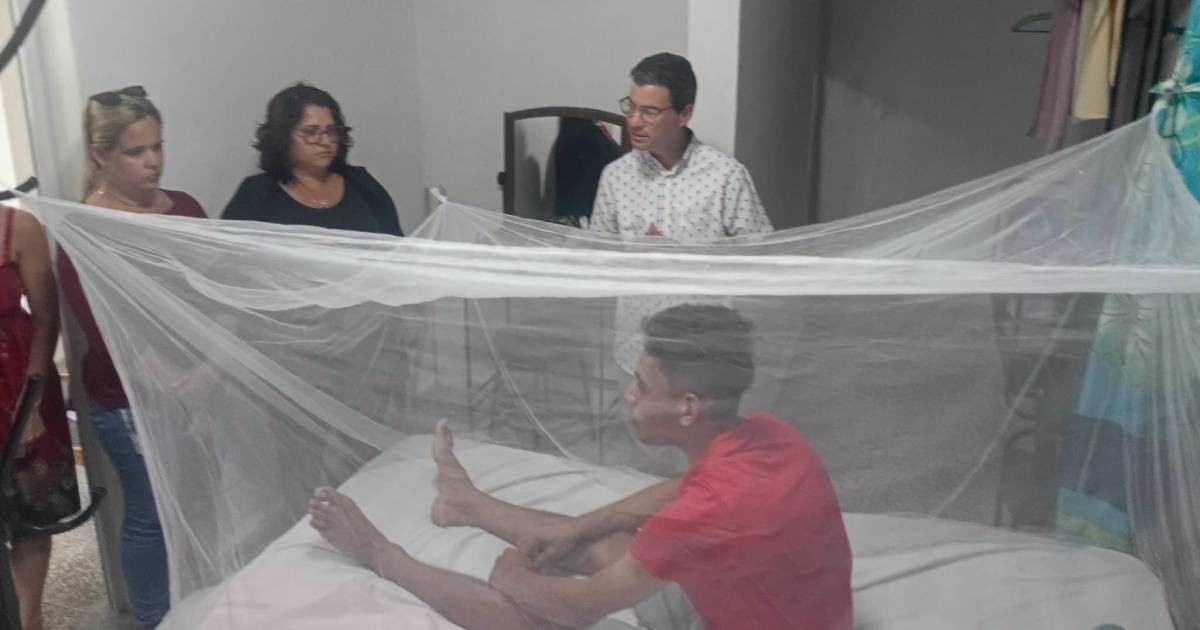
The municipality of Ranchuelo, in Villa Clara, is facing a concerning outbreak of hemorrhagic dengue, which has forced health authorities to deploy an emergency operation, while residents report a lack of water, prolonged blackouts, and a shortage of resources to care for the sick.
The situation worsened this week when provincial microbiologists confirmed the simultaneous circulation of serotypes II and IV of the dengue virus, a combination that, according to health authorities, can lead to a rapid deterioration of the patient and endanger their life.
"In hours, they can worsen the patient's condition and put their life at risk," specialists warned during a statement broadcast by official media.
The provincial director of Hygiene and Epidemiology, Dr. Yarelyn Lorenzo Oyarzabal, reported that authorities have been working in the municipality for over 15 days due to an increase in individuals with febrile syndrome and specified that 12 patients are currently hospitalized, in stable condition, at the isolation center set up in the Las Tecas motel.
According to official data, more than 10,300 inspections have been carried out, and control measures cover 114 blocks, encompassing a population of 5,286 people. On Monday alone, 562 homes were fumigated, and abate was applied in water storage containers to combat the reproduction of the Aedes aegypti mosquito.
Complaints from neighbors contradict the official version
While authorities highlight the health operation, residents of Ranchuelo describe a very different reality on social media.
One of the comments posted on Facebook claims there have been five deaths so far, 14 patients in critical condition, and between 40 and 50 new positive cases daily. These figures have not been confirmed or denied by the Ministry of Public Health.
There are also numerous reports about the conditions of the Las Tecas motel, which has been turned into an isolation center.
«They have opened the Las Tecas motel to isolate people, but there are still no resources there, neither water nor electricity,» wrote a neighbor on the page of the official media Soy Villa Clara.
The fumigation efforts have also drawn criticism. Several residents claim that the operations are conducted selectively and exclude homes where confirmed cases of dengue exist.
"They came to fumigate the village, but they didn’t fumigate the homes where there were dengue cases," reported another user.
Blackouts and a shortage of medications worsen the emergency
The prolonged power outages represent another obstacle to controlling the outbreak.
According to local residents, Ranchuelo receives only about two hours of electricity a day, a situation that hinders the use of fans, forces people to store water in containers—encouraging the proliferation of the mosquito that carries diseases—and complicates the preservation of medications and other essential supplies.
This is compounded by the shortage of treatments. Social media also circulated the case of a patient from Ranchuelo admitted to the Celestino Hernández Hospital in Santa Clara, who needed tranexamic acid, a medication that, according to the report, could only be obtained in the informal market for 3,000 pesos per vial.
A situation that raises concern at the national level
The outbreak occurs against a backdrop of growing health concerns in Cuba. In June of this year, the Ministry of Public Health warned about the risk of a dengue epidemic after confirming the simultaneous circulation of all four serotypes of the virus in the country.
According to data from the Pan American Health Organization (PAHO), Cuba ended 2025 with more than 81,900 cases of dengue and chikungunya, and at least 65 deaths associated with both diseases.
Villa Clara had faced a similar situation in October 2025, when the provincial government activated an emergency plan in response to simultaneous outbreaks of dengue, chikungunya, and the Oropouche virus, with 14 severe cases and at least one death from hemorrhagic dengue in the municipality of Cifuentes.
In light of the current situation, Dr. Lorenzo Oyarzabal announced that all residents of Ranchuelo will be screened to detect new cases early and urged residents of Manicaragua, Santa Clara, Placetas, and Sagua la Grande to seek health services immediately if they experience any feverish symptoms, due to the risk of spread to neighboring municipalities.
Related videos:
Filed under: