
Related videos:
The United Nations Development Programme (UNDP) and the Office of the Historian of the City of Havana launched a two-year project this week aimed at improving the management of plastic waste in the San Isidro Popular Council in Old Havana, with funding from the Spanish Agency for International Development Cooperation (AECID), according to various media reports.
The initiative, announced by UNDP Cuba through its website and social media profiles and reported by the Cuban News Agency, is titled "Local Solutions for Plastic Waste Management in the Prioritized Conservation Area of Havana" and is part of the Ecological Transition Program (PROTEC) of AECID.
The project will primarily be developed in San Isidro, described as one of the most vulnerable areas of the capital in terms of waste generation, with a population of 11,840 people.
The planned actions include strengthening institutions, promoting public-private partnerships, training key stakeholders, and creating spaces for community participation. According to the UNDP, the initiative incorporates "an approach of equity and accessibility, with a focus on women, youth, and people with disabilities, groups that face the greatest barriers to benefiting from ecological transition processes."
The stated objective is to build a replicable model for the sustainable management of plastic waste in heritage urban environments that, according to its promoters, "contributes to improving environmental quality, public health, and local economic development."
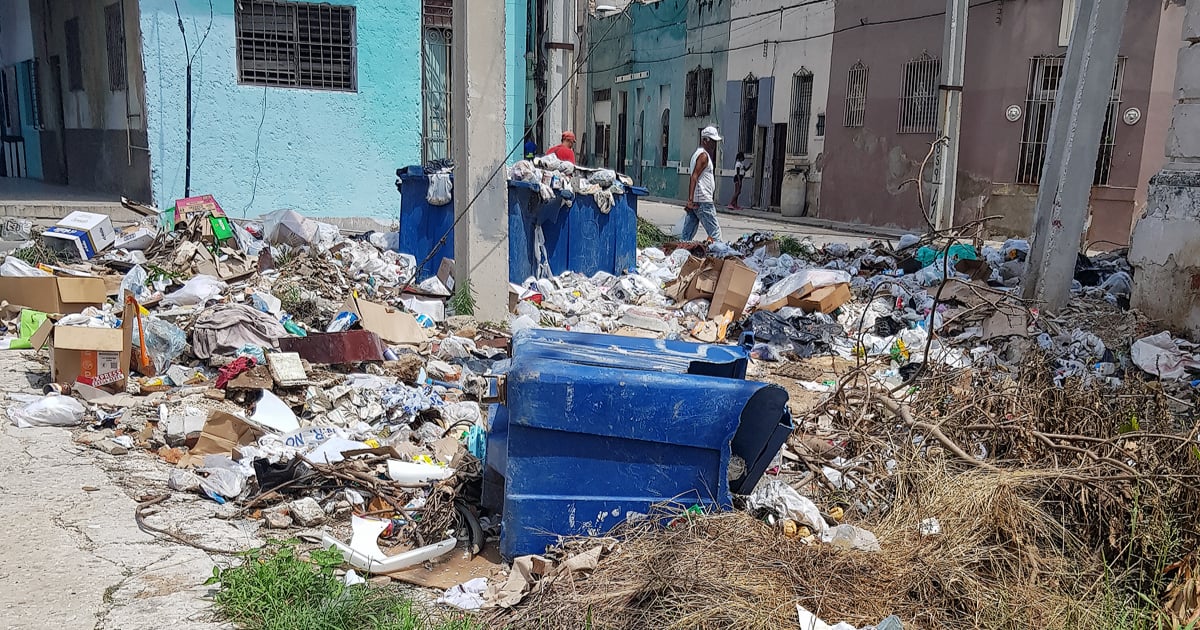
The announcement comes at a time when the garbage crisis in Havana has reached critical levels. According to official data cited by the PNUD, in November 2025, 13,101 cubic meters of urban solid waste were collected in the capital, a figure that does not meet the real collection needs, affected by fuel shortages. The city generates between 24,000 and 30,000 cubic meters of waste per day. In February 2026, only 44 of the 106 available collection trucks were operational, and the capital has just 10,000 containers when it needs between 20,000 and 30,000. Nationwide, only 40% of solid waste is recycled, according to authorities in the sector.
The accumulation of waste has had direct health consequences: outbreaks of dengue and chikungunya, garbage fires —such as the one recorded in the Los Sitios neighborhood on May 17, 2026— and the suspension of garbage collection in Old Havana for ten days. The regime even mobilized brigades of young people from the Military Service to collect rubbish in the streets of the capital, without addressing the underlying issue.
Since November 2025, in the San Isidro Popular Council and other areas of Old Havana, a measure has been implemented that requires residents and businesses to take their trash directly to the collection truck, which passes by at 7:00 p.m. This regulation has caused annoyance and sarcasm among the neighborhood residents.
The launch of the project comes just a few days before the fifth anniversary of the July 11, 2021 protests, the largest anti-government demonstrations in Cuba since 1959, which spread to more than 40 cities across the country. San Isidro is also the neighborhood that gives its name to the San Isidro Movement (MSI), a dissident artistic collective that served as a symbolic driving force behind those protests and the historic sit-in on November 27, 2020, in front of the Ministry of Culture.
The leader of the MSI, the artist and activist Luis Manuel Otero Alcántara, served an unjust sentence of five years of imprisonment after attempting to join the protests on July 11th. Currently, the regime, which released him, is holding him in an undisclosed location, presumably awaiting the processes for him to be taken out of the country.
The social context in Cuba is marked by high discontent. More than 300 people continue to serve sentences directly related to the protests of 2021, and human rights organizations count over 1,200 political prisoners on the island. In the days leading up to the anniversary, protests and the sound of pots and pans have not ceased in various neighborhoods of Havana, with slogans such as "Down with the dictatorship!".
Filed under: