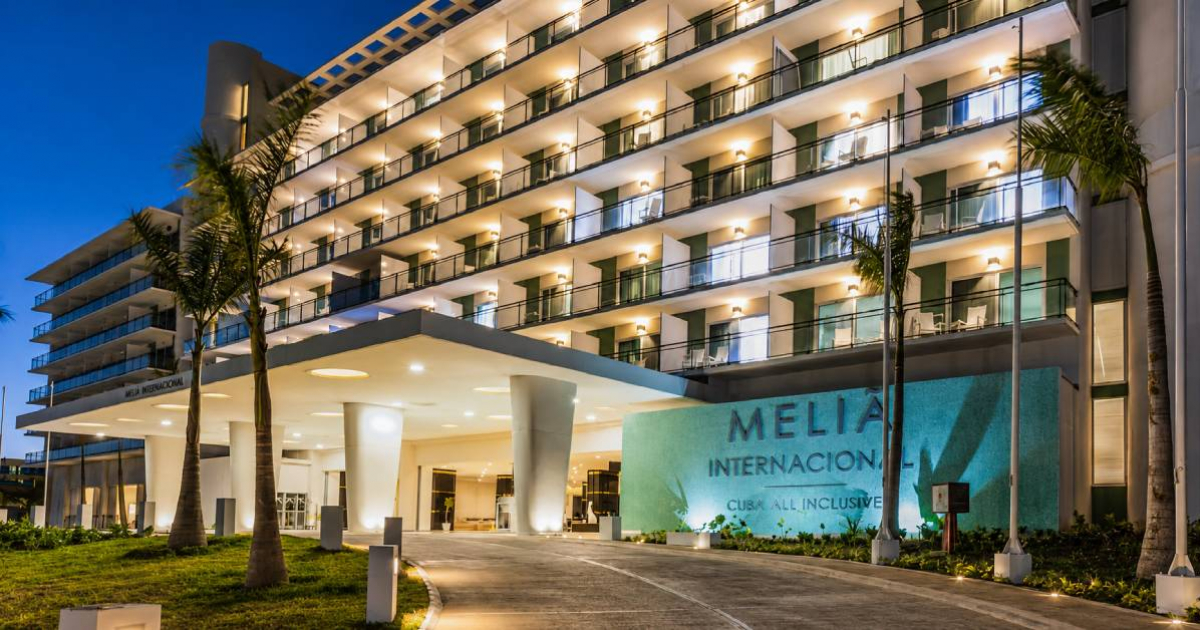
In financial markets, companies are valued not only by their earnings but also by the risks they take. In the case of Meliá Hotels International, several major European banks believe that leaving Cuba improves the company's outlook and makes it more attractive to investors.
The specialized portal Reportur cited statements from experts and reports from major banks asserting that the decision to leave Cuba boosts the valuation of the Spanish company Meliá.
Deutsche Bank is the most optimistic entity. It maintains Meliá as its only buy recommendation among all the European hotel chains it has on its radar, with a target price of 13 euros per share.
Banco Sabadell goes further in its analysis and clearly explains why leaving the island is good news for the Spanish company.
According to experts, Meliá's presence in Cuba was "a source of uncertainty that had been penalizing the group for years, and even by 2026, the contribution to the accounts was expected to be practically nonexistent."
The market consensus gathered by Bloomberg supports this view. From current levels, around 10 euros per share, analysts expect a 12% appreciation for Meliá, with 60% of buy recommendations and only two sell recommendations among approximately fifteen experts who monitor the stock.
Sabadell also states that it is "assessing the financial impact, which could include an accounting impairment of its assets in Cuba," and that the details will be revealed when the chain publishes its results for the first half of 2026, expected at the market close on July 30.
Trump's pressure forced the exit of Spanish hotel chains
The economic crisis, power outages, shortages of food and supplies, criticism of poor hotel services, and the sustained decline of tourism in Cuba had Melía facing losses on the island, but the turning point was Executive Order 14404, signed by the Trump administration on May 1, 2026.
The U.S. government officially designated GAESA—the Cuban military conglomerate that controls tourism through Gaviota—as one of the sanctioned entities and set June 5 as the deadline for foreign companies to sever their ties with the regime.
On July 13, new sanctions from the U.S. Treasury included the Cuban Ministry of Tourism, effectively shutting down the legal avenues for operating with groups such as Cubanacán and Gran Caribe.
In this context, Iberostar and Barceló followed Meliá and left Cuba in a cascading exit between June and July 2026.
Iberostar has severed its ties with 18 hotels linked to Gaviota, and Barceló has closed its establishments in Varadero. The estimated losses for Spanish companies as a whole are between 80 and 100 million euros.
Meliá had been operating in Cuba for 36 years and managed 34 hotels with 14,053 rooms. The company announced on Tuesday its complete exit, effective this Friday. In the first quarter of 2026, it was operating with 50% of its capacity closed on the island and an average occupancy of 34.1%, making the business unviable long before the sanctions definitively sealed its fate.
The change in perception within the markets is revealing. Meliá's extensive hotel network in Cuba, which has long been considered a stronghold, has become a regulatory, operational, and financial burden in the last five years.
Will American chains enter?
The departure of Spanish hotel companies leaves a void in the island's tourism management. Attention in the sector is now shifting towards the large American chains.
Marriott, Hilton, Hyatt, and Wyndham are mentioned as potential operators in Cuba if the political and regulatory framework changes, according to specialized media.
It wouldn't be the first time: Marriott managed the Four Points by Sheraton in Havana from 2016 to 2020, until the Treasury Department revoked its license.
That precedent sets the path that could be repeated if Washington's policy toward Cuba takes a turn in the coming months.
Meanwhile, air connectivity is another key point that generates debate and attention. Travel to Cuba from the old continent has decreased. Air Europa operates flights to the island, and Iberia is considering resuming its routes in the autumn, signs that commercial interest has not disappeared, although control of the hotel business could, in the future, pass into American hands.
Related videos:
Filed under: