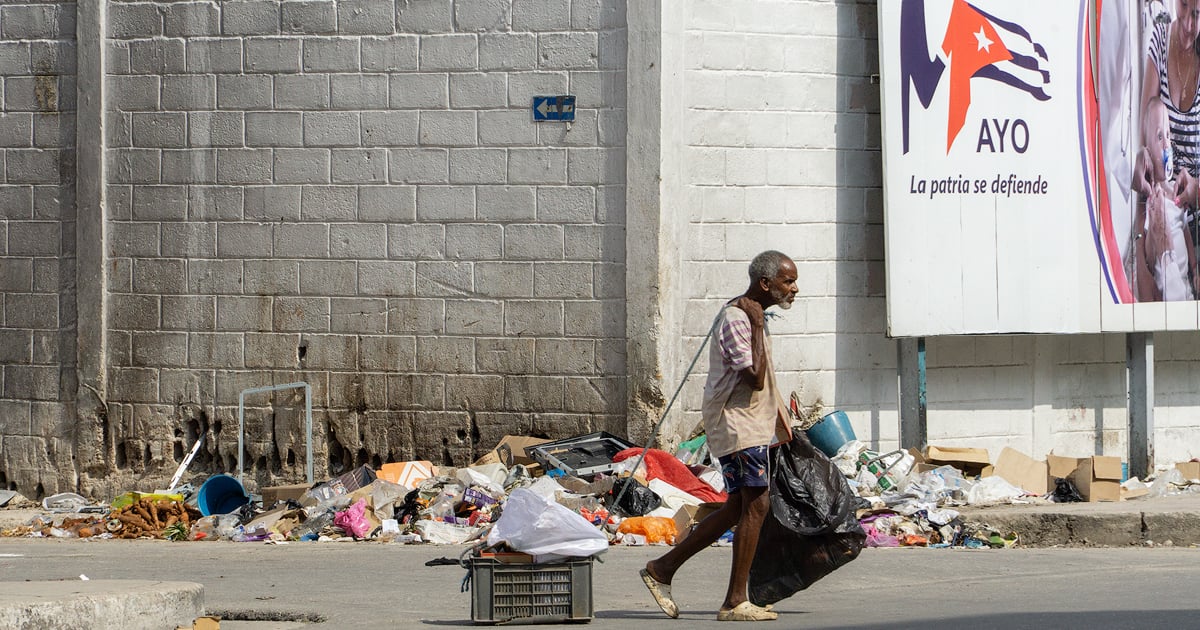
According to historical reconstructions from the prestigious Maddison Project Database, Cuba ranked 30th in the world in terms of real GDP per capita in the early 1950s. Today, it is approximately in 199th place. Back then, we had an economy that surpassed the economic powers of today such as Japan, South Korea, and Taiwan, and was very similar to that of Italy and Spain.
This Wednesday at the American Museum of the Cuban Diaspora, the forum "The Reconstruction of Cuba's Infrastructure as Part of the Transition to Democracy" took place. The main speakers included: Marcell Felipe, president of "IDEAs for Cuba," Sebastián Arcos from the Cuban Studies Institute at Florida International University, Helena Solo-Gabriele, an engineer and professor at the University of Miami, and Jorge Piñón, a researcher at the Energy Institute at the University of Texas, Austin.
Experts believe that the comprehensive reconstruction of our homeland requires between 200 billion and 500 billion dollars. Such is the calamitous state to which the Castro regime has plunged the Cuban economy. Let us examine and compare Cuba's reality with that of other countries in terms of per capita gross domestic product.
Gross Domestic Product (GDP) represents the total value of final goods and services produced within a country over a specific period. It is one of the fundamental indicators for measuring the size and evolution of an economy. When referring to nominal GDP, this production is calculated at current prices and, for international comparisons, is generally expressed in dollars according to a specified exchange rate.
The GDP per capita, on the other hand, is obtained by dividing the total GDP by the number of inhabitants. It does not equate to the average salary nor does it mean that each citizen receives that amount, but it provides an approximation of the level of production and economic wealth available per person. Although it does not measure inequality, institutional quality, or the effective distribution of income, it is useful for comparing the economic performance of different nations.
At the top of the global rankings are small financial or exporting economies such as Luxembourg, Ireland, Switzerland, Singapore, Norway, and Qatar. At the bottom are countries with closed economies, affected by wars, weak institutions, political instability, and low productivity.
The Statistical Yearbook of Latin America and the Caribbean 2025, published by ECLAC, estimated that Cuba's nominal GDP for 2024 was approximately 12.1 billion dollars. Divided by its population, this resulted in a nominal GDP per capita of just 1,082.8 dollars annually. This is an extraordinarily low figure for a country located just 90 miles from the United States, which has an educated population, significant natural resources, arable land, tourist potential, and an economically powerful diaspora.
By inserting that figure into a global ranking of over 200 countries and territories—including Bermuda, the Cayman Islands, Hong Kong, Macau, Puerto Rico, Aruba, Curaçao, and other jurisdictions—Cuba would place around 199th, with a margin of several spots depending on the source, the year considered, and the exchange rate applied.
This is not an official ranking from the International Monetary Fund. The IMF itself currently does not provide nominal GDP or GDP per capita figures for Cuba, which necessitates working with estimates from ECLAC and cautioning about the significant monetary distortions in Cuba.
However, even considering those precautions, the conclusion is devastating: the Cuban economy has fallen to levels comparable to those of Burkina Faso, Ethiopia, Liberia, Gambia, Chad, and other nations with severe structural deficiencies. The World Bank estimates recent figures of around 1,148 dollars per capita for Burkina Faso, 933 for Ethiopia, 915 for Liberia, and 919 for Gambia.
The situation is not the result of an inevitable natural disaster. It is, above all, the consequence of more than six decades of a communist model of centralized economy, which eliminated private property, destroyed productive incentives, made the State almost the sole owner, subordinated the economy to political decisions, and punished individual initiative for decades.
U.S. sanctions, external difficulties, and the loss of economic allies undoubtedly exacerbate the crisis. CEPAL itself mentions these factors. However, it also points out internal imbalances, delays in reforms, insufficient investment, a shortage of foreign currency, and structural problems that hinder growth.
Even the regime acknowledged that by the end of 2024, the economy remained approximately 11% below the levels of 2019. Primary activities—agriculture, livestock, and mining—had fallen by 53%, while industrial activities declined by 23%.
Cuba did not reach the bottom of the global rankings due to a lack of human capacity. It arrived there because of a system that favors political control over economic freedom; that fears independent entrepreneurs; that establishes monopolies, artificial prices, and unrealistic exchange rates; and that uses national resources without transparency or accountability.
The figure 199 is approximate. Poverty, shortages, blackouts, mass emigration, and the destruction of the economy are undeniable realities. Cuba needs much more than administrative measures: it needs to dismantle the economic model that has turned a nation with vast potential into one of the most impoverished economies on the planet.
Cuba needs democracy so that the people can take charge of their destiny and fully develop their creative and entrepreneurial capabilities.
Related videos:
Filed under:
Opinion article: Las declaraciones y opiniones expresadas en este artículo son de exclusiva responsabilidad de su autor y no representan necesariamente el punto de vista de CiberCuba.