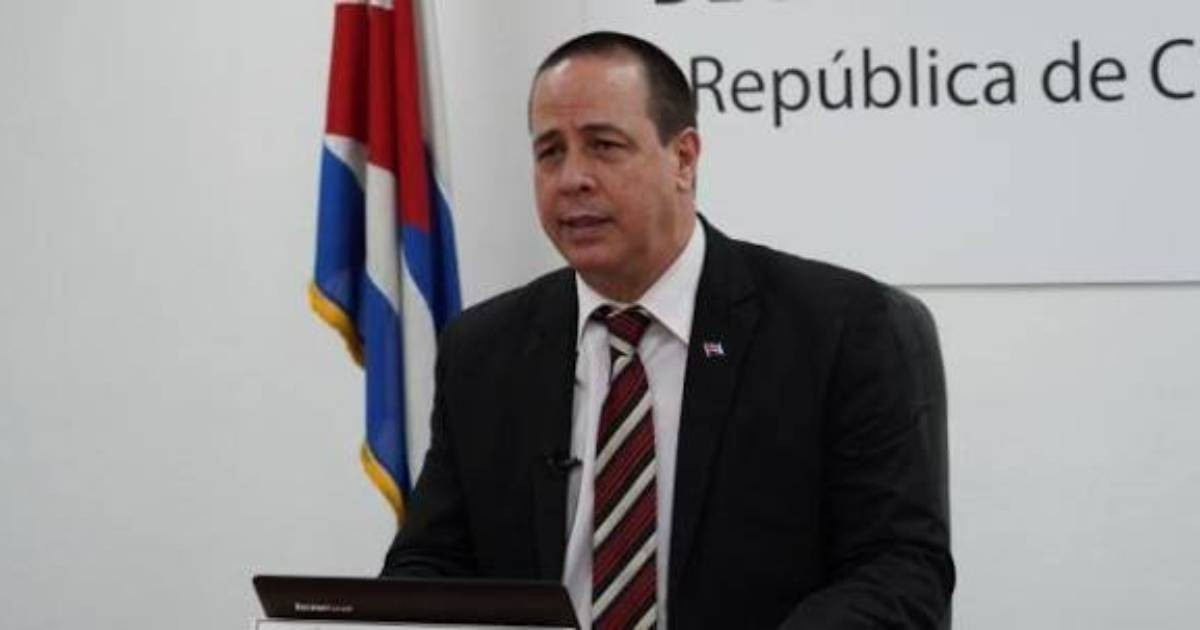
The Cuban Minister of Public Health, José Ángel Portal Miranda, presented alarming figures regarding the health decline on the island at the XVI Ministerial Meeting on Health of the BRICS, held in India, and urged the strengthening of international cooperation to ensure universal access to quality health services.
The minister was unable to attend the meeting in person, which took place from July 22 to 24, attended by representatives from member countries and partners of the bloc.
In his recorded statement, he explained that the absence was due to “the complex situation facing my country, marked by the unprecedented worsening of the economic, commercial, and financial blockade imposed by the U.S. government, the energy siege, and the constant threat of possible aggression.”
Far from limiting itself to official rhetoric, Portal Miranda provided concrete data that reflect the collapse of the Cuban healthcare system: over 100,000 people are waiting for a surgical intervention, including 12,000 children.
The infant mortality rate rose to 9.9 per 1,000 live births by the end of 2025, the highest level in over two decades, while the survival rate for children with cancer has declined due to the inability to access first-line treatments.
"Behind those restrictions, there are faces—patients, families who are suffering," stated the minister to his counterparts in the bloc.
The regime attributes the health deterioration to the U.S. embargo and Cuba's re-inclusion on the list of state sponsors of terrorism, designated by the Trump administration on January 21, 2025.
However, analysts and independent media point out that the crisis is also the result of decades of poor management, the massive exodus of medical personnel, and the structural deterioration of hospital infrastructure.
The severity of the situation has been acknowledged even by officials of the regime itself. Deputy Prime Minister Eduardo Martínez Díaz admitted on July 3 that more than 100,000 people were awaiting surgery, and the Portal Miranda itself stated in February that the system was “on the brink of collapse”.
According to data from Think Global Health, in September 2025, 69% of the 651 essential medications in Cuba were out of stock, a figure that worsened to 80% of locally produced medications by March 2026.
In contrast to that internal landscape, Portal Miranda highlighted before the ministers of the bloc that more than 16,000 Cuban health professionals are currently working in 50 countries "as an expression of South-South cooperation based on solidarity."
The minister's intervention came a day after the U.S. Department of State sanctioned him personally, along with nine entities and two individuals linked to the Cuban medical mission system, under Executive Order 14404 signed by Trump on May 1, 2026. Hours after the announcement, his account on the social network X was hacked.
The Chandigarh meeting reached a consensus to approve a Final Declaration that establishes as priorities multilateral cooperation against infectious diseases such as tuberculosis, coordination among regulatory bodies, digital health, and the construction of inclusive health systems, as well as the creation of a BRICS TB Network and an Integrated Early Warning System for infectious diseases.
Related videos:
Filed under: