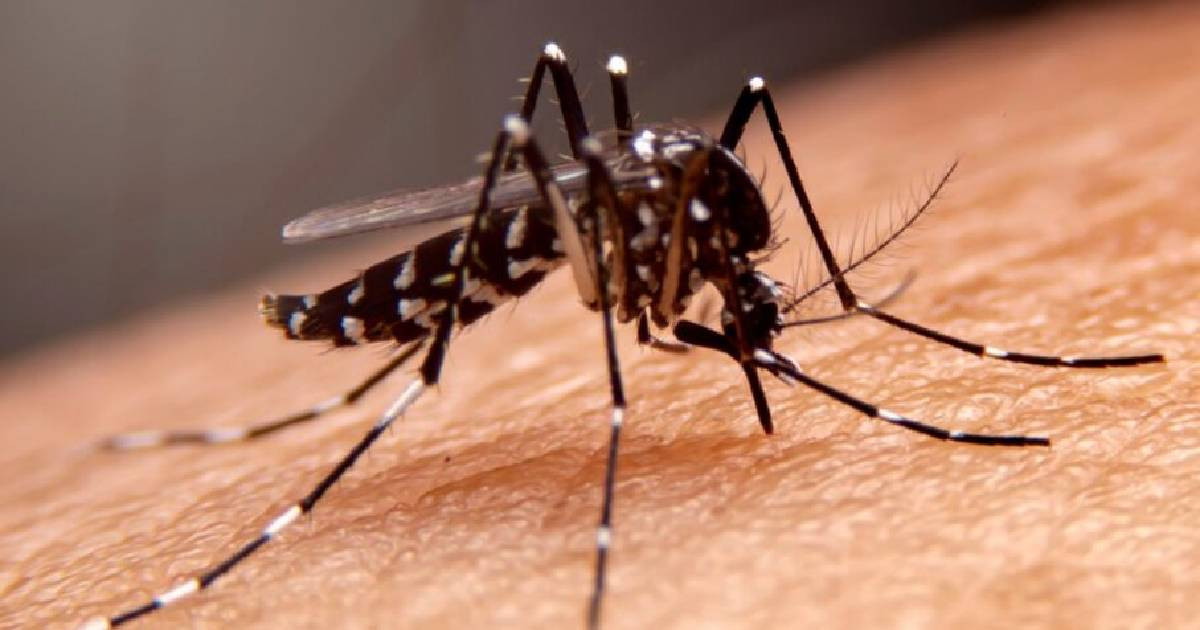
The province of Guantánamo ended this week with 23 suspected cases of dengue, and two of its municipalities, Imías and San Antonio del Sur, at the "Alarm" epidemiological level, the highest risk tier within the Cuban health classification, reported this Saturday via the radio station Radio Guantánamo.
The situation was analyzed in the daily meeting focused on the evaluation of the operational, economic, and social situation of the province, chaired by Yoel Pérez García, the first secretary of the Communist Party in the eastern territory, and the governor Alis Azahares Torreblanca, who called for strengthening epidemiological monitoring to curb the transmission of arboviral diseases.
At the provincial level, Guantánamo remains in the "Safety" zone within the endemic channel, the tool that classifies risk into four levels: Success, Safety, Alarm, and Epidemic. However, Imías and San Antonio del Sur have individually escalated to the third level, the source pointed out.
In San Antonio del Sur, the situation is particularly concerning; authorities have acknowledged that delays persist in the targeted treatment, the manual elimination strategy of mosquito breeding sites of Aedes aegypti, which is the primary tool for vector control when fumigation is not possible.
Guantánamo has a recurring history as one of the provinces most affected by dengue in Cuba. In October 2022, it was highlighted as the first territory in the country for infections, with nearly 1,600 breeding sites containing larvae of Aedes aegypti in over 1,300 homes across nine municipalities.
The outbreak in Guantánamo is part of a national scenario of increasing health alarm. In June, the Deputy Minister of Public Health, Carilda Peña, publicly warned that Cuba could face a new dengue epidemic due to the simultaneous circulation of all four serotypes of the virus. "If we do not take a series of actions, we could have an epidemic," she cautioned.
Meanwhile, the municipality of Ranchuelo, in Villa Clara, has been facing an outbreak of hemorrhagic dengue since mid-July with the simultaneous circulation of serotypes II and IV, with 12 patients hospitalized and reports from residents indicating more severe figures than those reported officially.
The structural factors exacerbating the situation remain unresolved. Prolonged blackouts force people to store water in containers that become breeding grounds for mosquitoes, the collapse of the garbage collection system due to a lack of fuel contributes to the accumulation of breeding sites, and the scarcity of insecticides halts spraying in large areas of the country.
According to data from the Pan American Health Organization, Cuba ended 2025 with over 81,900 cases of dengue and chikungunya and at least 65 deaths associated with both diseases, figures that reflect the magnitude of an epidemiological crisis that the regime took months to publicly acknowledge as an epidemic.
Related videos:
Filed under: