Every democracy needs more than just elections. It needs citizens who are able to freely organize themselves to defend their interests, express their ideas, and participate in public life without depending on political power. This collection of institutions, associations, and independent spaces is known as civil society.
When that civil society disappears, democracy begins to lose one of its fundamental pillars.
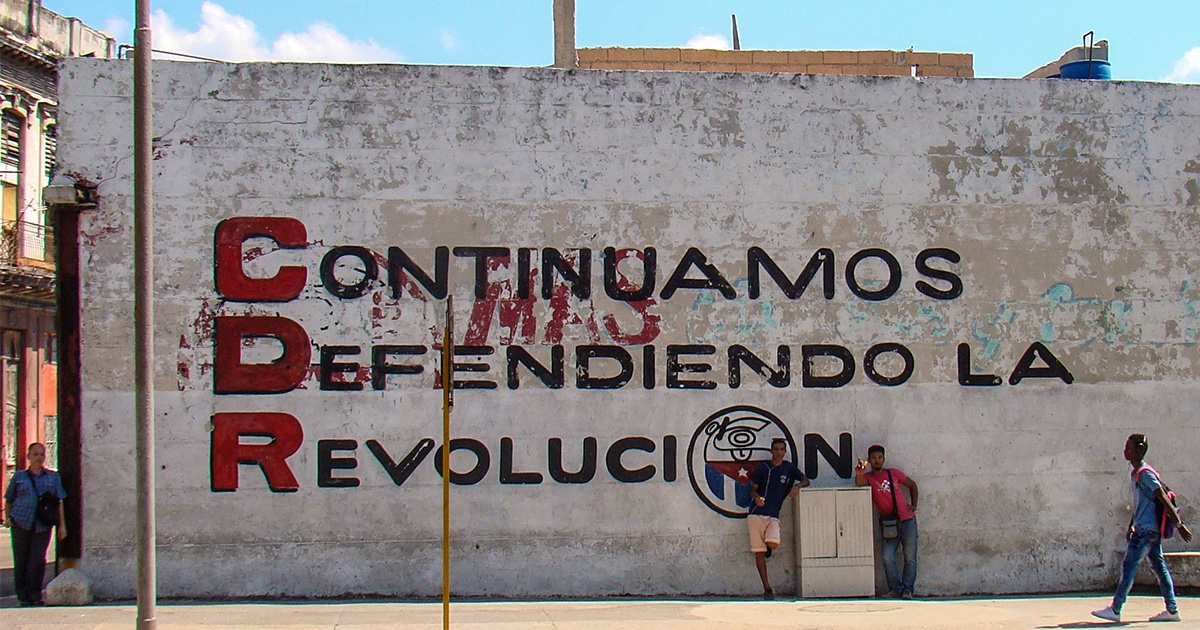
The Cuban experience stands as one of the most illustrative examples of this process in Latin America. After 1959, the new revolutionary power did not limit itself to controlling the government. Gradually, it absorbed or virtually eliminated all existing independent organizations. Trade unions, professional associations, student federations, peasant organizations, media outlets, cooperatives, and numerous civic institutions were replaced by structures subordinate to the State and the Communist Party.
The result was that millions of citizens ceased to belong to organizations created by society and became members of organizations established by the power itself.
When the state monopolizes the representation of workers, students, women, farmers, artists, and even numerous community spaces, social autonomy disappears. There are no longer independent interlocutors capable of questioning government decisions or defending interests that differ from the official ones.
This phenomenon leads to a profound transformation. The citizen stops seeing themselves as a protagonist in public life and begins to perceive themselves as a mere recipient of decisions made from above.
Dependence replaces participation. Obedience overrides debate. Individual initiative comes to be regarded as suspicious.
Over the years, this structure creates another, less visible but equally damaging effect: the loss of trust among citizens themselves. When all organizations answer to the power, many people stop believing in the usefulness of freely associating. Apathy and isolation ultimately become mechanisms of survival.
That is why it is so difficult to rebuild a nation after decades of authoritarianism. It is not enough to change a government. It is also necessary to restore trust among citizens, return autonomy to institutions, and recover a culture of free and responsible participation.
History shows that no country can aspire to a solid democracy when all social life depends on the state. A strong society needs strong institutions, independent associations, free universities, a free press, autonomous unions, respected religious organizations, and citizens capable of acting without seeking authorization from political power.
This is one of the most important lessons that the Cuban experience offers for Latin America.
Democracies do not only die when elections disappear. They also begin to weaken when society stops organizing itself and accepts that the State should decide which organizations can exist and which must disappear.
Political freedom is not upheld solely by governments. It is sustained, above all, by a vibrant, independent civil society capable of defending the dignity of citizens against any attempt to concentrate power.
Because when civil society disappears, the citizen stands alone before the State. And a lone citizen is always more vulnerable than an organized people.
Related videos:
Filed under:
Opinion article: Las declaraciones y opiniones expresadas en este artículo son de exclusiva responsabilidad de su autor y no representan necesariamente el punto de vista de CiberCuba.