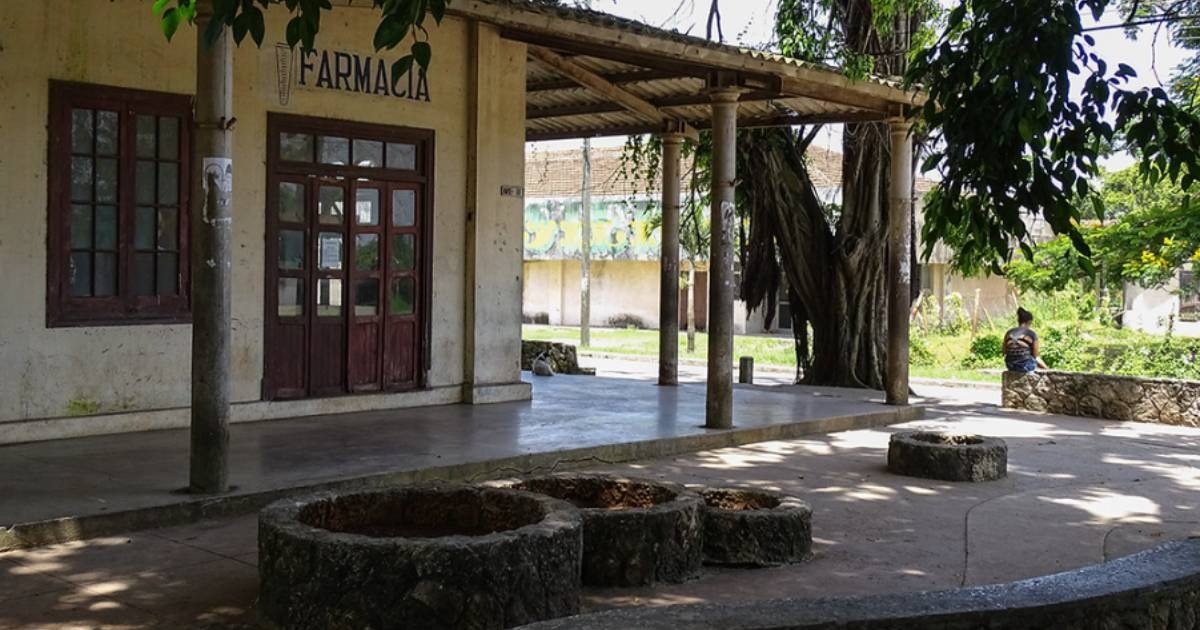
The Cuban regime made a significant change on Tuesday regarding one of the most prominent prohibitions imposed on the private sector by allowing, under state license, micro, small, and medium-sized private enterprises (mipymes) and non-agricultural cooperatives to provide pharmaceutical, optical, care, and rehabilitation services.
The measure is included in Decree 160/2026, published in the and signed by Prime Minister Manuel Marrero Cruz on July 22. The new regulation replaces Decree 107 of 2024 and redefines the permitted, prohibited, or conditioned activities for non-state economic actors.
While the repealed decree explicitly prohibited pharmaceutical and optical services, the new text classifies them as an "authorized or conditioned activity," allowing private companies and cooperatives to provide these services as long as they obtain the necessary authorization from health authorities.
The regulation reserves for the State the provision of medical and dental care both within and outside the National Health System, but it introduces an exception for pharmaceutical services.
"Pharmaceutical, optical, care, and rehabilitation services are authorized and can be provided by private companies, micro, small, and medium-sized private enterprises, as well as non-agricultural cooperatives," states Decree 160.
Furthermore, the text states that any activity not expressly listed as prohibited or conditional is considered permitted, although it will be subject to the licenses, certifications, or authorizations required by specific regulations.
The manufacturing of medications is also authorized
Another development is that the manufacturing of pharmaceutical products is no longer completely prohibited for the private sector.
The decree also incorporates it as an authorized activity, although it conditions its exercise on the permission of the Ministry of Public Health (MINSAP) and the competent regulatory authority. Furthermore, it specifies that it can only be carried out through partnerships or links with the state bio-pharmaceutical industry, keeping this strategic segment under government control.
The decision comes in the context of a deep crisis of the Cuban pharmaceutical system.
Over the past two years, authorities have repeatedly acknowledged serious supply issues. At various times, the Ministry of Public Health itself has admitted that the availability of the basic medicine supply has remained far below the needs of the country, while state pharmacies continue to face shortages of essential drugs.
The flexibilization also aligns with the 176 economic measures approved by the National Assembly in June 2026, aimed at broadening the operational scope of private economic actors.
They cannot open immediately
Although the decree eliminates the general prohibition, it does not mean that private pharmacies can automatically open.
The regulation states that the governing bodies have seven days to approve the procedures, requirements, licensing modalities, and supervision mechanisms necessary to implement the new provisions. Furthermore, the decree will come into effect seven days after its publication, specifically on August 4, 2026.
In practice, the opening of private pharmacy establishments will depend on the regulations issued by the Ministry of Public Health, which will be responsible for defining the conditions to authorize this type of activity.
Decree 160 also establishes that the Council of Ministers must review the content of the regulation at least every two years, at the proposal of the National Institute of Non-State Economic Actors, in order to update the list of prohibited or conditioned activities.
Related videos:
Filed under: