
Related videos:
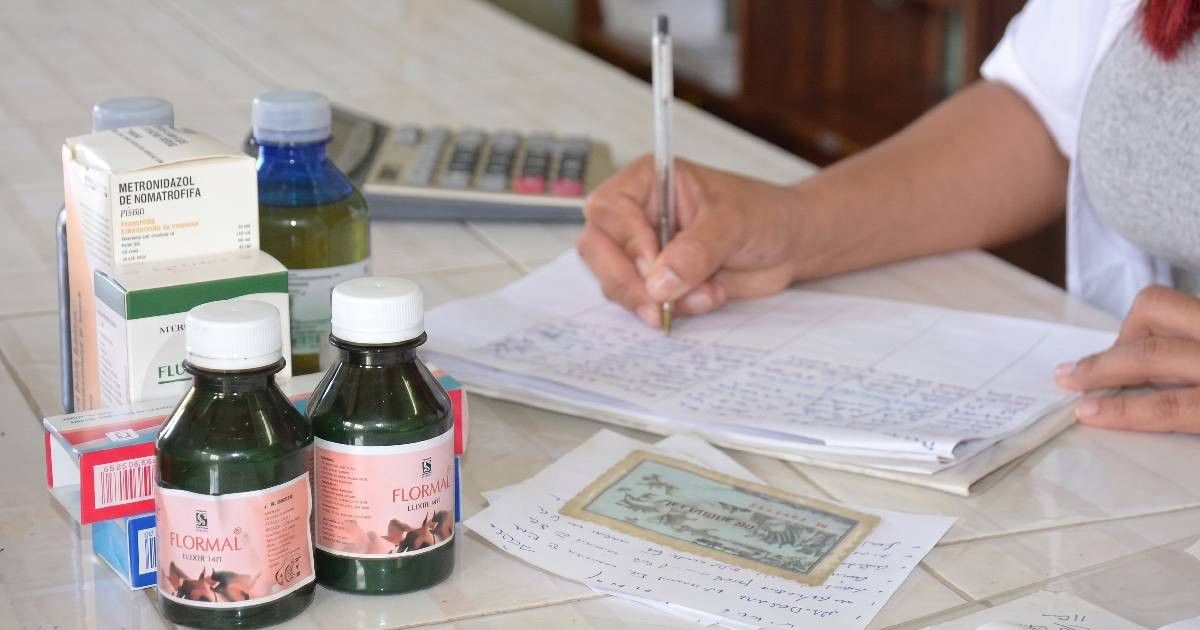
The province of Sancti Spíritus is facing a shortage of more than 300 medications in its basic supply, acknowledged this Saturday Elier Melendres de Armas, director of the Base Business Unit Wholesale Drugstore of Sancti Spíritus.
"Currently, we are facing a shortage of over 300 medications, but there are programs that the country continues to prioritize. Such is the case with hemodialysis, which, despite the tense situation, has been reliably guaranteed. We do not have extensive coverage, but we ensure the products used in this program," the executive emphasized.
Despite this deficit, provincial health authorities assure that they maintain "stable" coverage in three programs deemed a priority: hemodialysis, maternal-infant (PAMI), and care for critically ill patients, reported the official station Radio Sancti Spíritus.
Melendres also described an emergency system for extreme cases: "If there were any medication somewhere in the country that could be needed for a patient whose life is at risk, it is communicated through us and is made available to the hospital institution."
The provincial discourse of "stability" contrasts with a national crisis of alarming proportions.
Midway through this month, the president of the state-owned Biocubafarma, Mayda Mauri Pérez, admitted that the industry cannot guarantee nearly 300 of the 395 medications committed to the national health system, attributing the situation to the U.S. embargo and a funding gap of over 250 million dollars for raw materials.
That explanation was rejected by large sectors of the population. "For years, Cubans have faced a shortage of medications," wrote a citizen on social media.
Another person pointed out, "Now all the blame is on the blockade. When do they self-criticize, even just once? They didn't foresee anything; it's due to inefficiency."
The hemodialysis program, which Sancti Spíritus claims to have protected, is facing a severe crisis elsewhere in the country. In mid-June, patients at the Provincial Hospital of Camagüey had gone almost a week without treatment due to a lack of acid concentrate and bicarbonate.
Nearly 3,000 patients with chronic kidney failure rely on 56 units distributed across the country, and the ambulance services to take them to treatment have been halted in Las Tunas, Granma, Pinar del Río, Ciego de Ávila, and Villa Clara due to a shortage of fuel.
The pharmaceutical crisis in Sancti Spíritus is not new either. In 2022, the province already reported a shortage of 120 medications, including 39 for the Control Card for critically ill patients. Four years later, that number has more than doubled.
In July 2025, the Minister of Public Health José Ángel Portal Miranda admitted before the National Assembly that Cuba only had 30% of the essential medicines available.
In February, the minister himself declared that the Cuban healthcare system was "on the brink of collapse". Infant mortality nearly tripled between 2018 and 2025, rising from 3.9 to 9.9 per thousand live births, and over 96,000 patients are awaiting surgical procedures.
A survey conducted between February and March with over 1,700 participants revealed that 54.2% of Cubans face severe barriers to obtaining medications and only 4.8% were able to acquire them without difficulty.
Filed under: