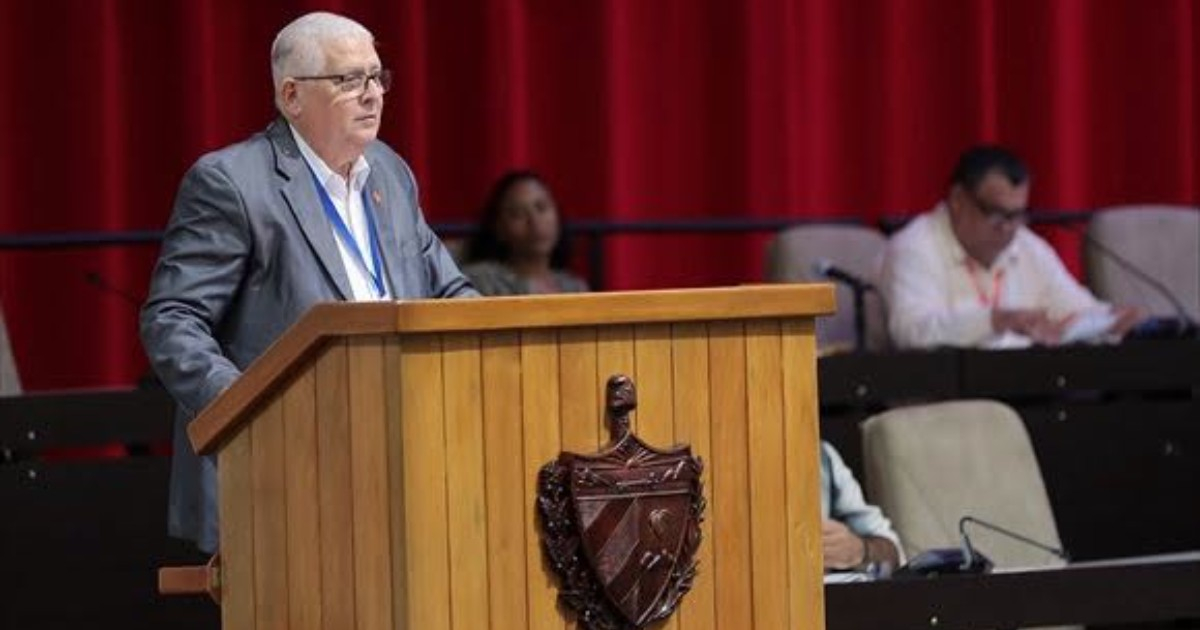
The National Assembly of People's Power repealed on Wednesday the , which was approved just seven months ago and reduced the term of delegates to municipal assemblies from five years to four years.
The decision, announced by the official media Cubadebate, sparked an avalanche of ironic and critical comments on social media, where Cubans openly questioned the purpose of these positions.
Law 183 had been approved last December and published in January of this year. Under that regulation, the current mandate of the delegates would have concluded in November of this year.
According to Deputy José Luis Toledo Santander, the reason for repealing it was the "complex economic and social situation of the country," which made it inappropriate to call for municipal elections at this time.
With the repeal, Article 187 of the Cuban Constitution is once again in effect, which establishes the term as five years.
The legislative back-and-forth did not go unnoticed. "They make and change laws as easily as changing clothes, how interesting," a user wrote in the Cubadebate post. Another summed up the incident in one phrase: "The law of 7 months."
The most widespread perception among those who commented was that the length of the term is irrelevant if the delegates do not resolve anything.
"It makes no difference whether there are four or five, or even if there are 20; it’s all the same. A seal with four is still a seal at five and remains a seal at 20. Their role is just to say yes and applaud," mocked an internet user. Another was more straightforward: "For what they do and solve, it doesn't matter if they are replaced; it’s all just a circus."
Several comments pointed to the nature of the system rather than the delegates themselves.
"It's a farce: when the time comes, 100% agree with everything and everything is fine. The decisions put to a vote have already been made a while ago; they put on more of a show than the television actors themselves," remarked another user. One more added, "A law that is approved by the very beneficiaries to satisfy and improve their demands regarding services."
There were also those who connected the measure to the broader political landscape.
"The devil is in the details. It sounds to me like the first step to legitimize an extension of Díaz-Canel's mandate, by the way, the government," speculated a commentator. Another recalled the real priorities of the population: "Deputies, oil is at 3,000, what do I care about that law?"
The citizenry, however, seems to have drawn its own conclusions: "That suggests fear of having to go through validating electoral processes," wrote one user, while another closed the debate with a succinct statement: "If those below move, those above will fall."
The repeal occurred during the Seventh Ordinary Session of the X Legislature, a particularly active parliamentary day.
In addition to this measure, the Assembly approved the Labor Code, the Agricultural and Forestry Lands Law, the Housing Law, and the Law on the Organization of the Central State Administration, which includes a cut of 92,000 positions.
The regime had turned to municipal delegates in the months prior as a tool for managing the crisis: in September 2025, they were freed from their regular jobs to focus on community tasks during power outages, and in February 2026, more delegates were ordered to be released to strengthen political presence in the neighborhoods.
Related videos:
Filed under: