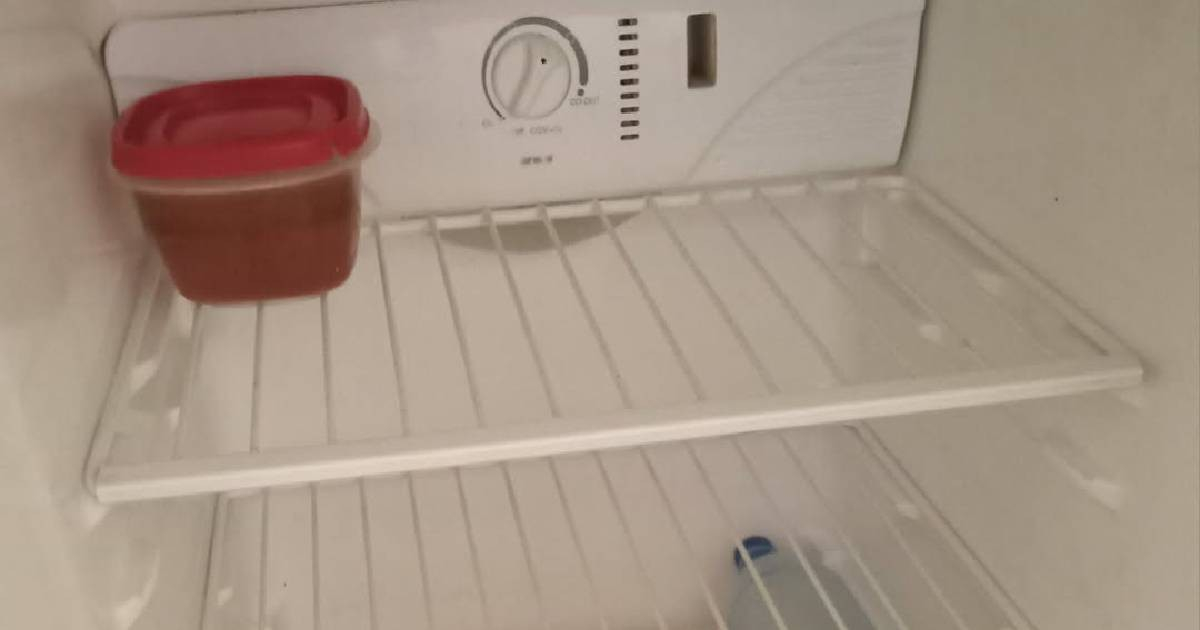
A Cuban who has spent his entire life on the island without knowing another world published this week on Facebook a three-part testimony titled "The Cuban Hell" that has shaken social media.
His author, Alejandro Delgado Cabrera, 56 years old, son of actor Tony Delgado and actress Gina Cabrera —considered the "Queen of Drama" in Cuban television and radio— describes with uncompromising harshness what it means to have lived an entire life under the political system established in 1959.
"Never has there been a period in my existence where it could be said that we had it all," writes Delgado Cabrera in the first installment.
The author lists the deficiencies that marked his life from childhood: clothing, shoes, food, medicine, transportation, electricity, and fuel, all rationed and always insufficient for the average citizen. However, he points out that the deprivation was not only material.
"The dividing line they talk about does not exist; it's not even thin—it's quite thick, I would say a wall," he states, recalling how during his school years, the leaders' children would arrive with brand-name shoes, backpacks, perfumes, and mobile phones, while such items were unthinkable for everyone else.
In the second part of the testimony, Delgado Cabrera points to the spiritual and social damage caused by the regime: the prohibitions of all kinds—religious, political, economic, of thought—the mass indoctrination, and the double standards that parents passed on to their children to survive. He condemns the paradox that those who were communist militants out of convenience are now the new owners of businesses, hostels, hotels, and factories.
"Today, conveniently, the children and grandchildren, those with nice shoes, jeans, perfumes, antennas, and phones in their cars, have logically become the new entrepreneurs, owners, lords, and masters of 'socialism,'" he writes, and asks: "Where did they get the money for those million-dollar investments?"
A report from February 2026 documented the existence of informal systems of privilege that determine who has access to resources, permits, and institutional protection in Cuba, supporting the author's allegations.
The third part, accompanied by a video recorded in a cemetery, is the most heart-wrenching. Delgado Cabrera visits the grave of his mother —Gina Cabrera, who passed away on January 3, 2022— and notices that the bronze letters from the family tomb have been stolen, and that even the flowers are taken.
"This is destroyed [...] the letters are stolen, the M, the I, the A of family [...] I put some very simple flowers that she liked," he says in the video.
Thefts in Cuban cemeteries are a documented phenomenon across multiple provinces between 2023 and 2026, involving the theft of bronze, marble, gravestones, flowers, and in some cases, human remains. In July of this year, a family in Sancti Spíritus reported the looting of a vault and the theft of items with sentimental value.
"Garbage, flies, real worms, decay, mosquitoes, all types of diseases thriving without resources or medicines to combat them, true hunger, endless blackouts, depravity, corruption, manipulation, repression, lies, extortion—this and more is today's Cuba," summarizes Delgado Cabrera in his conclusion.
The testimony aligns with a verifiable reality. According to the Food Monitor Program, in May 2026, 96.91% of the Cuban population lacked adequate access to food, and 33.9% of households reported that at least one member went to bed without eating in the previous 30 days.
Five provinces are facing critical levels of food insecurity: Havana, Matanzas, Cienfuegos, Guantánamo, and Santiago de Cuba. Meanwhile, Cubalex recorded 319 repressive events just in June 2026.
"What can remain of dignity for the living, if even the dead are not spared from this?" asks Delgado Cabrera. He concludes, "This is, and I am greatly understating, THE CUBAN HELL."
Related videos:
Filed under: