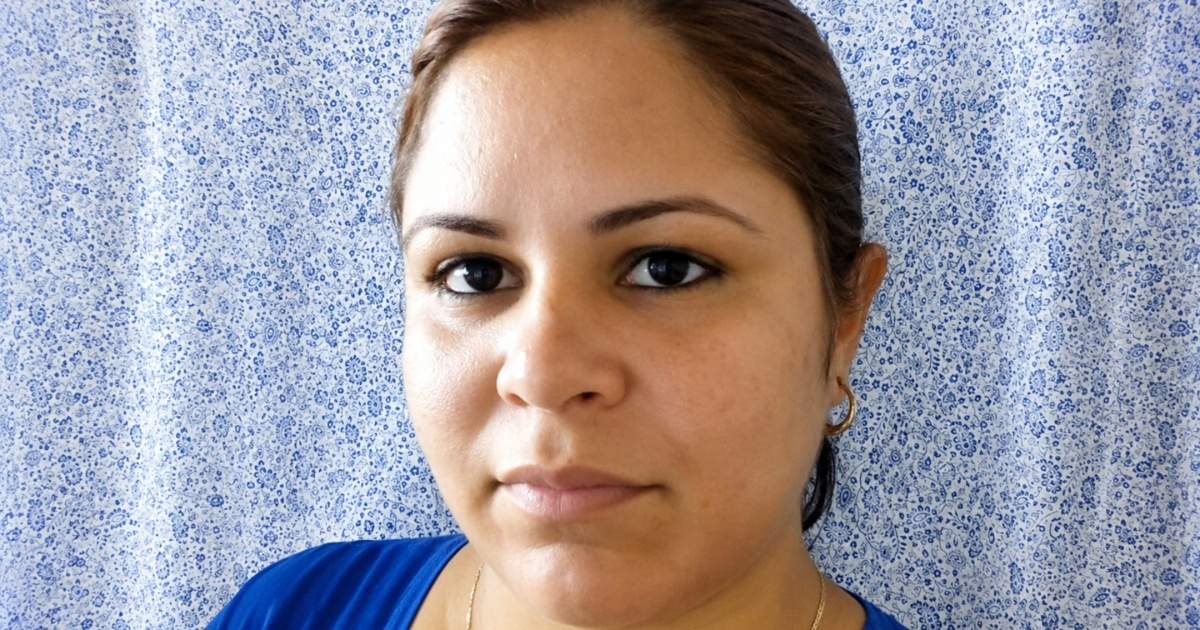
Arianna Fernández Tamayo, a Cuban mother from Manzanillo, posted on Facebook photos of her baby soaked in sweat and unable to rest due to the extreme heat caused by power outages, and directed a message straight to the regime.
“To those of homeland and death, to those of resistance, resilience, and the utopia on the horizon. I hope that before their time comes, they pay in life for all the suffering they are causing a country,” the mother wrote.
The images show the baby with glistening, sweaty skin, lying in a crib with white sheets in unbearable heat, amid the worst energy crisis in Cuba's recent history, which during the summer of 2026 has recorded historic deficits of up to 2,341 MW and blackouts affecting more than 73% of the national territory simultaneously.
Arianna's own mother responded in the comments bluntly: "Excellent, my daughter, nothing to add, just that your grandchildren won't go through this ordeal. Homeland and life, damn it."
The post sparked an avalanche of reactions of solidarity and condemnation. One user summarized the collective sentiment: "It's not easy to see a baby sleeping in those inhumane conditions; they are silently killing us."
Another commentator recounted that her situation is the same: she doesn't have money even to buy a fan, and all her earnings go towards food, so she opens the windows of the house to let in some air.
A Cuban woman from Manzanillo who saw the post offered to send Arianna a rechargeable fan through Messenger.
Several mothers drew a parallel with the Special Period of the 1990s.
"The history repeats itself: during the Special Period, my child was young and I suffered the same," wrote a user. Another one bitterly asked, "How do I tell my little grandson that at 11 months he needs to have creative resilience? But I declare it in faith: one day someone must pay for this suffering inflicted on an entire country."
A commentator who has already emigrated recounted that when she lived in Cuba and shouted her frustration from her doorstep, neighbors urged her to be quiet so she wouldn’t be arrested. Today, she acknowledges that silence was a mistake: “I believe that it’s worth it to shout, protest, and raise your voice. Don’t let anyone silence you because it will always be a small step toward the freedom of Cuba.”
Another voice in the publication reflected on the collective paralysis: "The ones who are paying are a people who are losing their lives. Elderly individuals who are mere specters, young people struggling through an agonizing daily existence, and children born without the chance to learn what life is. Meanwhile, the system is faltering, but they still hold the frying pan and the handle as well."
A commentator turned to the poem "The Yoke Boy" by Miguel Hernández to describe today's Cuban children: "Born as flesh for the yoke / more humiliated than beautiful / with a neck pursued / by the yoke for the neck." And concluded with the final lines: "Who will save that little one / smaller than a grain of oats?"
The case of Arianna is part of a series of documented testimonies since May 2026: babies with heat rashes, children sleeping in doorways or on makeshift beds in the street, and mothers fanning their children all night long without electricity.
Cuba has experienced at least five nationwide blackouts in 2026, three of which occurred in a single week in July, with outages lasting up to 20 hours daily in Havana and over 70 consecutive hours in areas of the interior.
Manzanillo, Arianna's hometown in the province of Granma, had already reported protests against power outages lasting more than 12 hours since June 2022.
Related videos:
Filed under: