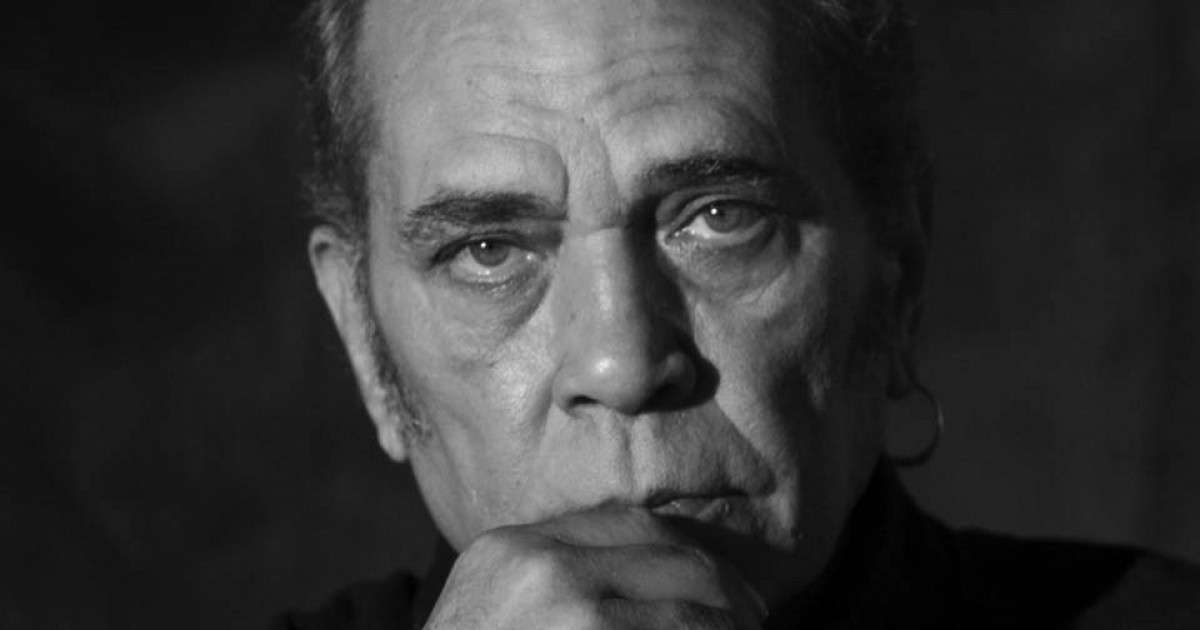
The Cuban actor Luis Alberto García Novoa published a lengthy message on his Facebook account this Friday denouncing the repression that the authorities impose on citizens who peacefully protest against blackouts, calling this practice unconstitutional and undemocratic.
The text arrives amidst the worst electrical crisis recorded in Cuba, with a deficit that reached 2,380 MW on July 29 and three total collapses of the National Electric System in July, which left millions of people without electricity.
García accurately describes the pattern that he believes has become routine: authorities arrive at the protest site, negotiate, make promises, calm tensions, and restore electricity, but the next day they start searching "house by house, hallway by hallway, and rooftop by rooftop" for those who led the mobilization.
"Detaining individuals —including mothers with small children in their arms— and taking them to a unit of the PNR or to a State Security office when they have not violated the Constitution is unconstitutional and extremely undemocratic," the actor wrote, invoking Article 56 of the 2019 Cuban Constitution, which recognizes the right to peaceful assembly and demonstration.
The actor was emphatic in debunking the arguments the regime typically uses to justify arrests: "Hitting one's own kitchen utensil is not damage to state property," he stated, and added that "expressing dissatisfaction, anguish, and desires verbally is not a crime."
It also directly pointed to the government's responsibility by closing the text with a phrase that rejects any external excuses: "That conduct, unfortunately already common, is not the fault of the blockade."
García's report aligns with data that confirm a sustained increase in repression. In June 2026, a historic record of 107 in-person protests was registered throughout the island, with at least 38 arrests according to the NGO Cubalex. In the first half of the year, the Cuban Observatory of Human Rights recorded 1,949 repressive actions and around 257 arbitrary detentions.
In his post, the actor also addressed the uneven distribution of photovoltaic modules, another source of public discontent. He noted that no one objects to a person with special needs or a distinguished scientist receiving a solar panel, but that outrage arises when those who receive them are precisely the officials who preach collective sacrifice and "romanticize the blackout." "More than once I've heard that these are colleagues who, due to the importance of the work they do in whatever capacity, should have electricity in their private quarters," he wrote, concluding that this argument would equally apply to hundreds of professions "that are quite a bit more important than directing us or shepherding us."
García, one of the most persistent public voices in denouncing the widespread crisis, especially the energy crisis, from within Cuba, has been documenting extreme blackouts in his own home for weeks: on July 5, he reported 34 consecutive hours without electricity or water, and on July 11, he reported three days and three nights without power, warning that "the food is spoiling".
In Havana neighborhoods and municipalities such as Lawton, El Vedado, Guanabacoa, Centro Habana, El Cerro, and La Habana Vieja, the sounds of pots and pans and chants of "We want light" and "Freedom" have continued throughout July, with an official response that combines temporary promises with subsequent harassment of the participants.
"The Constitution allows for peaceful protests. At least on paper," wrote García, summarizing in a single sentence the gap between the constitutional text and the reality experienced by those who take to the streets in Cuba.
Related videos:
Filed under: