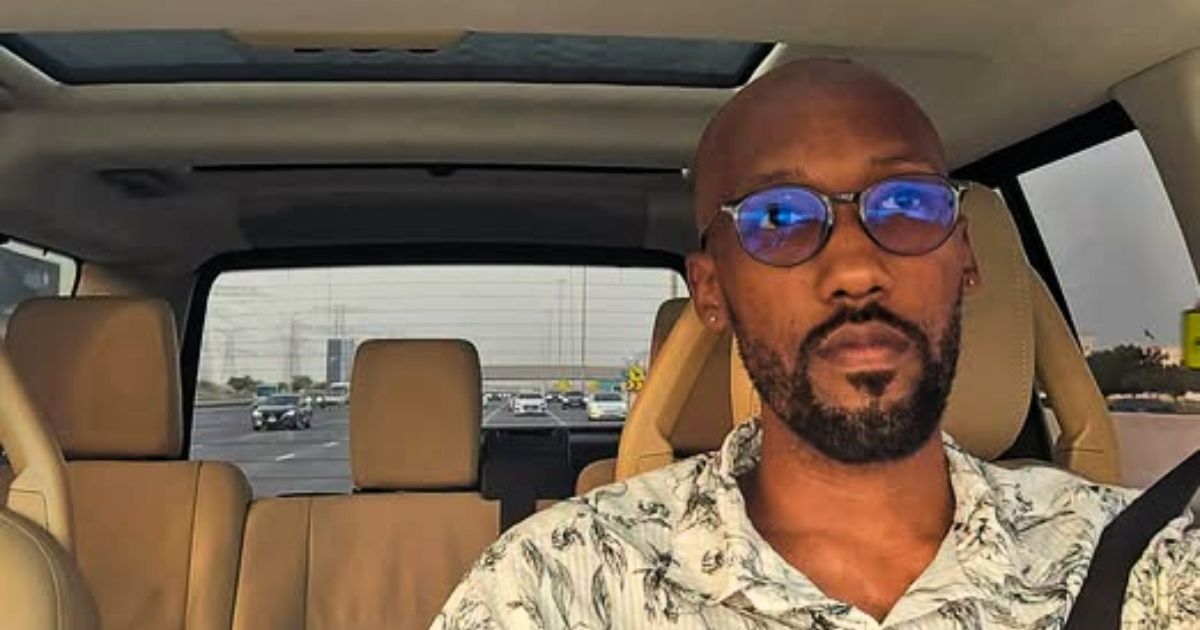
Alejandro Terry, a Cuban doctor residing in Dubai and digital content creator, published on Facebook this Saturday a reflection on his experience of emigrating, in which he states two truths that, according to him, almost no one speaks out loud: that emigrating was both "the worst mistake" and "the best decision" of his life.
Terry, a graduate of the University of Medical Sciences of Havana in 2018 and the son of the former director of the official newspaper Granma, Pelayo Terry Cuervo, emigrated in February 2022 with his wife to the United Arab Emirates, where he reinvented himself as a storyteller and content creator for Meta.
Under the title "Is it Worth Emigrating as a Cuban? My Answer After 4 Years," the text contrasts with the triumphalist narrative that often circulates in Cuba about those who leave: "In Cuba, emigrating has a single color: that of triumph. Those who left succeeded. Those who stayed... well. You already know that better than I do."
In the first part, Terry describes the impact of the first month abroad as a series of small defeats in the face of what is routine for any local resident: opening a bank account, understanding credit, using a transportation app, or choosing a type of milk at the supermarket.
"Capitalism has its own language and teaches it to you without a translator, laughing at you," he wrote, recalling that in Cuba the most relevant history wasn't credit-related but rather whether one had a supply booklet or not. He referred to that period as "surviving the everyday," filled with "small daily humiliations that no one captures in their Instagram photos."
The second part is the most intimate: the mourning for the family left behind, which psychology refers to as "ambiguous loss," a concept that describes the pain for something that is not dead but is also not present.
"Your mom is aging on a six-inch screen," he wrote, describing the anguish of watching his father sick over a video call with a poor connection, unable to tell if he was downplaying the seriousness to avoid worrying him.
"The worst part isn't the physical distance. The worst part is the disconnection. You change here, they change over there, and when you see each other—if you see each other—sometimes you're almost strangers who care for each other deeply," he noted.
Terry also cited research from universities such as Harvard and the London School of Economics that documents that the first year of an immigrant involves stress levels comparable to those of major traumatic events: "It's not weakness. It's biology."
In the third part, he dismantled the motivational phrase "starting from scratch" to reveal its more concrete dimension: reaching a system that does not acknowledge the emigrant's previous journey, lacking references or contacts.
"Everything you were in Cuba —your reputation, your contacts, your hard-earned street smarts— stays in Cuba. Here, you are just a strange name on another form," he wrote, adding that the gap between immediate expenses and income that takes time to arrive is the space where "the emigrant is built or destroyed."
Despite the weight of all the above, Terry concluded that emigrating is worthwhile if one seeks true freedom or the chance to build something of their own, but with one condition: “Emigrate knowing what you are leaving behind, not fleeing from what you do not want to see. […] The only bad decision is the one made without honest information.”
He also advocated for those who emigrate for political reasons: "No human being is obligated to live under a system that denies them. That is not desertion. It is dignity. It is true dignity."
Terry's testimony is part of the largest Cuban exodus in decades. According to the National Office of Statistics and Information, by the end of 2023, at least 1,249,733 Cubans resided outside of Cuba, while over 850,000 arrived in the United States since 2022 and more than 250,000 emigrated just in 2024, driven by chronic power outages, shortages, and an economy that has experienced a decline of over 15% since 2020.
"The Cuban emigrant does not abandon his family. He supports them from afar with an effort that no one photographs either," Terry concluded in his post.
Related videos:
Filed under: