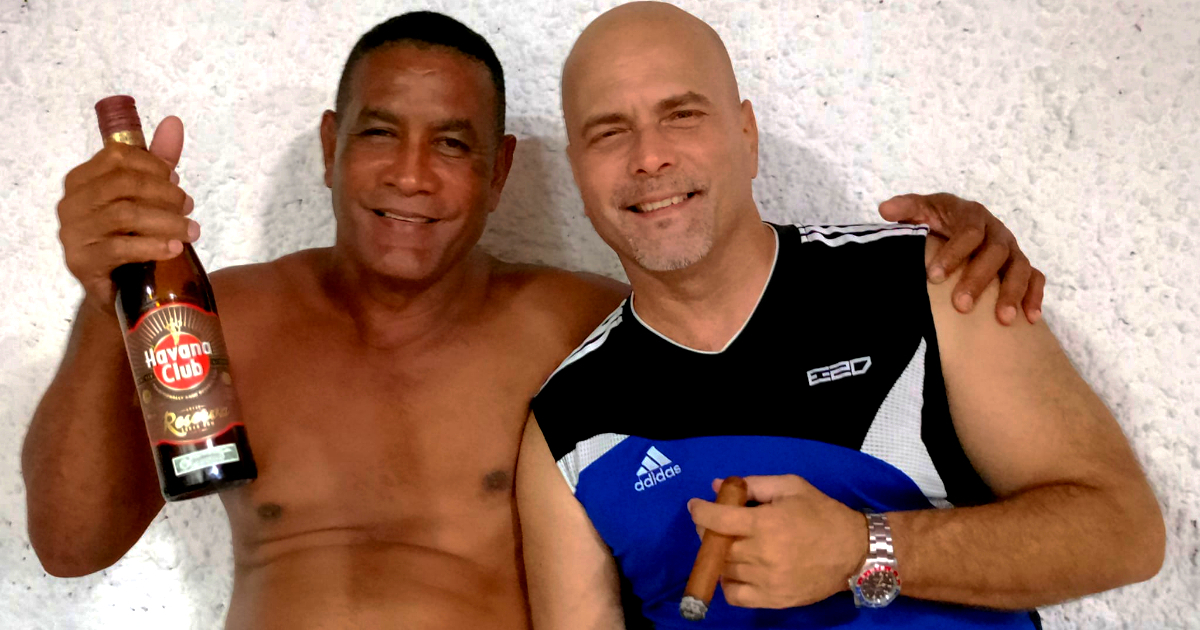
Gerardo Hernández Nordelo tried to discredit the warnings from U.S. Secretary of State Marco Rubio by pointing out a supposed contradiction: Cuba could not simultaneously be a failing state and a threat to U.S. security.
The reasoning appears clever, but it is conceptually weak. It confuses a government's ability to control and repress its population with its capacity to fulfill the essential functions of a state. It also overlooks that internal fragility can pose risks beyond its borders.
A state does not stop failing just because it maintains police forces, prisons, intelligence services, and a single party. It also does not cease to pose a threat simply because its economy is in ruins.
The concept of a failed state is debated, and there is no universal definition. However, the main frameworks for analyzing state fragility evaluate factors such as economic decline, loss of legitimacy, population exodus, collapse of public services, human rights violations, and the actions of closed and extractive elites.
The Fragile States Index from Fund for Peace, for example, examines precisely economic decline, the exodus of people and human capital, state legitimacy, public services, human rights, and demographic pressures. It does not require a government to have lost all its territory to recognize a process of institutional failure.
Cuba exhibits many of these characteristics. The regime maintains a high capacity for coercion, but it is increasingly unable to ensure stable electricity, food, medicine, transportation, housing, or economic prospects.
Blackouts lasting up to 20 hours a day, severe shortages of food and medicine, and constant failures of the national electrical system have been documented by non-governmental organizations such as Human Rights Watch, which also highlighted in one of its recent reports on Cuba the request for assistance from the World Food Program to supply milk to young children.
Moreover, the NGO indicated that the Cuban population decreased by 10% between December 2021 and December 2023, mainly due to emigration.
That perspective does not describe a lack of government. It describes something different: a government that has maintained the tools to command, but has failed in its duty to serve.
The apparent Cuban paradox is resolved by distinguishing between coercive capacity and institutional capacity.
Freedom House classifies Cuba as a “not free” country and describes a single-party system that prohibits political pluralism, suppresses dissent, controls the media, and severely restricts civil liberties.
His report on internet freedom highlights the blocking of independent media, imprisonments for digital publications, and new measures to monitor content.
The Inter-American Commission on Human Rights has also documented the absence of democratic institutions, the subordination of public powers, and patterns of persecution, criminalization, and harassment against activists, opposition members, journalists, and human rights defenders.
Therefore, the regime is not weak in all areas. It is strong where it needs to monitor, punish, and maintain power, but extraordinarily inefficient when it comes to producing food, managing infrastructure, protecting rights, or creating conditions for people to live with dignity.
That combination does not contradict the idea of state failure. It reinforces it.
Fragile states can pose international risks in multiple ways: mass exoduses, human trafficking, the expansion of illicit economies, humanitarian crises, regional conflicts, or the use of their territory by foreign powers.
In the Cuban case, the most visible external effect is emigration. The departure of hundreds of thousands of people is not just a demographic tragedy caused by mismanagement; it puts pressure on the immigration systems of other countries, fuels human trafficking networks, and shifts part of the cost of the crisis created by Havana to the outside world.
There is also a dimension of security and intelligence. The report from the State Department titled «Cuba: the capital of communism in the 21st century» portrays the regime as an actor that has combined espionage, political infiltration, propaganda, and cooperation with opponents of the United States for decades.
The document cites legally proven cases, such as those of Ana Belén Montes and Víctor Manuel Rocha, to assert that the material poverty of Cuba never eliminated the operational capacity of its intelligence services.
The report is a governmental document with a political purpose, not an independent academic research. However, its central argument is hard to dismiss: a depleted regime can maintain intelligence networks, ideological ties, influence capacity, and alliances with powers seeking to project themselves close to U.S. territory.
Being poor does not equate to being harmless.
Hernández Nordelo presents a false dilemma by treating "failed state" and "threat" as incompatible categories. They are not.
Cuba may fail in providing welfare, rights, public services, and opportunities, while retaining instruments to suppress internally and cause destabilizing effects abroad.
It may lose population, suffer national blackouts, and rely on humanitarian aid, while simultaneously maintaining an experienced intelligence apparatus and providing geopolitical value to Washington's allies.
The crucial question is not whether the regime controls the country. It does. The question is what it uses that control for.
After more than six decades, the Cuban regime has proven greater capacity to perpetuate itself than to govern effectively. This is precisely the crux of its failure and one of the reasons why its consequences no longer end at the shores of the island.
Related videos:
Filed under: