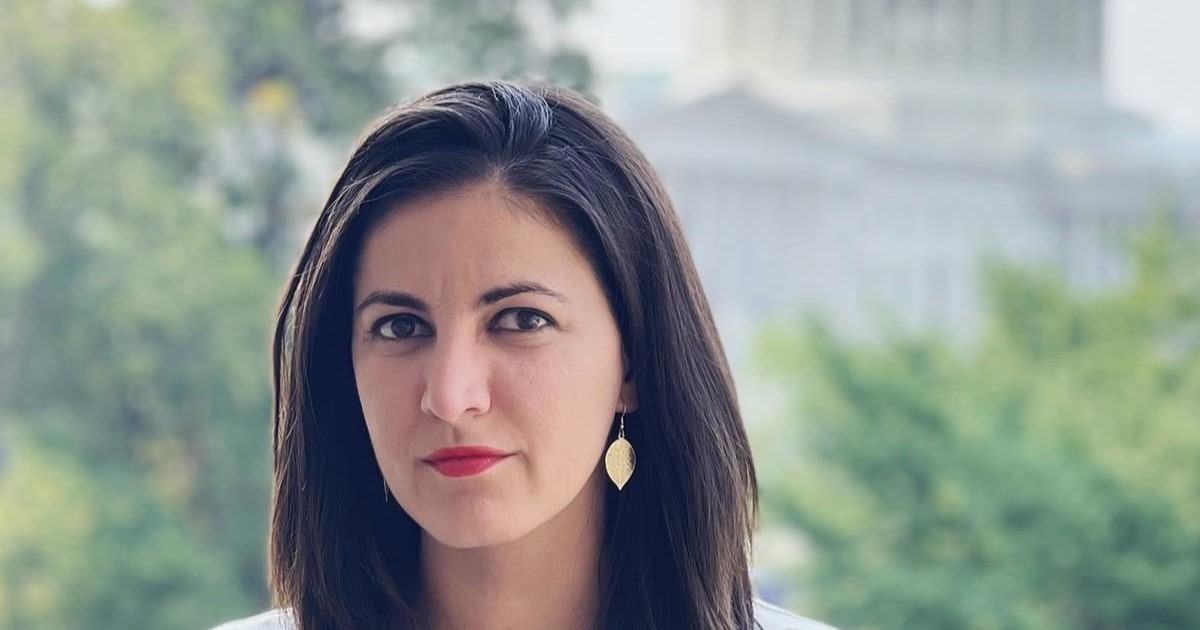
The Cuban activist and opposition leader Rosa María Payá reported this Monday that the Cuban people are facing a humanitarian catastrophe that is not a result of the U.S. embargo, but rather of a dictatorship that amasses wealth outside the island while its citizens suffer from scarcity and repression.
"The Cubans are facing a humanitarian catastrophe caused by a dictatorship that holds billions of dollars in foreign accounts," wrote in a message on X Payá, founder of Cuba Decide, an initiative that promotes a binding plebiscite for a democratic transition on the island.
The activist pointed out that the only real solution lies in a change of system: "Democratic change is the way to have a chance to overcome this crisis."
He also urged the international community to take action: "Human suffering is increasing, and the regime only responds with more repression."
The statement comes at the worst humanitarian moment that Cuba has experienced in decades. The electrical system suffered its fourth total collapse of the year on July 10, 2026, with power outages lasting between twenty and twenty-five hours daily in several provinces.
In March, the UN issued a humanitarian appeal for 94 million dollars to assist nearly two million affected Cubans, although by mid-May, the funding shortfall exceeded 60 million.
The U.S. administration, for its part, offered 100 million dollars in aid last May, to be channeled through the Catholic Church and independent non-governmental organizations to prevent the regime from intercepting the funds.
The European Commission, for its part, announced an additional 10 million euros in humanitarian aid in July.
The argument made by Payá regarding the regime's resources is supported by documented evidence. A report from the BBC based on documents leaked to the Miami Herald estimated the assets of GAESA —the business conglomerate controlled by the Cuban Armed Forces— at least 17.894 billion dollars as of March 2024, although the BBC itself clarified that it could not independently verify these figures.
Days before this message, Payá had already described GAESA as a "private company of the Castros, with billions of dollars in foreign accounts", labeling those funds as stolen from the Cuban people.
The regime, on the other hand, rejects the characterization of a humanitarian crisis. Chancellor Bruno Rodríguez dismissed on July 1, 2026, the idea that Cuba was experiencing a situation comparable to the pandemic, although he acknowledged severe deprivations and attributes the difficulties to the U.S. embargo.
The U.S. Department of State stated this Tuesday that the crisis is a "direct result of the Cuban regime, its non-functioning economic model, and its own incompetence."
Payá, daughter of the esteemed dissident Oswaldo Payá Sardiñas—who passed away in 2012 under circumstances that witnesses and international organizations have described as an attack by the regime—has been maintaining this same thesis for years.
In December 2025, I had already warned that that year was leaving Cuba "plunged into a humanitarian catastrophe" marked by shortages, blackouts, and repression. In March 2026, I went further by describing the situation as "the worst in the last six decades."
Related videos:
Filed under: