The sanctions recently imposed by the U.S. Department of the Treasury against CEIBA Investments Limited could signify much more than just a new addition to the list of sanctioned entities.
According to the latest dossier from the research center Cuba Siglo XXI, the case marks a paradigm shift in Washington's strategy against the military conglomerate GAESA (Grupo de Administración Empresarial S.A.).
The report asserts that the United States has stopped focusing its sanctions solely on companies directly controlled by GAESA to extend them also to investment funds, companies, and intermediaries involved in the management, protection, or transfer of its assets.
The central thesis of the document is that Washington seeks to close the avenues that for years allowed the military conglomerate to operate through external corporate structures or seemingly independent companies.
The CEIBA case
The dossier devotes a significant part of its analysis to CEIBA Investments Limited, an investment fund registered in the United Kingdom that has concentrated substantial real estate investments in Cuba for many years.
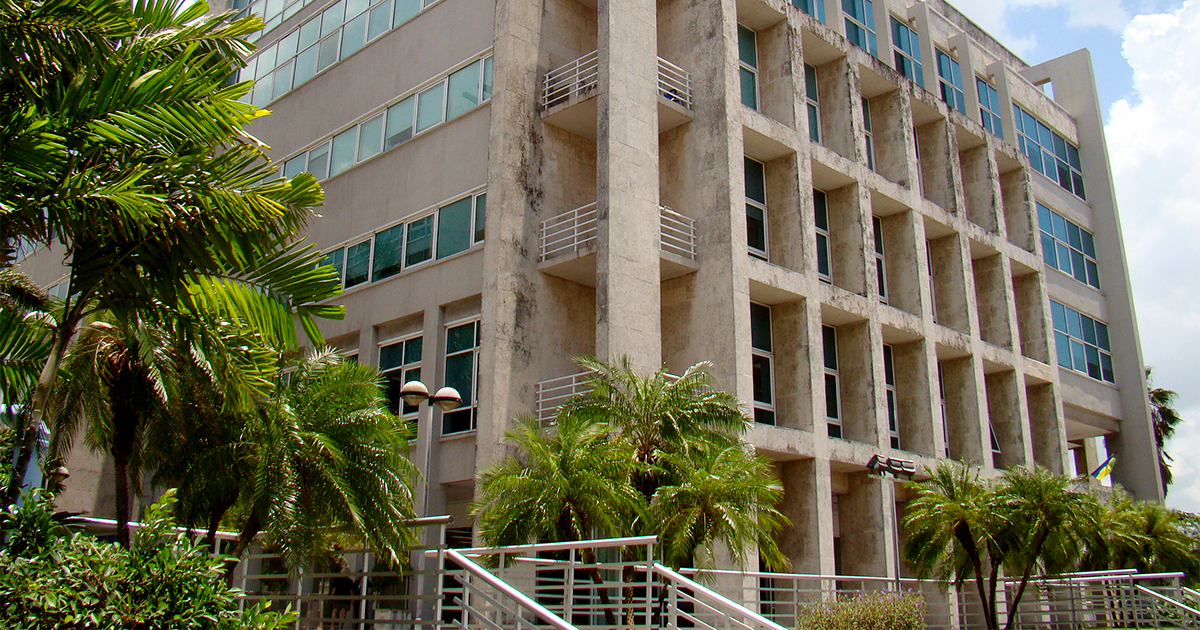
According to Cuba Siglo XXI, one of the most significant operations was the complete acquisition of Inmobiliaria Monte Barreto (IMB), which owns the Miramar Trade Center, considered one of GAESA's primary real estate assets in Havana.
The report states that this business reorganization did not represent a true disconnection from the military conglomerate, but rather a mechanism to place certain assets beyond the reach of U.S. sanctions through a different corporate structure.
Precisely for that reason, the dossier argues, the Department of the Treasury decided to include CEIBA among the new measures announced this year.
The report presents this decision as a signal aimed not only at CEIBA but also at any foreign company attempting to act as an intermediary to preserve assets linked to GAESA.
A message for investors
The consequences, according to the document, were immediate.
Following the sanctions, several members of CEIBA's board of directors resigned, and the fund announced the commencement of its exit process from the London Stock Exchange, where it had been listed since 2018.
For Cuba XXI, these events send a clear message to the international financial market: any entity that engages in operations aimed at protecting GAESA's assets now risks being subject to U.S. sanctions.
The report states that this new strategy is increasing uncertainty among potential investors and reducing interest in maintaining business linked to the Cuban military conglomerate.
Why are GAESA's assets so important?
Washington's interest in preventing these assets from changing hands before a potential political transition becomes increasingly significant in light of internal financial documents from GAESA revealed by the Miami Herald in 2025.
That research revealed that the military conglomerate held over 18 billion dollars in liquid assets and maintained billions of dollars deposited in entities like Gaviota, its tourism arm, despite the severe economic crisis the country is experiencing.
The documents also indicated that GAESA received resources from the state budget and did not pay taxes in foreign currency, consolidating a financial position that was far superior to that of the rest of the Cuban economy.
In this context, the Cuba Siglo XXI report asserts that preventing the transfer of hotels, real estate, and other properties from the conglomerate aims to ensure that this strategic heritage remains within reach of a potential economic reconstruction process for the country.
Avoid an "asset piñata."
Beyond the CEIBA case, the dossier suggests that the new sanctions pursue a broader objective.
According to the analysis, Washington is trying to prevent hotels, properties, companies, and other assets controlled by GAESA from being sold, transferred, or privatized before a potential political transition in Cuba.
The document uses the concept of a possible "piñata" of assets to describe a scenario in which state properties are transferred to companies, funds, or individuals close to those in power through operations carried out before a system change.
In this context, the report interprets that the expansion of sanctions aims to hinder any operation that allows for the formal disassociation of those assets from the military conglomerate.
A new approach
For Cuba Siglo XXI, the CEIBA case illustrates the shift in approach adopted by the United States.
The pressure would no longer be directed exclusively at GAESA's companies, but also at the network of international financial actors that could facilitate the preservation or transfer of its assets.
The dossier asserts that this strategy aligns with the increasing international isolation of the conglomerate, the withdrawal of significant foreign partners and the severe decline in tourism, one of the main sources of foreign currency for the economy controlled by GAESA.
Although the report presents these elements as part of an increasing pressure scenario on the military conglomerate, several of its conclusions—such as the alleged intention to protect assets during a future transition—correspond to the analysis and interpretation of Cuba Siglo XXI and have not been officially confirmed by the U.S. Department of the Treasury.
Related videos:
Filed under: