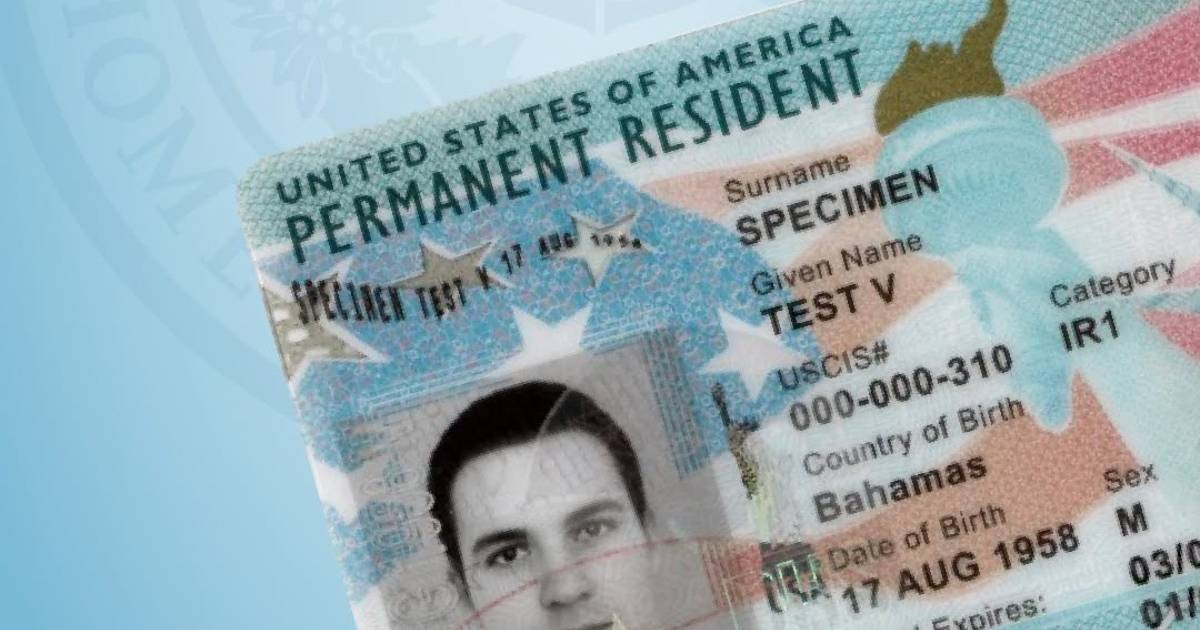
The Department of State launched a pilot program for public charge bonds aimed at certain immigrant visa applicants, with amounts that can reach 250,000 dollars, as confirmed by Bloomberg Law and the Washington Free Beacon.
The program initially launched in the Dominican Republic and applies to those who have been declared inadmissible under section 212(a)(4) of the Immigration and Nationality Act — the public charge ground — but who meet the other requirements to obtain the visa.
The amounts are not fixed: each consular officer determines them on a case-by-case basis under federal regulation 8 CFR 213.1(b), and they can range between $100,000 and $250,000.
If the U.S. Citizenship and Immigration Services (USCIS) approves the bond, the previously denied immigrant visa can be issued. The deposit is formalized through Form I-945 and remains valid indefinitely until it is canceled or declared in default, according to the USCIS Policy Manual.
This program is different —though complementary— to the bond program for tourism and business visas (B1/B2), which the Trump administration made a permanent policy on August 3, with deposits of up to $20,000 set at three levels: $10,000, $15,000, or $20,000 at the discretion of the consular officer.
Cuba remains among the 50 countries affected by the B1/B2 visa program, to which it was added in January 2026 along with Venezuela and other nations from the Caribbean, Asia, and Latin America.
The results of the B1/B2 pilot program —which began in August 2025 under Executive Order 14159— were the central argument for making it permanent: visa violations dropped from nearly 45,500 cases in 2024 to less than 50 in the first ten months.
However, almost half of the 20,000 applications that required a deposit did not complete the payment, resulting in an 83% drop in the issuance of visas for the affected countries.
The spokesperson for the Department of State, Tommy Pigott, justified these measures last July by stating that "the Trump administration is restoring the basic expectation that immigrants to the United States must contribute to our society more than they receive from it."
The most direct criticism came from Sharvari Dalal-Dheini, director of government relations for the American Immigration Lawyers Association: "We are making our system pay-to-play: only the wealthy can come to visit, reunite with their families, or seek a better life."
For Cubans, the economic barrier compounds a series of prior restrictions: the suspension of B-1/B-2, F, M, and J visas since June 2025, the expansion of the travel ban, and the USCIS memo from May 2026 that made consular processing the default route for obtaining permanent residency.
The situation could become even more challenging: the Department of Homeland Security published a new public charge rule in July that will take effect on September 18, 2026, allowing the use of Medicaid, food stamps, and housing assistance to be considered negative factors for denying permanent residency.
Related videos:
Filed under: