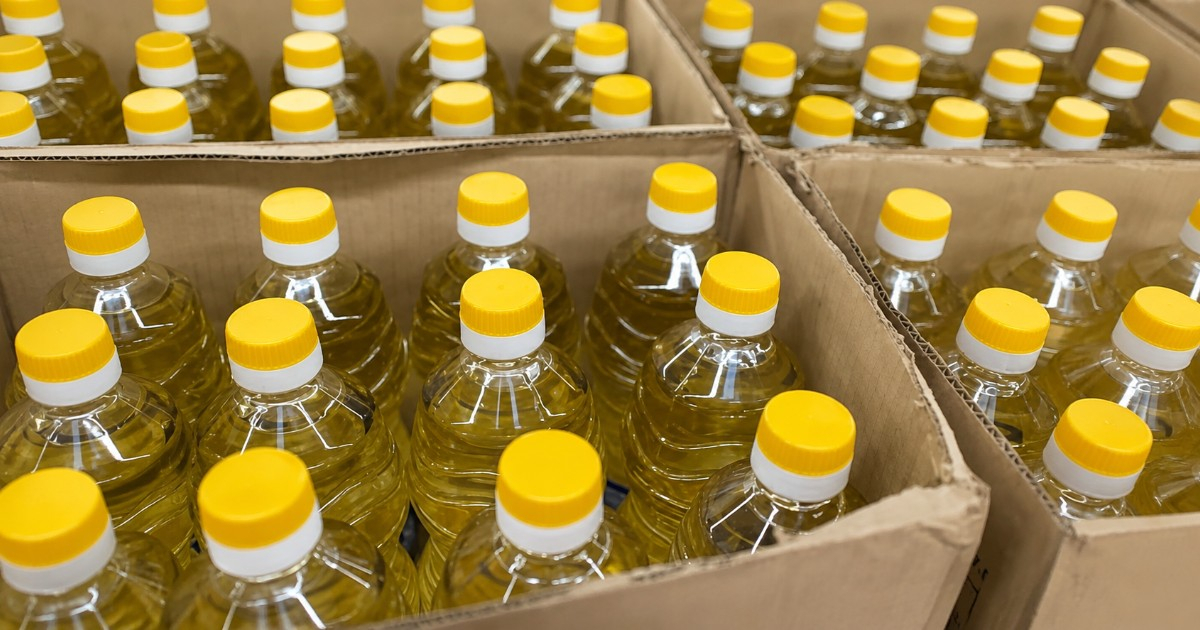
The Government of Matanzas decided to intervene in the pricing of basic food items and established reference values for products such as oil, eggs, powdered milk, chicken, rice, and beans, in addition to approving a commercial margin of up to 30% for wholesale and retail sales.
The measures were announced this Saturday by the Provincial Government of the People's Power in Matanzas, which stated that it made the decision after receiving complaints and feedback from the public regarding what it described as an "abusive" increase in prices for various essential goods.
According to the official publication, provincial authorities reviewed cost sheets, market reference prices, and the exchange rate, in addition to engaging with various economic actors involved in marketing.
The Matanzas government stated that it also took into account the current regulations on price formation in the context of the recent economic transformations approved in the country.
In his explanation, he once again attributed part of the supply crisis to the U.S. embargo.
The general decision establishes a trade margin of up to 30% for the formation of wholesale and retail prices.
In addition, there is a list of prices that the authorities call "reference" for ten foods.
The edible oil, except for olive oil, has been set at 2,250 CUP per liter for wholesale marketing and 2,500 CUP for retail. The egg has been set at 100 CUP per unit for wholesale and 110 CUP for retail sales.
For powdered milk, the price was set at 3,000 CUP per kilogram in the wholesale market and 3,400 CUP in retail, while sugar was priced at 350 CUP per pound wholesale and 400 CUP for the consumer.
The sauages in a one-kilogram format will have a reference price of 850 CUP for wholesale trade and 900 CUP for retail. In the case of cut chicken, the announced prices are 450 CUP per pound for wholesale and 500 CUP for retail sales.
The pasta has been set at 800 CUP per kilogram for wholesale and 835 CUP for retail. For the ground meat, the announcement establishes prices of 300 CUP and 350 CUP, respectively.
The rice will have a reference price of 250 CUP per pound for wholesale and 300 CUP for retail, while the beans are set at 300 CUP and 350 CUP per pound, respectively.
The Provincial Council of the People's Power stated that it aims to confront "illegalities and abusive and speculative prices" and urged both state and private merchants to comply with the announced decisions.
The new decision from Matanzas comes amid persistent inflation and significant difficulties in accessing food, a scenario in which authorities are once again opting to limit margins and establish price references as a mechanism to try to contain rising costs.
In Villa Clara, maximum prices were also set for various essential food items, with a commercial margin of up to 30%.
There, for example, the price of an egg reached a retail maximum of 110 CUP per unit, and a liter of oil was priced at 2,500 CUP.
Similarly, in San Luis, Santiago de Cuba, the authorities set reference prices for oil, chicken, rice, and eggs.
The oil is priced at 2,200 CUP per unit, chicken at 600 CUP per pound, national rice at 250 CUP per pound, and eggs at 120 CUP per unit.
Although the municipal government clarified that it was not about "price caps," it announced sanctions for those who violated those values.
A similar formula has begun to be implemented in Moa and Banes, in Holguín, where the municipal governments established the reference price for oil at 2,200 CUP.
In Moa, control also extended to chicken, sausages, ground meat, processed meats, eggs, powdered milk, pasta, rice, beans, imported sugar, soap, and detergents.
The most immediate precedent was set in Guantánamo, where the municipal government also established the reference price of oil at 2,200 CUP.
Authorities insisted that it was not formally a cap, although they warned that non-compliance could result in fines, seizures, forced sales, and temporary closures of establishments.
Related videos:
Filed under: