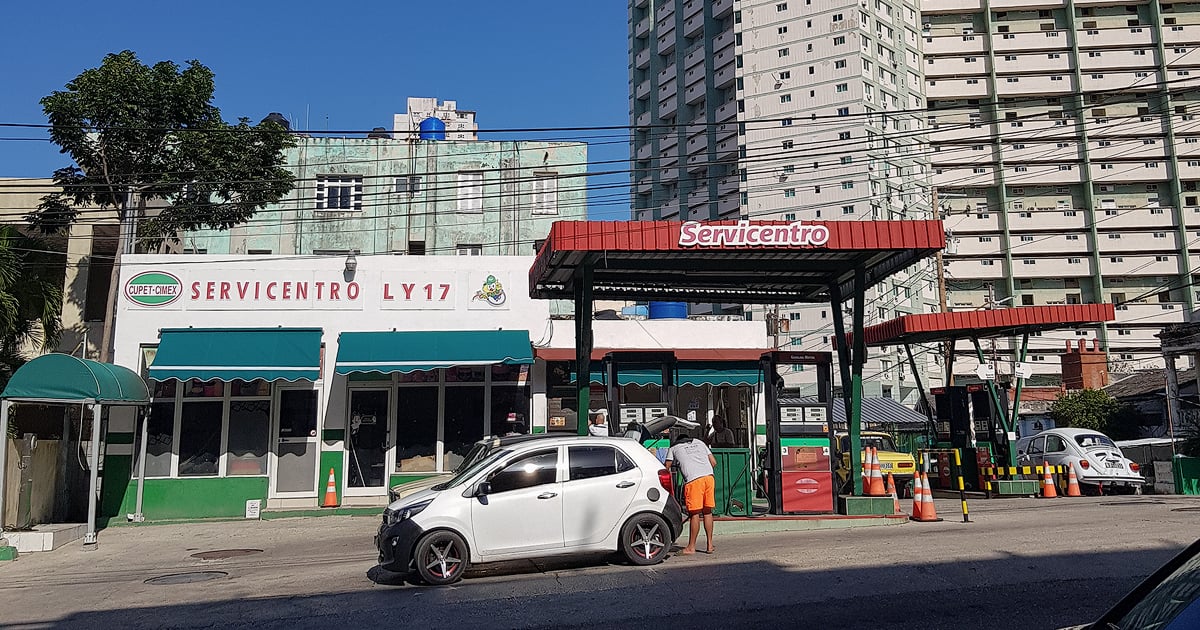
A friend of mine from Manzanillo, in eastern Cuba, tells me that the tank trucks that used to bear a CUPET logo now carry one that reads KM0. He concluded: "Everything remains the same; only the name has changed. That fuel coming from the United States benefits the regime, its leaders, and its repressive forces the most. You know very well how clever they are at evading sanctions..."
In just two months, May and June of 2026, the United States sent to Cuba fuels and petroleum derivatives worth 71.7 million dollars. The figure, which raises the total for the first half of the year to 95.7 million, confirms the opening of an unprecedented energy channel between the two countries. Never before, since the beginning of the embargo, had the volume of U.S. petroleum products to the Island reached these levels.
The data from the U.S. Census Bureau, compiled by the U.S.-Cuba Trade and Economic Council, is unequivocal: 23.9 million in May and 47.8 million in June. The shipments — diesel, gasoline, kerosene, aviation fuel, lubricants, and propane — primarily depart from Houston, Miami, Tampa, Port Everglades, and New Orleans, mostly transported in ISO tanks ranging from 20,000 to 25,000 liters, destined for ports such as Mariel.
U.S. policy is clear on paper. These sales are authorized exclusively for the Cuban private sector: small and medium-sized enterprises, self-employed workers, and non-state entities.
Direct delivery to the Government, CUPET, GAESA, the Revolutionary Armed Forces, or any company controlled by the regime is prohibited. The declared aim of Washington is to reduce the private sector's dependence on the State.
Among the U.S. companies that have publicly operated in this market are Flash Kingz, based in Miami, and Vanguard Energy from Coral Gables. The former has sent iso-containers intended for private companies. The latter had negotiated a larger-scale project that included the use of existing storage facilities in Cuba, although that plan was suspended following the sanctions imposed on CUPET in June.
The problem begins when the fuel arrives in Cuban territory. Although the formal buyer may be a Mipyme, the chain of import, storage, and distribution necessarily goes through state-owned companies. Journalistic investigations have documented the involvement of MetalCuba, QUIMIMPORT, and MAPRINTER as intermediaries, as well as the use of the infrastructure of CUPET and CIMEX for the reception, custody, and delivery of the product. The system does not allow for autonomous importation: the State controls the critical nodes.
The mechanism is recurring. A private Cuban company makes the purchase in the United States. The fuel travels in isocontainers to Mariel. From there, customs procedures, storage, and subsequent distribution are handled by state entities, which charge fees and accept technical "losses." At that point, the traceability that Washington aims to ensure is disrupted.
Reports have already emerged of vehicles belonging to state-owned companies allegedly refueling at facilities linked to these private imports. Everything seems to indicate that the regime has found ways to profit from a scheme designed specifically to exclude it. Even without direct diversion, the collection of fees, logistical control, and the ability to influence distribution create an economic benefit for state structures.
Formally, the operations are aimed at the private sector, but it is not accurate to present these exports as a clean and independent flow that exclusively strengthens small and medium-sized enterprises (Mipymes). As long as the fuel has to pass through state infrastructure to reach its final destination, real control remains in contention.
The crucial question is no longer how much American fuel enters Cuba. It's about who manages it after customs, who captures the economic margin from its distribution, and what proportion ends up, directly or indirectly, strengthening the state apparatus and repressive forces. Responding transparently to these questions is essential to determine whether this new energy channel is fulfilling its stated purpose or if it has once again become another resource for the survival of the Castro-communist tyranny.
The streets of Cuba speak with brutal eloquence. There is no improvement in passenger transport, and the ambulance service remains severely lacking, but the repressive forces maintain great mobility and have many vehicles with enough fuel to chase down and suppress the protests of the population.
Related videos:
Filed under:
Opinion article: Las declaraciones y opiniones expresadas en este artículo son de exclusiva responsabilidad de su autor y no representan necesariamente el punto de vista de CiberCuba.