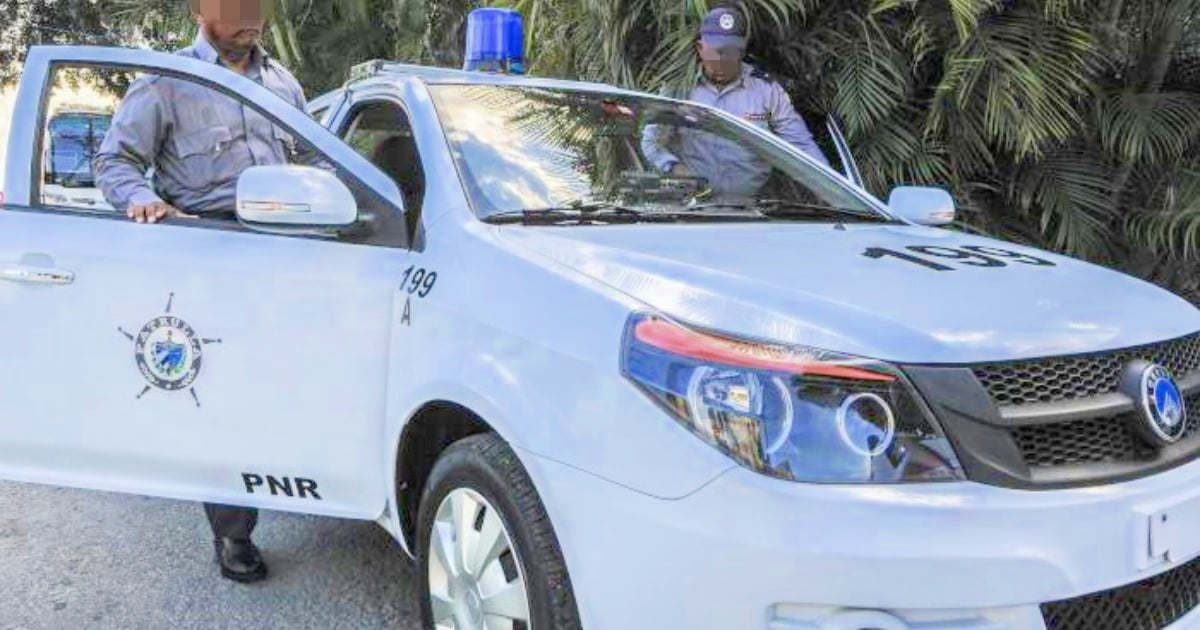
The authorities of Mayabeque dismantled a gang of six people who were stealing dielectric oil from transformers in the municipalities of Güines and Melena del Sur, according to reported by the official Facebook profile of Entérate Mayabeque.
The detainees, known by the nicknames Maikel, Papito, El Timba, Yasmani, José Luis, and Jenrry, are residents of the Güines neighborhood and are in the custody of the Technical Investigations Department (DTI) in San José de las Lajas.
A calculated method to avoid raising suspicions
The official publication noted that “this gang operated with a modus operandi that reveals a high degree of planning and technical knowledge, which further exacerbates the crime.”
To access the transformers, the members would climb the concrete poles using the metal tips as claws, without using ladders, to go unnoticed.
Once at the top, they forced open covers and drainage plugs with metal bars or machetes, damaging the infrastructure in the process.
They extracted the oil using one-inch flexible hoses through mouth suction, spilling between five and ten liters at the beginning of each operation.
To transport it, they loaded the product into 20-liter plastic tanks on bicycles with boxes, a strategy designed not to attract attention on dirt roads.
The capture was possible, according to authorities, thanks to citizen reports of suspicious activities near electrical facilities.
Days without light or water for entire communities
The theft of dielectric oil has direct and immediate consequences: without that liquid, transformers can overheat, suffer short circuits, and become unusable. These are pieces of equipment that Cuba has serious difficulties in replacing.
Residents of the province experienced it firsthand. "In San José, two transformers that supplied electricity to Tapaste were stolen. We were without light or water for eight days, in addition to everything we had already endured with the blackouts," wrote a citizen in the comments on the post.
Another testimony was more striking: “In my municipality, they did the same. The result was several places, including water wells, affected for 21 days without electricity or water. A total disaster for the elderly, children, pregnant women, and the sick.”
The losses are not confined to the domestic sphere.
"These wrongdoers do not grasp the extent of the damage: crops in irrigation systems have been lost, resulting in significant food losses, and neighborhoods have spent hours and days in darkness," pointed out another commentator.
A national wave that does not relent
The case of Mayabeque is part of a phenomenon that extends across the entire island.
In Holguín, the theft of dielectric oil leads crimes against the electrical system and accounts for more than half of the 42 incidents recorded by the end of July, with 13 new cases occurring in less than a month.
In Matanzas, a trail of spilled oil led the police to a suspect in Unión de Reyes on August 5, where approximately 20 liters were recovered.
The Minister of Energy and Mines, Vicente de la O Levy, acknowledged on July 30 that the volume of stolen oil is "almost similar" to that produced during the same period and that some settlements have remained without electricity for up to 105 days due to damage to transformers that are difficult to replace.
Severe penalties that do not deter thefts
The regime has responded with the utmost punitive severity.
Through Ruling 475 of the People's Supreme Court, these acts are treated as sabotage under Article 125 of the 2022 Penal Code, with sentences ranging from seven to 15 years for the basic type and from ten to 30 years, life imprisonment, or the death penalty in cases with serious consequences.
Despite that, the thefts continue.
Citizen outrage at the capture of the gang is intertwined with skepticism about justice.
"Now it takes months or even years to hold the trial, almost no one sees the sentence, and they end up serving an easy sanction. That can't continue," wrote a user.
Another urged for an expansion of the crackdown: "Let it also apply to the receivers. We must not only go after those who steal, but also against those who buy stolen goods."
Related videos:
Filed under: