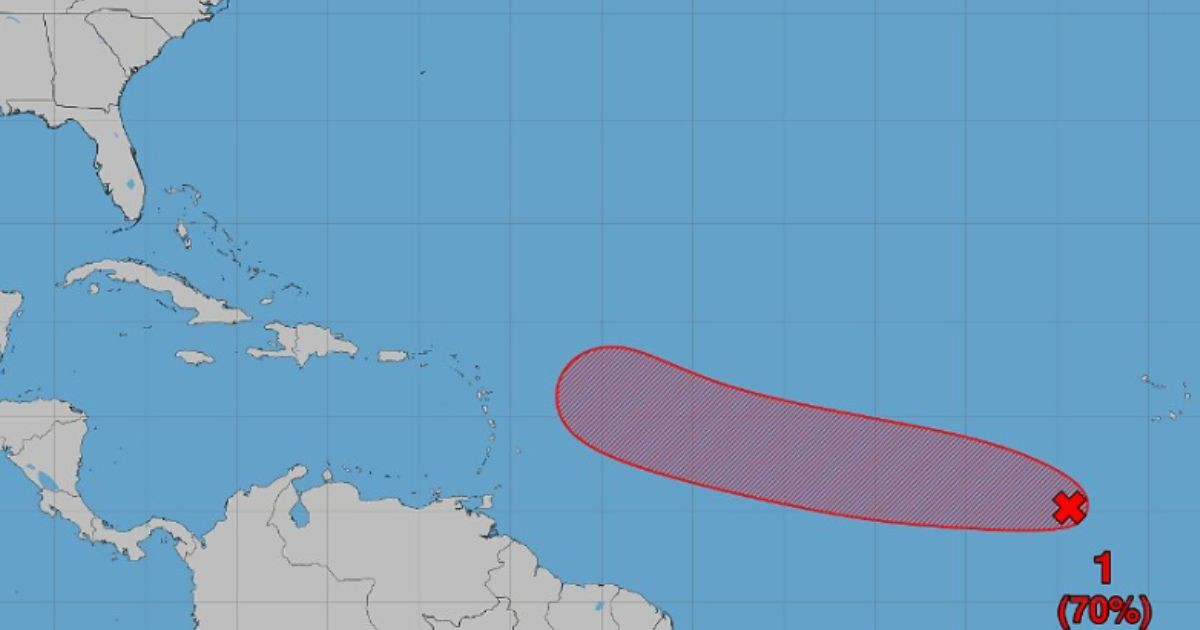
A low-pressure system monitored in the Atlantic reached a 70% chance of development over the next seven days and is likely to become a tropical depression in the latter half of this week.
The National Hurricane Center of the United States (NHC for its acronym in English) raised the estimate in its advisory at 8:00 p.m. this Monday.
The probability of formation over the next 48 hours has also increased to 30%, although it is still considered low.
The low-pressure area was located about 500 miles —approximately 805 kilometers— southwest of the Cape Verde Islands and was generating an extensive area of rain and thunderstorms.
The environmental conditions will gradually become more favorable for its development over the next day or two, according to the NHC forecast.
The system will move westward and west-northwestward across the central tropical Atlantic.
The new update represents another increase in just a few hours. In the 2:00 p.m. notice on this Monday, the NHC had placed the probability of development at 60% over seven days and at 20% for the next 48 hours.
Although the system is generally moving westward, there is still no defined path or confirmed threat to Cuba or the rest of the Caribbean.
Its possible intensity and track will depend on how well it manages to organize itself over the next few days.
The NHC is also monitoring a tropical wave located approximately 900 miles —about 1,448 kilometers— east of the Windward Islands.
The phenomenon generates disorganized rains and storms and maintains a 10% chance of development, both in 48 hours and over the next seven days.
That wave will move rapidly westward, but conditions could become less favorable for its organization as it approaches the Lesser Antilles by the end of the week.
The third system under observation is a low-pressure trough located several hundred miles northeast of Bermuda.
It presents a 10% chance of development in both time frames and is moving quickly toward the east.
Its arrival in colder waters would put an end to its chances of formation on Thursday.
Related videos:
Filed under: