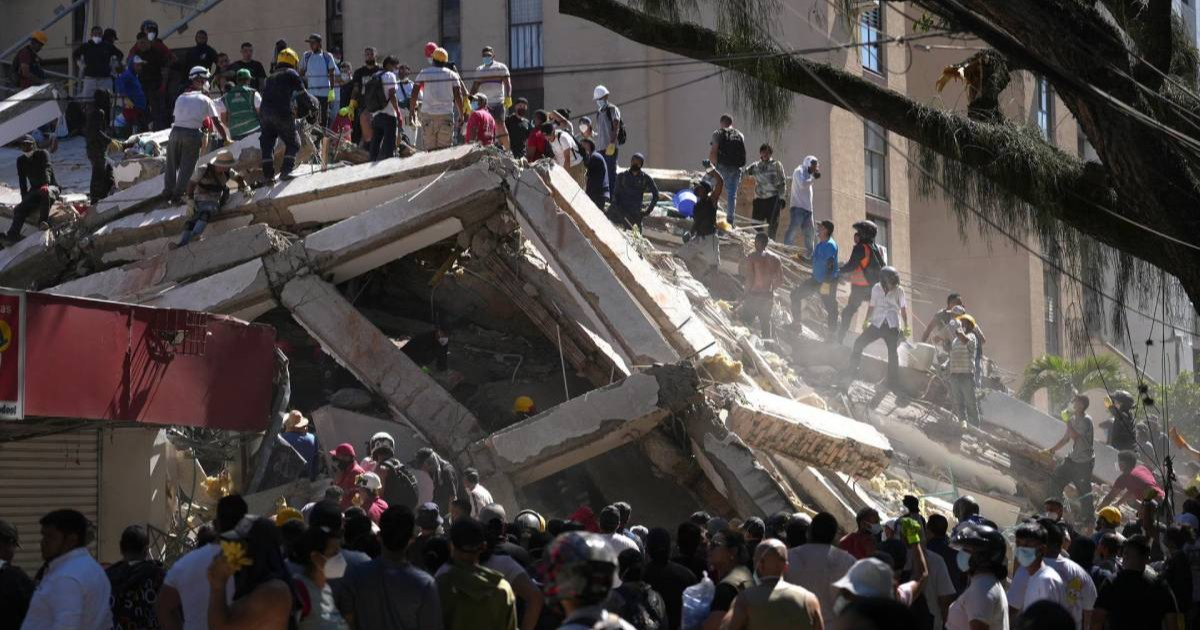
The toll of victims from the 7.4 magnitude earthquake that shook Colombia on Monday morning continues to rise: regional authorities from four departments are reporting at least 240 fatalities, a figure significantly higher than the last official report from the national government, which stood at 111 deaths by midday on the day of the quake.
The earthquake, recorded at 7:34 in the morning with an epicenter in San José del Palmar, in the department of Chocó, was classified by the Colombian Geological Service as the largest magnitude earthquake in the country in the 21st century, the most intense in 47 years, even surpassing the devastating Coffee Region earthquake of 1999.
Valle del Cauca is the most affected department, with a total of 130 dead: 95 in Cali and 35 in other municipalities in the region.
The mayor of Cali, Alejandro Eder, provided a bleak update this Tuesday: "Unfortunately, we have to report 95 deaths; that is the count as of this morning. We have 949 injured persons and 86 rescued individuals," he stated, adding that "239 people remain trapped under the rubble, and 56 buildings have collapsed."
The governor of Valle del Cauca, Dilian Francisca Toro, reported that "35 people have died, nearly 700 are injured, three hospitals have collapsed, 18 are affected, and 39 educational centers have been impacted," along with approximately 5,000 homes damaged in the municipalities of her department outside of Cali.
In Risaralda, the regional government secretary, Israel Londoño, confirmed "around 90 deceased individuals," including the capital, Pereira, where the mayor declared a nighttime curfew with one thousand army personnel deployed to prevent looting.
The Chocó department, the epicenter of the earthquake, reported 14 fatalities, 138 injured, and five missing, according to its governor, Nubia Carolina Córdoba-Nuri, who warned that "although the epicenter was San José del Palmar, there are injuries and serious damage to buildings in the capital, Quibdó."
Caldas recorded six deaths, 76 injuries, and over 1,300 affected homes by Monday afternoon.
The Institute of Legal Medicine reported having received 160 bodies from the four affected departments, which provides a partial but verifiable measure of the magnitude of the tragedy.
The delay of the central government in updating the figures has generated criticism. The National Unit for Disaster Risk Management indicated that, "by instruction" of President Abelardo de la Espriella, "all official information regarding the situation will be released exclusively by the Presidency of the Republic," which created an information void that was filled by regional authorities and the Colombian Association of Capital Cities.
De la Espriella, who had been in office for just three days when the earthquake occurred, declared a national disaster and set up a Unified Command Post.
The international response was swift: the UN, Ecuador—with a team of 47 specialized rescuers—, the United States, Spain, and the European Union, which activated the Copernicus system, offered support for the rescue efforts.
The United States Geological Survey issued an orange alert estimating between 100 and 1,000 deaths as the most likely scenario, with a 20% chance that the figure will exceed 1,000 fatalities. This warning becomes increasingly significant as rescue teams reach areas that are still cut off and regional authorities continue to update their assessments.
Related videos:
Filed under: