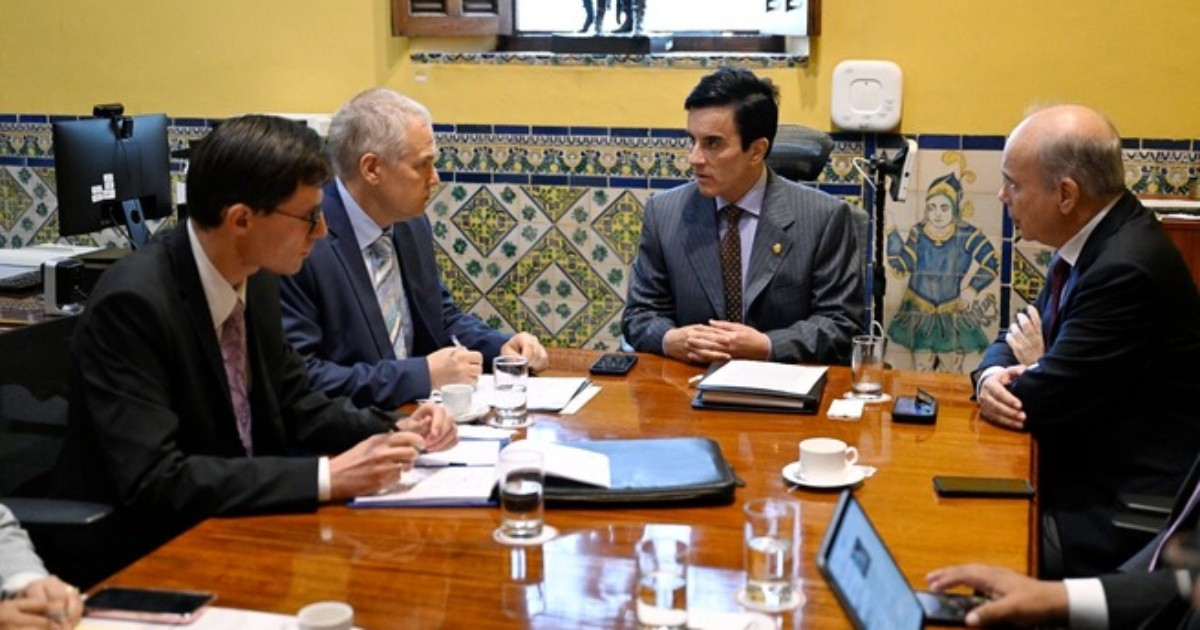
The Peruvian Foreign Ministry formally summoned the Russian ambassador in Lima, Alekséi Ushakov, to demand information regarding the situation of its citizens who have died or gone missing while fighting in Russian ranks in Ukraine, according to a official press release issued by the Ministry of Foreign Affairs of Peru.
The announcement came a day after the Peruvian government updated its official figures: out of a total of 459 Peruvians recruited by the Russian army, 11 have died, 114 are missing, and three have been captured by the Ukrainian army.
Additionally, Lima managed to evacuate 31 nationals from Russian territory, of which 28 have already returned to the country and three remain in Europe by their own choice.
The chancellor Carlos Espá conveyed to the ambassador the concern of President Keiko Fujimori and emphasized that Moscow has the obligation to inform "as it is a matter of justice and a human right to information recognized by the international community."
The Deputy Minister Eric Anderson was even more direct: «Peru will not forget or become indifferent to Peruvians wherever they are», he said, urging Russian authorities to provide «accurate and up-to-date information about their location and circumstances».
The meeting was also attended by representatives of the affected families, who conveyed their desperation to the Russian diplomat over Moscow's silence. Just days earlier, these same families had demonstrated outside the Russian embassy in Lima, demanding the return of their injured relatives and seeking to know their whereabouts.
Family members also report that the recruiters who "defrauded and deceived" their loved ones remain at large and that the formal complaints for human trafficking filed in April "are just sitting in the Prosecutor's Office," despite the fact that the Public Ministry opened a preliminary investigation in May.
The recruitment network operated through ads on social media featuring fake job offers—security guards, drivers, cooks, engineers—promising salaries ranging from 1,700 to 2,500 euros a month.
Once in Russia, those recruited were sent to the front in what were called "meat assaults" or "grinders", high-risk operations where the Ukrainian project "I Want to Live" documented that 42% of foreign mercenaries die within the first four months after signing their contracts.
The Peruvian administration stands in stark contrast to the opacity of the Cuban regime in the face of a phenomenon of much larger scale.
Lima has held over 25 coordination meetings with families, sent a special delegate to Moscow, and requested support from the International Committee of the Red Cross.
Havana, on the other hand, has not released any official figures regarding recruits, deceased, or captives, has not informed families, and maintains complete silence about the involvement of its citizens in the conflict.
Estimates from Ukrainian intelligence place the number of Cubans recruited by Russia between 20,000 and 25,000. At least 93 have been identified by name as killed in combat.
In July of this year, Moscow declared a Cuban dead who was actually alive in Ukrainian captivity, highlighting a double pattern of institutional neglect: Russia administratively erases captured foreigners, while the Cuban regime remains silent.
While Peru exerts diplomatic pressure and holds public accountability to its citizens, Cuban families searching for their loved ones receive not a single official response from Havana.
Related videos:
Filed under: