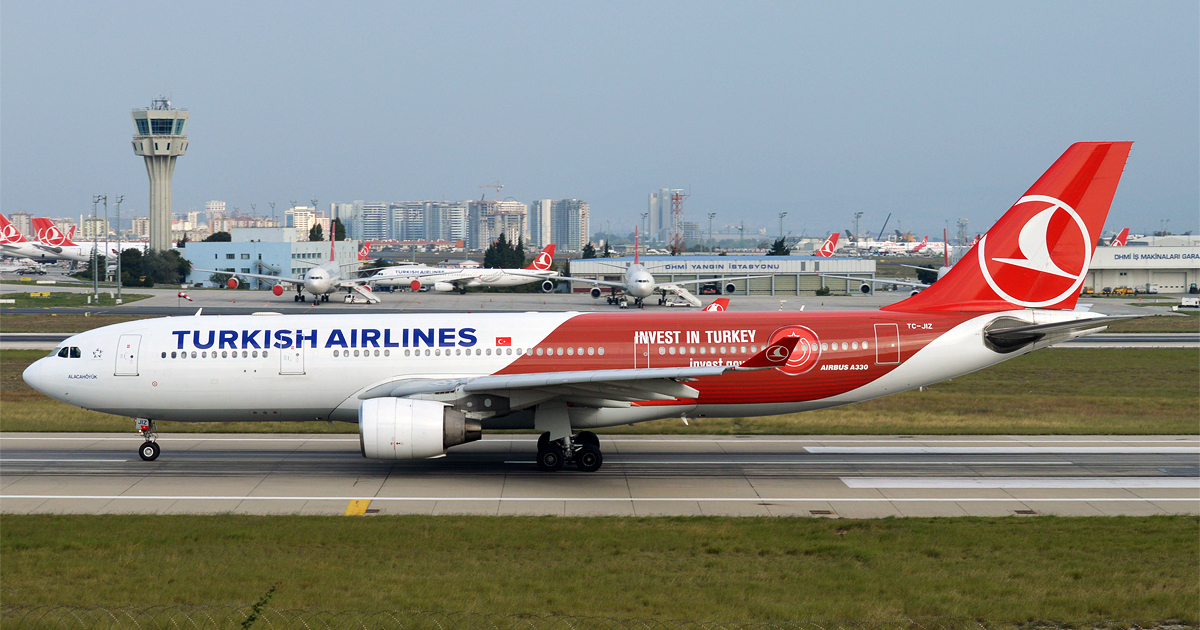
Turkish Airlines has made tickets available for flights to Cuba, with departures starting from October 27, as revealed by a note from Diario de Cuba based on the airline's own website.
The route will connect Vnukovo Airport in Moscow with the José Martí International Airport in Havana, with a stop in Istanbul.
The reopening of sales comes months after the company suspended its operations to Cuba at the end of March, citing the aviation fuel crisis affecting the island and the decline in tourist demand.
The ticket prices start at 137,565 rubles, equivalent to about 1,650 dollars per passenger for a round trip in economy class.
The fare includes four pieces of luggage: a small bag of up to four kilograms under the seat, one carry-on of eight kilograms, and two checked bags of 23 kilograms each.
The airline's reservation system shows no availability for August or September; October is the only month with active flights on the Moscow–Havana route.
Currently, Turkish Airlines only operates flights to Havana with a stopover in Panama, where passengers must transfer to Copa Airlines or another airline that still flies to the island.
The Moscow–Istanbul–Havana route was strategic for Russian tourism to Cuba.
When Turkish suspended it, Russian tour operators and agencies were forced to reimburse their clients or offer them alternative destinations during peak season.
The suspension of Turkish was part of a broader aviation crisis. Following the Jet A-1 fuel shortage at Cuban airports, eleven international airlines suspended or reduced their operations to the island in 2026, including Air France, Iberia, LATAM Peru, Air Canada, WestJet, and Air Transat.
The return of Turkish comes at the worst historical moment for Cuban tourism outside of the pandemic.
Between January and June of 2026, Cuba received only 387,591 foreign tourists, a decrease of 60.7% compared to the same period in 2025, according to data from the National Office of Statistics and Information (ONEI).
That drop represents a loss of 598,015 visitors in a year. The main source markets registered drastic declines: Canada fell by 70.3%, Russia by 66.8%, and the United States by 53.8%.
Related videos:
Filed under: