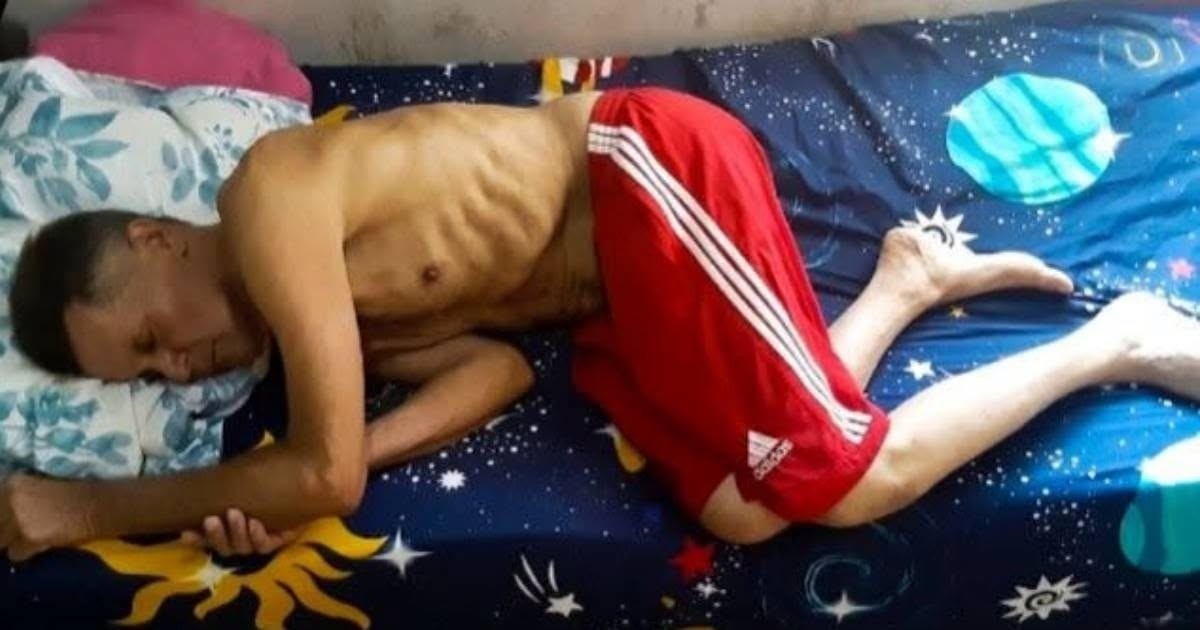
The Cuban activist Guillermo del Sol Pérez remains in critical condition after almost 60 consecutive days on hunger strike, with extreme physical deterioration, significant signs of weakness, and new changes in his health parameters, according to reports from his family and activists closely monitoring his case.
According to the latest update provided by his son, Adrián del Sol Alfonso, to the platform Cuba Decide, Guillermo had been on a 59-day consecutive fasting regimen and had begun to show tremors and severe weakness since early morning, while the checks conducted throughout the day revealed significant alterations in both his blood pressure and glucose levels.
His physical deterioration, after nearly two months without consuming solid food, was described as severe.
The information provided by her son indicates that six days had passed since Del Sol had to be transferred to a hospital, where he received intravenous hydration before being sent back to his home.
His family has insisted that he needs continuous medical attention and monitoring due to the risk of experiencing another decompensation.
Despite his delicate condition, the opposition figure remains conscious and upholds the demand that sparked the protest: the release of political prisoners and those imprisoned for their beliefs included in his appeal.
Of the 18 detainees whose release was initially demanded, Jonathan David Muir Burgos has already been released, while the other 17 remain in prison, according to an update from his family.
Del Sol states that he will not lift the strike until everyone is free.
The information disseminated in the days leading up to it indicated that Del Sol had lost over 30 pounds, in addition to suffering from severe dehydration, hypertension, and dangerously low glucose levels.
His son had then warned that “his body could collapse at any moment” and had made an urgent appeal to the international community.
In one of the most serious incidents recorded since the beginning of the protests, the activist collapsed at his home in Santa Clara and had to be admitted to the Arnaldo Milián Castro Hospital.
According to the account of Adrián del Sol Alfonso, he arrived at the medical center with a blood sugar level of three, uncontrolled blood pressure, and a very high pulse.
After receiving intravenous fluids, the glucose level increased to 4.2, although the blood pressure remained high.
The strike began on June 19 at his home in Villa Clara with a singular goal: to demand the release of 18 political prisoners, including Leonel Tristá García —a prisoner from the 11J whose parole was revoked in June 2026 and who was returned to the Guamajal prison— and other inmates such as Mayelín Rodríguez Prado, sentenced to 15 years for broadcasting the protests in Nuevitas in 2022, and the historical opponent Félix Navarro Rodríguez.
The deterioration of Del Sol was gradual and documented week by week. Upon surpassing 40 days of protest, the doctors attending to him warned of the imminent risk of collapse.
On day 46, Adrián del Sol Alfonso described that "drinking water has become quite burdensome for him as he is practically dry muscly." Days later, the activist himself stated in an interview: "I don't want to die."
The situation is particularly critical because Del Sol suffers from type 2 diabetes, severe hypertension, chronic asthma, heart disease, and a history of thrombosis.
The Cuban doctor asylum-seeker in Brazil, Eduardo Enrique Herrera Durán, described his situation as "a medical emergency that requires specialized monitoring" and warned that the combination of diabetes and prolonged fasting can lead to "metabolic instability, cardiovascular alterations, and renal failure."
This is the longest hunger strike Del Sol has undertaken to date, surpassing the one in 2019, which lasted 55 days and also ended with his hospitalization at the Arnaldo Milián Castro.
According to Memory of Nations, the activist has participated in at least 14 hunger strikes since the 1990s.
The Defense Complaints Center (CD) submitted a request for urgent precautionary measures to the Inter-American Commission on Human Rights to protect their life, demanding that the Cuban state ensure independent medical care and cease the harassment. The regime has not responded to any of the activist's demands.
"The Cuban regime will be responsible for whatever may happen," warned the site Political Prisoners of Cuba, in a context where Justice 11J reported in April 2026 the existence of 775 political prisoners on the island, 338 of whom are linked to the protests of July 11th.
Related videos:
Filed under: