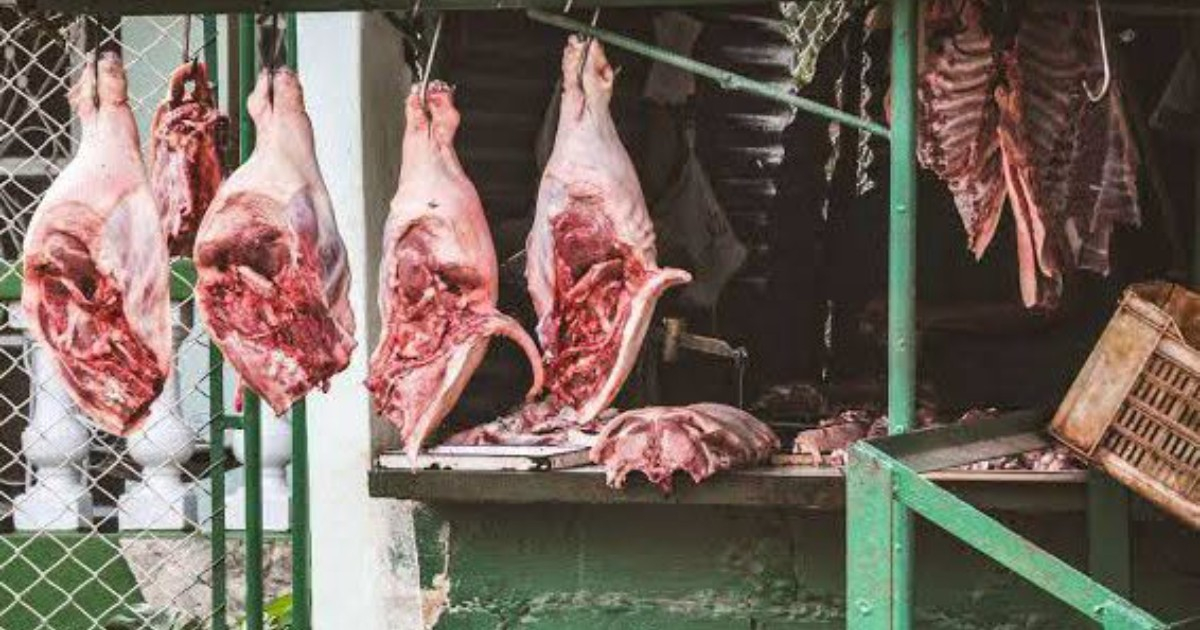
The shortage of cooking oil in Cuba has triggered an unending chain of shortages: Cubans who turned to pork fat as a traditional substitute now find that this remedy is also in short supply, and obtaining it requires waking up early and waiting in line from the early hours of the morning.
The Cuban Yaudel Rodríguez Vento described it with bitter humor in a post on Facebook that sums up the daily paradox: "I got up early to get it, but I found out that the line for the fat one starts at dawn. I arrived thinking I was being early... and there were already people who had spent half their lives there!"
Rodríguez Vento quickly pointed out the underlying irony: "This is incredible: every time there's a shortage, we find a way to complicate it further. First, there was a shortage of oil; now we have to stand in line to get the pork fat that allows us to substitute it."
The situation you describe is not anecdotal. A report from August 7th in Placetas documented that the search for lard was unsuccessful at all the consulted sales points, and that the only available substitute was oil at 4,000 pesos per bottle.
The root of the problem lies in the collapse of the vegetable oil supply. In June of this year, the Minister of Food Industry, Alberto López Díaz, publicly acknowledged that throughout the year, oil had not been able to be distributed through the regulated family basket.
On June 20, the Ministry of Finance and Prices approved Resolution 150/2026, which eliminated the retail price caps for imported cooking oils, repealing the previous limit of 990 pesos per liter.
What followed was an uncontrolled rise in prices: from 1,500 pesos in April, the price of a liter jumped to 2,000 in June, to 2,500 in Havana by the end of July, and in Sancti Spíritus it rose from 2,000 to 3,000 pesos in less than 24 hours on July 24.
In August, the price ranges between 4,000 and 7,000 pesos per liter in various regions of the country, according to reports from several provinces.
In response to the chaos, several municipalities attempted to impose local price caps: Guantánamo set a price of 2,200 pesos on August 5; Holguín and Villa Clara adopted similar controls in the following days; and Pinar del Río established the lowest limit, with a price of 2,150 pesos per liter.
Pork fat—obtained by rendering the animal's fat—has historically been the culinary substitute that Cubans rely on when vegetable oil is unavailable. But by 2026, this resource has also become elusive, closing the loop of interconnected shortages described in Rodríguez Vento's publication.
"And one laughs, because otherwise, one cries. Behind the joke lies the harsh reality of everyday life: acquiring the basics has become an adventure," he wrote, before concluding with a phrase that encapsulates the daily spirit of resistance of many Cubans: "But here we are: sharing stories in the lines, inventing solutions, and, in the absence of oil, looking for lard to make life slide by more easily."
Related videos:
Filed under: