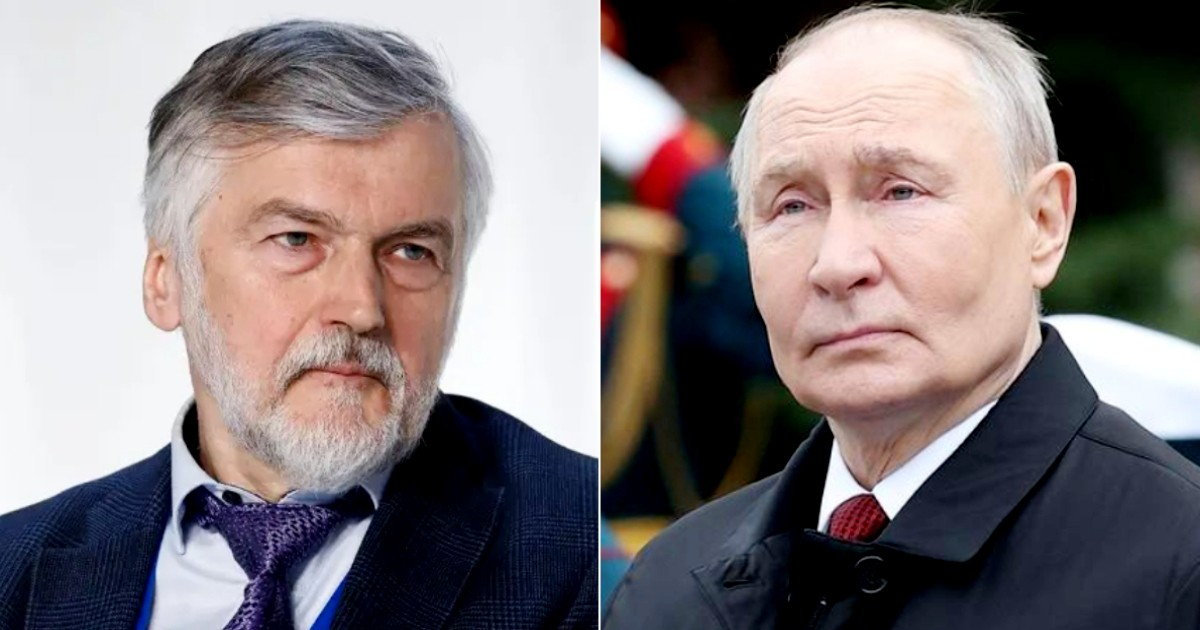
The chief economist of the Russian state bank VEB RF (Vnesheconombank), Andrei Klepach, was dismissed this Sunday just hours after his statements circulated in the media, in which he claimed that Russia cannot win a war of attrition against Ukraine and that the country is heading towards a serious social crisis.
According to a report by the Russian media The Bell, cited by UNN, the president of the state corporation VEB, Igor Shuvalov, made the decision after receiving a "call from above." Klepach had held the position for 12 years and previously worked for a decade at the Ministry of Economic Development of Russia. VEB did not respond to media requests for comment.
The statements that led to his departure were made during a session of the Nikitsky Club—a Russian forum of academics and entrepreneurs—in May 2026, but their excerpts did not circulate publicly until Saturday, suggesting a deliberate leak or a delayed access to the recordings.
In that statement, recorded by Ukrainska Pravda, Klepach openly acknowledged the structural weaknesses of the Russian economy: «We are falling behind. We are losing technological and economic competition on a global scale. And, as I have already said, we are losing it not only to China and the U.S.; in some respects, we are also losing to Ukraine».
The economist pointed out that, despite the partial destruction of its economy and a demographic catastrophe, Ukraine is holding up thanks to Western financial support. "With that level of backing, its military spending and its own expenses account for almost 50% of our budget," he warned.
Regarding the outlook of the conflict, he was categorical: «We will not win this competition in a war of attrition. We have the illusion that everything there will collapse. It has not collapsed and will not collapse».
Klepach described a Russian economy that, following the accelerated growth of 2023-2024 driven by military spending, began to decline in 2026. Investment plummeted, and entire civilian sectors—from aircraft manufacturing and building materials to light industry and food production—are experiencing recession.
The tightened U.S. sanctions at the end of 2025 also led India and China to reduce their purchases of Russian oil, "despite all their repeated statements that they do not comply with the sanctions," he noted.
The outlook painted for Russia was bleak: an inevitable social crisis, comparable to the February Revolution of 1917 or the collapse of the Soviet Union in 1991, which will arrive “at a time when no one expects it.”
The Ukrainian attacks on Russian refineries have already become, according to Klepach, a "notable macroeconomic barrier to growth."
The dismissal was interpreted as a retaliation from the Kremlin for statements that contradict the official narrative of economic strength and military advancement. This case adds to a long series of episodes of economic censorship in Russia since the onset of the large-scale invasion of Ukraine in February 2022.
"I believe that Russia will not disintegrate, but I am almost certain that we will face a social crisis", Klepach concluded in that May session, words that cost him his position.
Related videos:
Filed under: