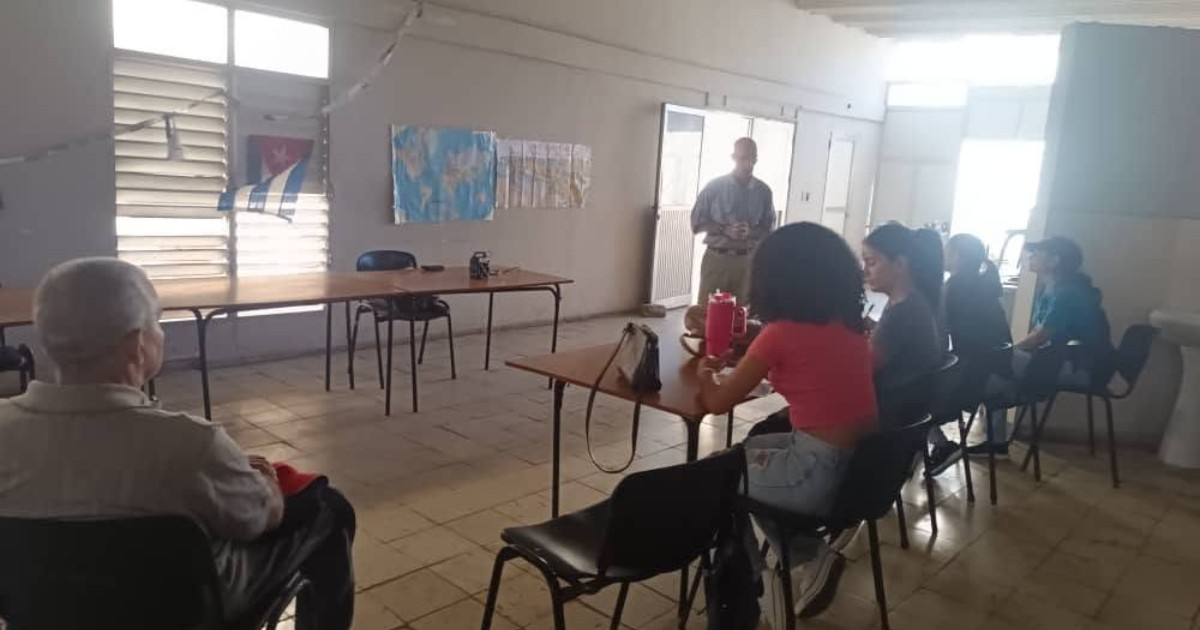
The University of Havana announced this Saturday on its Facebook page that there are 123 spots available for the History program in the Distance Learning format, vacancies that went unclaimed during the first stage of the admission process for the 2026-2027 academic year.
According to the notice from the institution, the Provincial Admissions Commission of Havana will open a second opportunity to fill those positions between August 31 and September 4, from 9:00 a.m. to 1:00 p.m. at their offices. Interested parties can call 78780875 for inquiries.
The fact that more than a hundred positions have gone unfilled illustrates the growing disinterest among young Cubans in university degrees, particularly in the humanities, in a context of massive emigration and limited job prospects.
The admission process for this year has already begun with a significant anomaly: the Cuban government exceptionally suspended the entrance exams for higher education—originally scheduled for June—citing the energy crisis, and replaced them with an assignment system based on the accumulated academic index from pre-university education.
The measure was announced on May 20, just one day after the Ministry of Higher Education (MES) confirmed that the exams would proceed.
René Sánchez Díaz, director of Income and Job Placement at MES, acknowledged the contradiction: "We continue to maintain that the best approach to organizing access to higher education is through standardized exams. We haven't debated that, we have no doubts about it. However, we have a very difficult situation now."
Despite the crisis, the same official promised that "everyone who wants a university place will have it guaranteed numerically", with a national offer of 96,305 places for the 2026-2027 academic year.
The University of Havana had opened a specific call in July for the Course by Meetings and Distance Course modalities, offering a total of 1,455 slots, with registration from the 6th to the 15th of that month and a re-offer on the 21st and 22nd of July.
That 123 of them —only in History— have remained unfilled indicates that actual demand is significantly lower than supply.
The pattern is not new. In 2025, only 464 students passed the entrance exams in Las Tunas, leaving 1,809 places unassigned in fields as diverse as Medicine, Law, and engineering.
In 2024, only 50.4% of applicants passed the three required exams; in 2025, the percentage rose slightly to 51.5%.
Academic demand is low, and migration has exacerbated the situation: it is estimated that more than 90% of the youth remaining on the island would like to emigrate if they could, and the Young Communists Union (UJC) acknowledged in 2022 that around 800,000 Cuban youths had no connection to either education or employment.
The History degree offered in a distance format, with limited job prospects and salaries in pesos that do not compete with any alternatives in foreign currency, is hardly appealing to a generation that prioritizes leaving the country or accessing dollarized sectors.
The 123 vacant positions are, in that sense, a barometer of the broader crisis affecting higher education in Cuba.
Related videos:
Filed under: