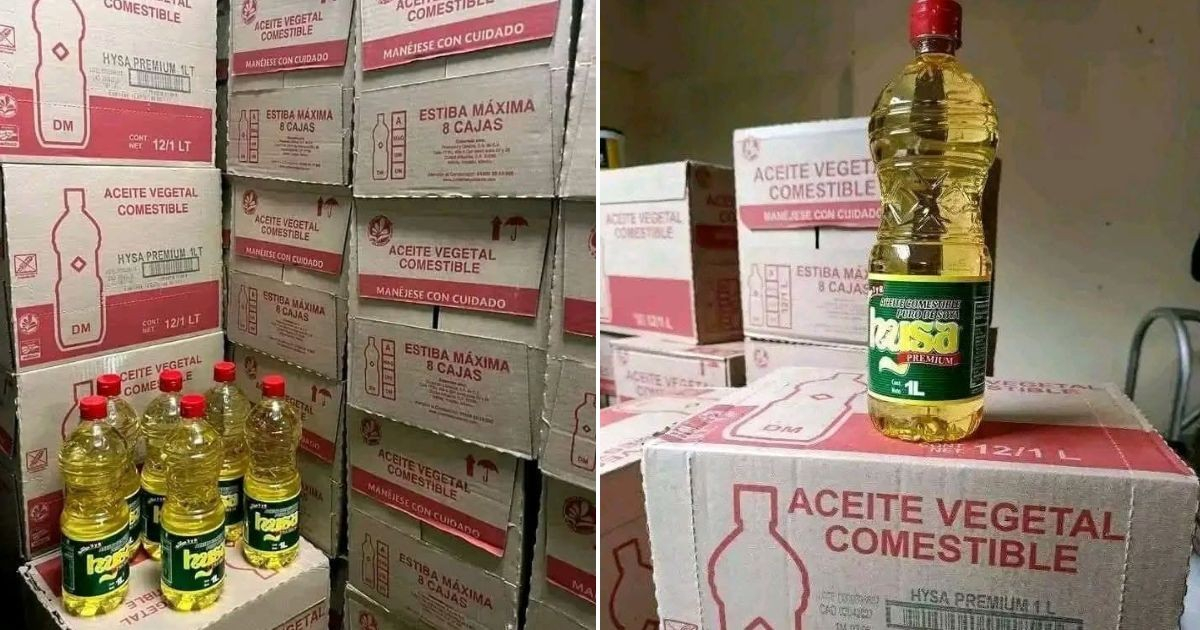
The Government of Isla de la Juventud established new maximum retail prices for food and basic items, including chicken, rice, sugar, beans, oil, eggs, and powdered milk, in a new local effort to curb the rising prices that are affecting Cuban consumers.
The measure was announced on Monday by Radio Caribe, which reported that the Municipal Administration Council reached an agreement on the values alongside small and medium enterprises (mipymes) and self-employed workers.
Although the authorities insist on presenting the decision as a result of "dialogue and consensus" and "not of imposition," the set prices are mandatory, and no retail business will be able to sell above them. Those who challenge the measure, at least in other territories, face confiscations, forced sales, and business closures.
The chicken is priced at 620 pesos per pound; the package of sausages weighing 340 grams is 1,200; the MDM ground beef is 550 pesos per pound; the rice is 825 pesos per kilogram; the sugar is 1,150; and the black beans are 900 pesos per kilogram.
The list also sets the spaghetti at 500 grams for 360 pesos, the tomato paste at 400 grams for 750, the whole milk powder at 4,800 pesos per kilogram, and the milk powder with 28% added fat at 3,900.
The liter of oil will have a maximum price of 2,300 pesos, while the laundry soap is set at 400 pesos, the bath soap of 100 grams at 350, the kilogram of powder detergent at 1,600, and each egg at 110 pesos.
The details are outlined in the official statement from the Municipal Administration Council, relating to Agreement 544 on reference prices for the retail market.
In addition to setting limits, the Government imposed a 30% cap on the margin between the wholesale price and the final retail price. In all cases, the lower value between the result of that margin and the maximum price established in the table must be applied.
Authorities also prohibited the so-called covert wholesale sales and established that wholesale purchases must be supported by invoices to justify the costs.
Prices will be reviewed at least once a month based on fuel costs, shipping freight, availability of foreign currencies, and other market fluctuations.
The Government also promised to take measures to reduce logistical times at the port of Batabanó and during unloading in Nueva Gerona, with the intention of lowering transportation and storage costs that drive up prices for products in the island territory.
In Isla de la Juventud, the authorities also called on the population to report any possible violations to the Municipal Inspection, State Commerce, the government leadership office, or the constituency delegates.
The decision comes just a few weeks after a package of chicken went from 3,130 pesos to over 7,000 in a matter of days in Isla de la Juventud, amidst a significant price surge following the removal of several national price caps.
That increase occurred after Resolution 150/2026 from the Ministry of Finance and Prices lifted the national limits on products such as chopped chicken, cooking oils, powdered milk, pasta, and sausages in June.
However, just a few weeks after that turn, several local governments have once again resorted to price controls, although they insist on avoiding the term "price caps" and prefer to refer to them as "reference prices."
At the beginning of August, Villa Clara established maximum prices for essential food items, including 110 pesos per egg and 2,500 pesos per liter of oil.
A day later, Matanzas also set reference prices for products such as oil, eggs, chicken, rice, and beans, in addition to limiting the profit margin between wholesalers and retailers to 30%.
The same trend arrived in Pinar del Río, where the municipal government set the maximum retail price of oil at 2,150 pesos.
The series of local measures indicates the return of price ceilings as a tool to combat inflation just weeks after the central government acknowledged the difficulties of that policy and eliminated several national limits.
Related videos:
Filed under: