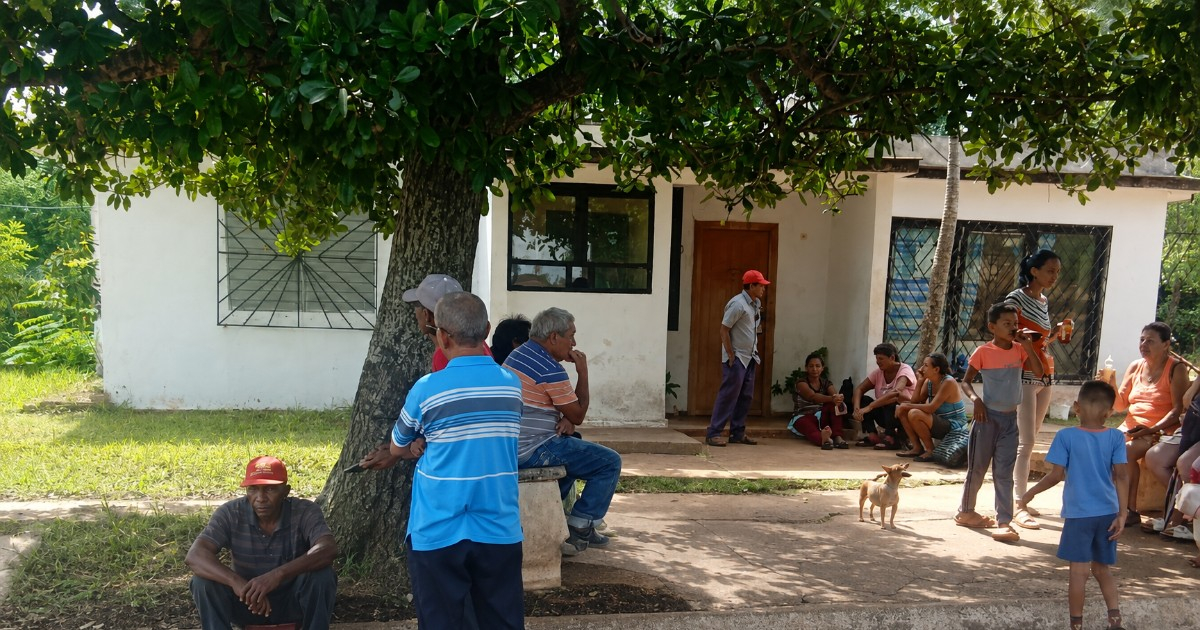
The branch of the Banco Popular de Ahorro (BPA) in Sierra de Cubitas, a rural municipality in the province of Camagüey, has been closed for several days, impacting dozens of elderly individuals who have been unable to collect their pensions, according to a report circulated on social media this Tuesday.
Independent reporter Jose Luis Tan Estrada claims that the situation has left elderly people unable to withdraw cash or collect their pensions in a locality with very limited banking infrastructure.
Sierra de Cubitas is a small and remote municipality with a predominantly agricultural economy and minimal banking presence.
For its residents, especially retirees, the closure of any branch means becoming completely disconnected from the financial system, as there are no functional ATMs or accessible digital alternatives for the older rural population.
The case adds to a pattern that is recurring throughout Cuba in 2026. In Camagüey, banks have been operating for months with drastically reduced hours: since February, public service has been limited to Monday through Friday from 9:00 a.m. to 1:00 p.m.
That restriction, imposed by the energy crisis, had already led to dramatic scenes in the province: in April, elderly people were sleeping at the entrance of a bank in Camagüey to secure a spot and be able to cash out the next day.
The situation is not exclusive to Camagüey. In July, a branch of BPA in Holguín closed its doors at 3:00 p.m., leaving dozens of elderly individuals without their pensions, despite having electricity, cash, and connectivity available. That same month, huge lines of retirees overwhelmed banks in Santiago de Cuba, while in Havana there were pushes and chaos as pensioners waited for their turn.
The collapse of the Cuban banking system in 2026 is due to a combination of structural factors: prolonged blackouts that incapacitate computer systems, chronic cash shortages that jeopardize the payment of salaries and pensions, and the overload of the few branches that manage to open.
The official press itself admitted in July the failure of the transfer payment system, which the regime had promoted as an alternative to cash.
The government has attempted to alleviate the crisis with limited measures: a pilot plan to pay pensions in shopping centers and at home in four municipalities in Havana, and the designation of local businesses as responsible for paying pensions in certain areas.
None of these initiatives have reached rural municipalities like Sierra de Cubitas, nor have they addressed the underlying issue.
The Central Bank of Cuba publicly acknowledged in July that retirees must wake up early to receive their pensions, an admission that highlights the extent of the deterioration of a system that does not provide real solutions for the most vulnerable.
Related videos:
Filed under: