The United States government announced this Thursday a new round of sanctions against entities and individuals connected to the Cuban regime, this time targeting state-owned companies in the steel and mining industries.
The U.S. Department of the Treasury expanded its sanctions campaign against the Cuban regime this Thursday by adding nine state entities and three regime officials to the List of Specially Designated Nationals (SDN).
The measure is part of the Trump Administration's strategy to "put an end to the harmful activities of the Cuban regime, both in Cuba and throughout the rest of the hemisphere," according to the official statement.
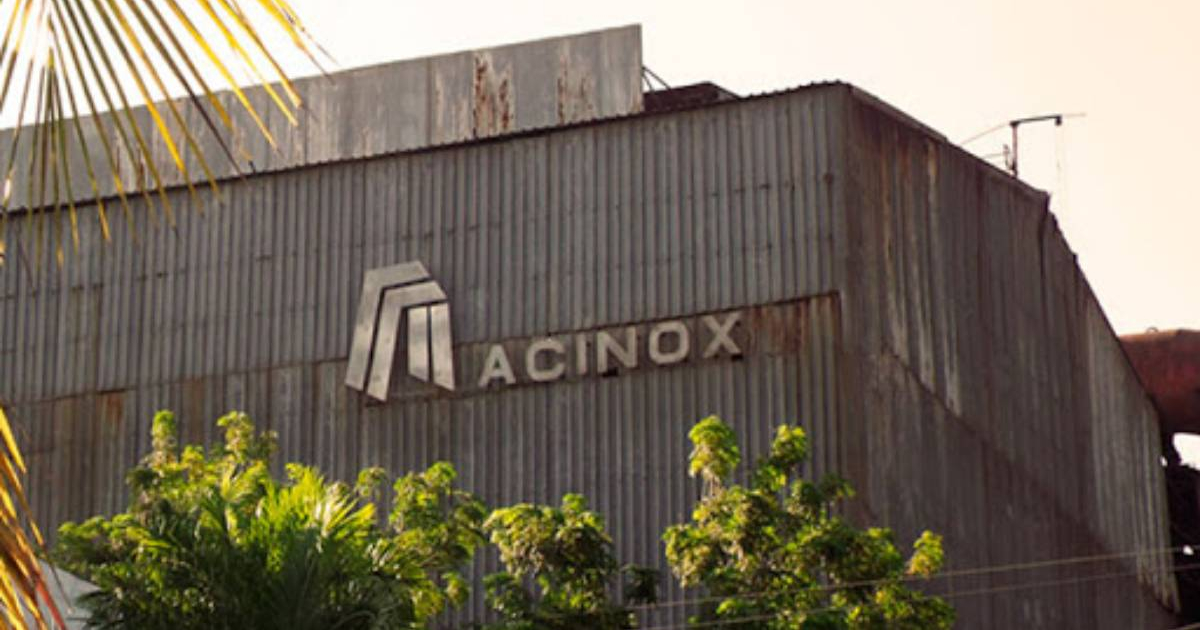
The Office of Foreign Assets Control (OFAC) has added Acinox Comercial S.A. to the list, a state-owned company founded in 1990 that is responsible for the manufacturing and export of basic iron and steel, and is part of the ACINOX steel group, whose main export product is steel billet.
The same action included the Empresa de Níquel Comandante Ernesto Che Guevara, located in Moa, in the province of Holguín, which is dedicated to the extraction and processing of nickel and cobalt.
The Import Export and Marketing Company of Metals (Metalcuba) was also penalized, as it deals with the importation of heavy industrial products, including specialized fuels and metal components.
Similarly, the Geological Mining and Salt Business Group (Geominsal) was appointed, which develops and markets mineral resources and salt, in addition to providing technical services to those industries.
The OFAC also sanctioned four other state-owned enterprises: Acorec S.A. (Agency for Hiring Commercial Representatives), a state entity providing human resources established in 1991, a sector that Washington has pointed out as a mechanism for generating foreign currency for the Cuban government through the export of workers; Coratur (Tourism Supply Corporation S.A.), responsible for international trade operations, import and export, and partnerships in foreign markets; Transimport, the Central Company for the Supply and Sale of Heavy Transport Equipment and its Parts, and Consumimport, a company specializing in appliances, construction materials, and other goods.
In addition, the Ministry of Construction (MICONS) was added to the list.
All entities were designated under Executive Order 14404 (EO14404), the legal framework signed by President Donald Trump in May 2026 that allows for the imposition of sectoral sanctions against individuals and companies operating in strategic areas of the Cuban economy, including metals and mining, energy, defense, and financial services.
On an individual level, the Trump administration also sanctioned three key leaders of the Cuban Institute of Friendship with the Peoples (ICAP), an organization founded in 1960 that, under the guise of promoting international solidarity, serves as a platform for foreign influence linked to Cuban intelligence.
The ICAP had already been included in the list of sanctioned organizations by the U.S. last June. This Thursday, its president, the convicted spy Fernando González Llort, a member of the Cuban espionage network (Red Avispa) dismantled in the late 90s in south Florida, was also designated. González served 15 years in prison and was deported to Cuba in 2014.
Similarly, Noemí Ramona Rabaza Fernández, the first vice president of ICAP, and Leima Martínez Freire, director for North America, were sanctioned.
The appointments this Thursday are part of a stepped series of actions that has intensified since May 2026.
The first designations under EO14404 occurred on May 7, when GAESA and Moa Nickel S.A., the joint venture between Canadian Sherritt International and the General Nickel Company of Cuba, were sanctioned. On June 5, the deadline given to foreign companies to cease operations with sanctioned Cuban entities expired, under the threat of secondary sanctions.
In the following months, Washington continued to expand the scope of the restrictions by designating new entities and individuals connected to the regime's economic-military apparatus.
The pressure from secondary sanctions has had concrete effects: the Australian company Antilles Gold suspended its operations in Cuba, and Sherritt International issued warnings about the risks to its activities on the island.
The Cuban regime has reported to international organizations losses exceeding 47 million dollars in a year for the ACINOX group, attributed to the pressures of the U.S. embargo on its foreign suppliers, although these figures have not been independently verified.
With this new round, the Trump administration is consolidating a strategy aimed at suffocating the sources of financing for the Cuban state sector by sector, from mining and steelmaking to the mechanisms for labor export and the regime's diplomatic projection abroad.
Related videos:
Filed under: