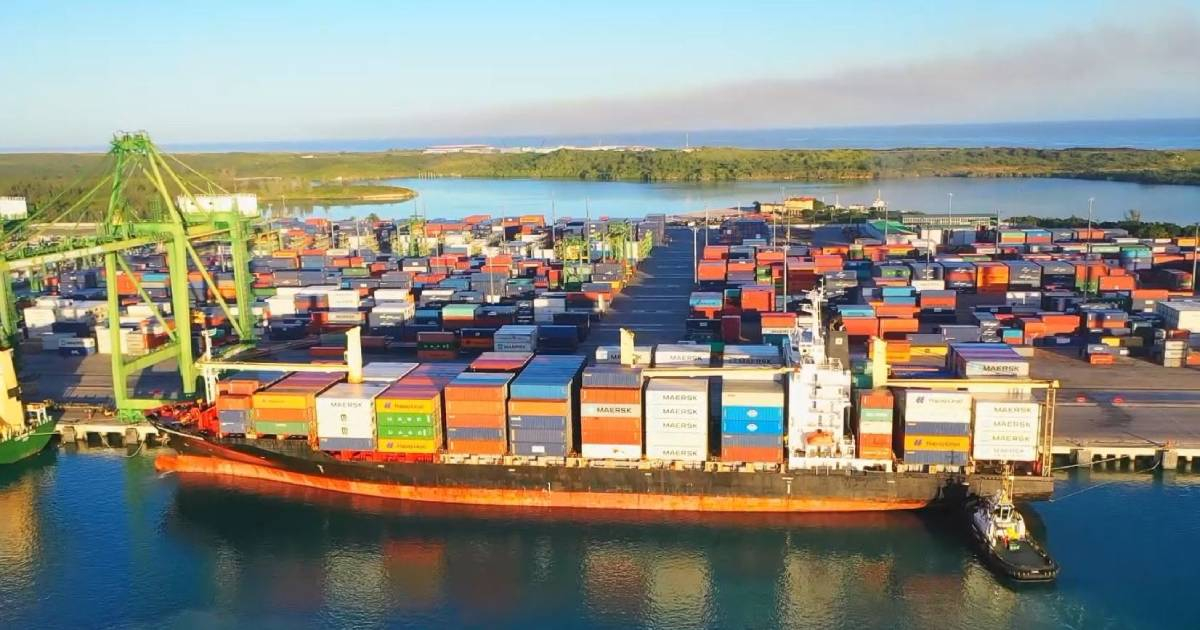
The U.S. Department of the Treasury expanded its sanctions against the Cuban regime on Thursday, adding nine entities and three individuals to the List of Specially Designated Nationals and Blocked Persons (SDN), in a new round that directly impacts foreign trade, imports, and mining on the island.
All the appointments were made under Executive Order 14404, signed on May 1, 2026, which authorizes blocking sanctions against those operating in strategic Cuban sectors such as energy, defense, metals, mining, and financial services.
The nine blocked Cuban entities are Transimport, Consumimport, Coratur (Corporation for Tourism Supplies), Acorec (Agency for Contracting Commercial Representations), Acinox Comercial, Metalcuba, Geominsal (Geominero Salinero Business Group), the Comandante Ernesto Che Guevara Nickel Company, and the Ministry of Construction (MICONS).
The inclusion of the MICONS sets a precedent: it is the first time this ministry has received this designation, and it was incorporated as a government entity, not as a state-owned enterprise.
Transimport, founded in 1962, is the state-owned company specialized in the importation of heavy vehicles, parts, and accessories. Consumimport is responsible for the importation of general consumer goods.
Coratur supplies the tourism sector and is linked to the Ministry of Foreign Trade and Foreign Investment. Metalcuba is involved in the import, export, and marketing of metals, while Geominsal encompasses the geomining and salt operations of the Cuban state.
Alongside the entities, the Treasury sanctioned three individuals linked to the Cuban Institute of Friendship with the Peoples (ICAP): Fernando González Llort, Leima Martínez Freire, and Noemí Ramona Rabaza Fernández.
González Llort, president of ICAP since March 2017, is one of the former Cuban spies known as the Wasp Network—or "Cuban Five"—who served 15 years in prison in the United States for espionage before returning to Cuba in 2014.
The State Department described him in 2026 as a "convicted Cuban spy." Díaz-Canel publicly congratulated him just a day before these sanctions were announced.
The sanctions involve the freezing of assets under U.S. jurisdiction and the prohibition of any transactions with individuals or companies subject to U.S. law.
This action is part of a phased campaign that the Trump administration has been implementing since May 2026. In previous rounds, MINFAR, MININT, GAESA, CUPET, MINTUR, and dozens of state-owned companies have already been blocked.
The round of July 13 included GECOMEX, ANTEX, Caudal S.A., and six other entities. On August 6, Tecnotex, Tecnoimport, EMI Yuri Gagarin, and Duna S.A. were added.
The ICAP had already been sanctioned on June 4, 2026 for its alleged role in intelligence and counterintelligence activities. The new designations of its officials deepen that encirclement around the institution.
The same action by the Treasury this Thursday also included sanctions for drug trafficking against an Ecuadorian cocaine network linked to violent gangs and Mexican cartels, as well as designations related to Hezbollah, the Iranian Revolutionary Guard, and a general license related to Russia, reflecting the global reach of the sanctions offensive by the Trump administration.
Related videos:
Filed under: